
The Birth of an Icon: Microsoft Windows 1.0 released on this day
The impact and enduring legacy of Windows 1.0 are still palpable today, as it established the foundation for the widely used and relied upon operating system.
- Tech News
- 3 min read

;'%3e%3cpath%20d='m8,15.99c4.41,0,7.99-3.58,7.99-7.99S12.41,0,8,0,0,3.59,0,8s3.58,7.99,7.99,7.99Z'%20style='stroke:%23fff;%20stroke-miterlimit:10;%20stroke-width:.02px;'/%3e%3cpath%20d='m3.08,3.37l3.82,5.11-3.84,4.15h.87l3.37-3.64,2.72,3.64h2.94l-4.04-5.39,3.58-3.87h-.86l-3.1,3.35-2.5-3.35h-2.94Zm1.27.64h1.35l5.97,7.99h-1.35l-5.97-7.99Z'%20style='fill:%23fff;'/%3e%3c/g%3e%3c/svg%3e)


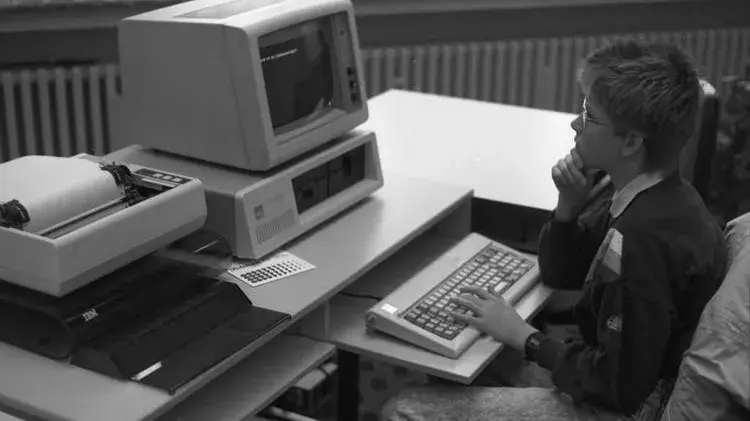
Birth of Microsoft Windows
A crucial time in the development of personal computers was the 1980s. The public was beginning to have greater access to computers during this time, and software companies were engaged in intense competition. The future of computing was significantly shaped by Microsoft, a rising star in the field.
The recognition by Microsoft that operating systems formed the bedrock of computer functionality led them to envision a transformative user interface. This vision brought in the development and release of Microsoft Windows in 1985, a revolutionary OS that not only paved the way for the future of personal computing but also fundamentally changed the way people interacted with computers.
Graphical User Interface
Advertisement
The graphical UI was greatly done by Windows, which made it easier for people to interact with computers. Users were able to move around programmes, files, and settings with ease by using windows, menus, icons, and a mouse. This groundbreaking advancement in user interface design revolutionized the computing experience.
Cooperative Multitasking
Advertisement
Cooperative multitasking was first ever introduced with Windows, allowing users to run multiple applications simultaneously. While it was not as sophisticated as the pre-emptive multitasking in later Windows versions, this feature was still a significant upgrade from the previous command-line interface.
Applications
Windows 1.0 included a text editor, a calendar, a calculator, a paint programme, and a file manager, among other things. These applications offered users basic productivity tools as well as a more interactive computing experience.
MS-DOS Compatibility
Windows 1.0 was designed to be compatible with MS-DOS, Microsoft's previous operating system. Users could still run MS-DOS applications within the Windows environment, providing a smooth transition for those accustomed to the command-line interface.
Modular Design
With a modular and diverse design language, Windows 1.0 enables developers to use the Windows Software Development Kit (SDK) to customise their own applications. This special feature has drastically increased the functionality and adaptability of the Windows operating system and was instrumental in fostering a thriving third-party software ecosystem.
The Evolution and Legacy
Following the initial release of Windows 1.0, Microsoft remained committed to enhancing and refining their operating system. In 1987, Windows 2.0 was introduced, bringing with it the introduction of overlapping windows and notable performance improvements. The release of Windows 3.x in 1990 further elevated the user experience with enhanced multimedia functionalities, improved graphics, and broader software compatibility.
It is indeed a great influence of Windows 1.0 and its later iterations on the history of personal computing. The global use of graphical user interfaces, which increased computer accessibility and user-friendliness, was largely attributed to Microsoft Windows. The field of technology has been significantly impacted and improved by these developments for a long time.
Windows' legacy can be seen in various aspects of modern computing. The GUI principles introduced in Windows 1.0 heavily influenced the design of other operating systems, leading to a more intuitive and accessible computing experience. The Windows ecosystem also fostered a thriving software industry, with countless applications and games developed specifically for Windows.
Windows forever
The advent of Windows 1.0 in 1985 signified the commencement of a groundbreaking journey for Microsoft Windows. With each subsequent version, Windows has undergone continuous evolution, bringing forth new features and innovative advancements that have profoundly influenced the realm of personal computing.
The impact and enduring legacy of Windows 1.0 are still palpable today, as it established the foundation for the widely used and relied upon operating system we are familiar with.