
The LG Rollable That Never Saw Daylight: Teardown Shows Sliding Display, Motors, Bristles, and Brilliant Engineering
JerryRigEverything’s teardown of the unreleased LG Rollable reveals hidden motors, dust‑defying bristles, and a 7.5‑inch expanding display. Though LG shut down its smartphone business in 2021, the device shows what the industry missed.
- Tech News
- 3 min read

;'%3e%3cpath%20d='m8,15.99c4.41,0,7.99-3.58,7.99-7.99S12.41,0,8,0,0,3.59,0,8s3.58,7.99,7.99,7.99Z'%20style='stroke:%23fff;%20stroke-miterlimit:10;%20stroke-width:.02px;'/%3e%3cpath%20d='m3.08,3.37l3.82,5.11-3.84,4.15h.87l3.37-3.64,2.72,3.64h2.94l-4.04-5.39,3.58-3.87h-.86l-3.1,3.35-2.5-3.35h-2.94Zm1.27.64h1.35l5.97,7.99h-1.35l-5.97-7.99Z'%20style='fill:%23fff;'/%3e%3c/g%3e%3c/svg%3e)


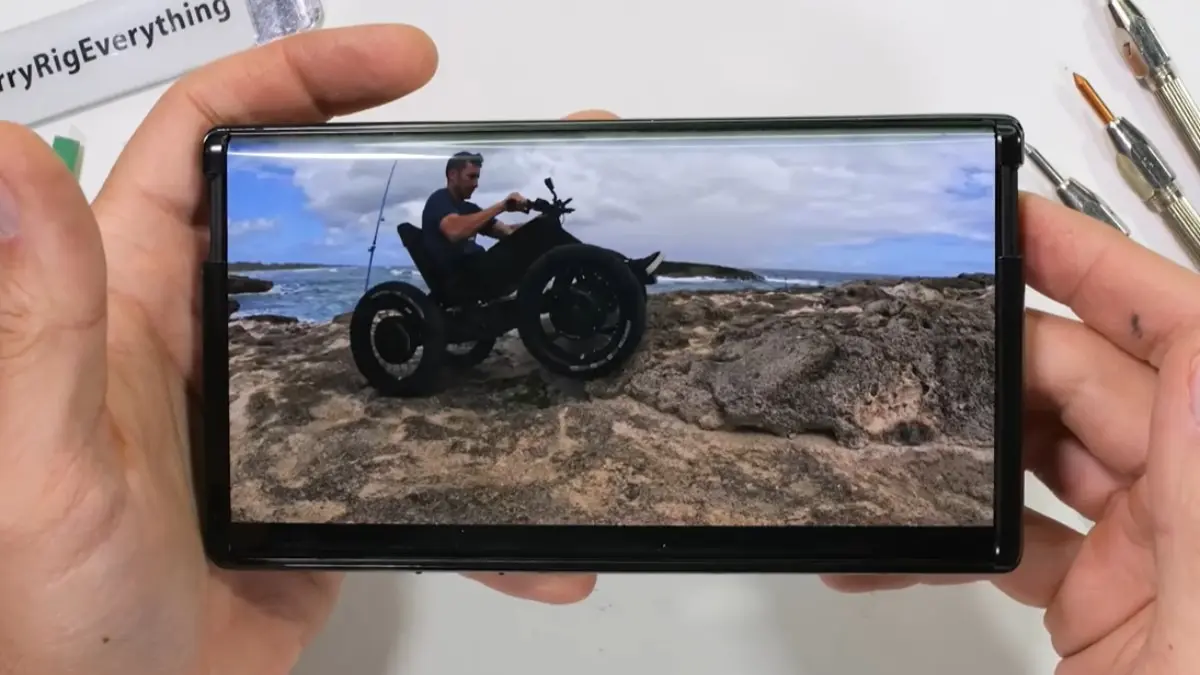
The LG Rollable is not a newly discovered device. It has been known since 2020, when LG teased it as part of its next wave of innovation. But before it could see the light of the day, LG shut down its mobile phone business in 2021. However, a fresh teardown by JerryRigEverything has brought renewed attention to the phone offering the most detailed look yet at how it actually works from the inside.
The timing matters because the industry is still experimenting with foldables and flexible displays, making LG’s old concept feel surprisingly relevant even today.
LG’s Sudden Exit Changed Everything
Back in 2021, LG made the decision to shut down its entire smartphone division after years of losses. The move ended decades of innovation in the mobile space and cancelled multiple devices in development including the Rollable.
At the time, LG said it would focus on more profitable areas like home appliances and electric vehicle components. But the shutdown also meant that projects like the Rollable, which were close to launch, never reached consumers. The teardown now highlights what the industry lost when LG exited.
Advertisement
A Different Vision From Foldables
Unlike foldable phones from brands like Samsung, the LG Rollable took a different route. Instead of bending the screen, it expands horizontally using a motorised system. With a swipe, the display grows from a normal 5.5-inch smartphone size to a 7.5-inch tablet..

There is no hinge and no visible crease-two common pain points with foldable devices. Even in 2026, this approach still feels cleaner and more practical in many ways.
Advertisement
Inside the Engineering
The teardown shows that LG had built a highly complex system to make this possible. The phone uses dual motors and a gear mechanism to extend and retract the display. The soft plastic display doesn't fold, instead, it rolls into the back of the device, hiding behind a glass panel when retracted. The flexible screen is supported by internal structures that keep it stable while moving, along with spring-loaded arms that ensure smooth expansion.
There are also protective elements like brush-like barriers to keep dust away from the internal screen area - an important detail given how sensitive flexible displays can be. Despite the moving parts, the device appears solid and well-engineered, not experimental.
Built Like a Finished Product
One of the biggest surprises is how complete the phone looks. This was not just a concept. The device includes a large battery, dual cameras, a fingerprint scanner, and a polished software experience that adapts as the screen expands. It even hides part of the flexible display under a glass back panel, reducing exposure and improving durability - something foldables still struggle with.
Ahead of Its Time, Still Relevant Today
The renewed attention around the LG Rollable shows how far ahead LG was thinking. While the rest of the market focused on foldables, LG was exploring a different solution to the same problem: bigger screens without sacrificing portability. Today, companies are still experimenting with rollable concepts, but none have fully commercialised them yet.
A Missed Opportunity for the Industry
LG’s exit in 2021 did more than just remove another smartphone brand, it took away one of the most experimental players in the space.
The Rollable is a reminder that innovation does not always succeed commercially, even when the technology is ready. For users, it is a glimpse of a path the smartphone industry could have taken but didn’t. The LG Rollable is not just about a teardown. It is about timing. LG built something futuristic, but left the market before the world could catch up.