
Tim Cook Hands CEO Role to John Ternus - Yet These Core Powers Stay Firmly in His Grip as Apple’s Executive Chairman
Tim Cook is stepping aside as Apple CEO this September after more than a decade of global expansion and innovation. John Ternus will take over day‑to‑day operations, while Cook remains Executive Chairman, steering Apple’s policy and global strategy.

;'%3e%3cpath%20d='m8,15.99c4.41,0,7.99-3.58,7.99-7.99S12.41,0,8,0,0,3.59,0,8s3.58,7.99,7.99,7.99Z'%20style='stroke:%23fff;%20stroke-miterlimit:10;%20stroke-width:.02px;'/%3e%3cpath%20d='m3.08,3.37l3.82,5.11-3.84,4.15h.87l3.37-3.64,2.72,3.64h2.94l-4.04-5.39,3.58-3.87h-.86l-3.1,3.35-2.5-3.35h-2.94Zm1.27.64h1.35l5.97,7.99h-1.35l-5.97-7.99Z'%20style='fill:%23fff;'/%3e%3c/g%3e%3c/svg%3e)


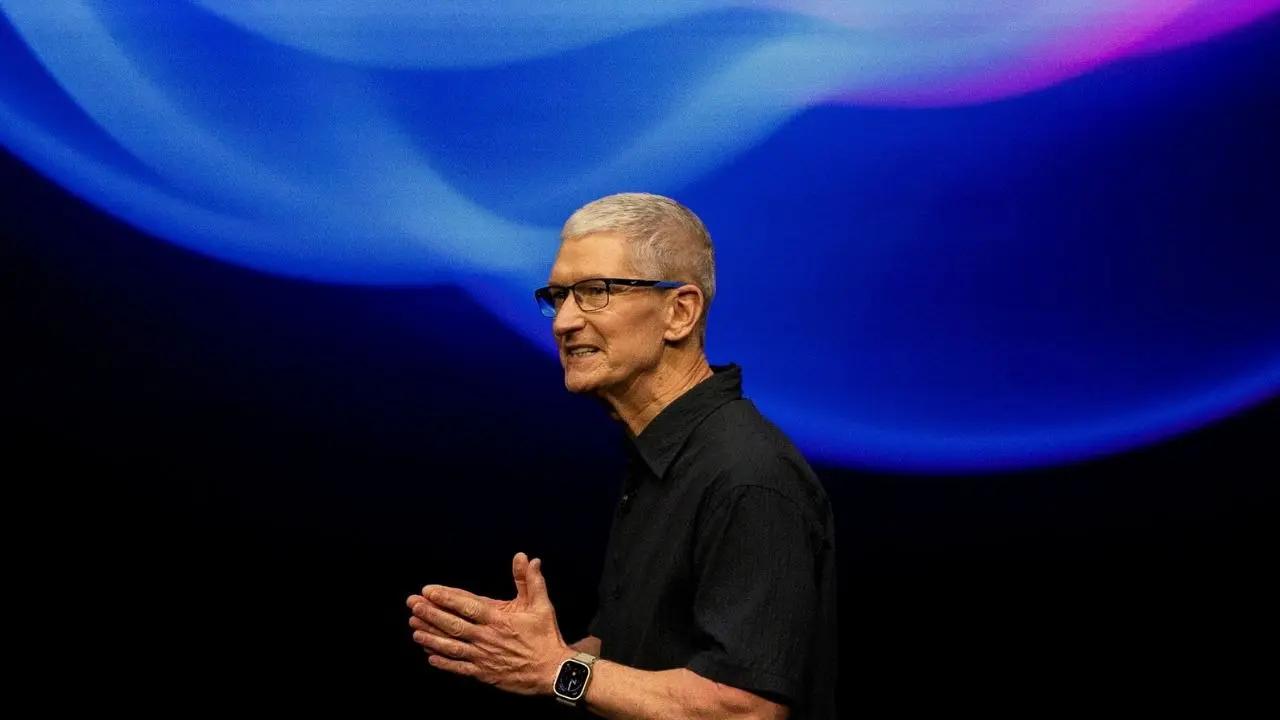
Tim Cook Steps Down: After more than a decade at the helm, Tim Cook is stepping aside as chief executive of Apple this September. The move ends an era defined by global expansion, supply chain reinvention, and Apple’s deeper push into services and policy influence. But this transition is carefully structured - Cook isn’t walking away. He is moving into the role of executive chairman, and with it, retaining control over one of the company’s most sensitive functions.
Cook Keeps the Policy Steering Wheel
Apple has made it clear that Cook will continue to handle engagement with governments and regulators worldwide. In practical terms, this means he will remain the company’s key voice in high-level discussions around trade, data privacy, taxation, and manufacturing policies.
Over the years, Cook has built direct relationships with political leaders and regulatory bodies - a role that became increasingly important as Apple expanded beyond the United States and faced tighter scrutiny globally. His continued presence ensures Apple doesn’t lose continuity in navigating complex geopolitical and regulatory challenges.
Ternus Steps In for Day-to-Day Control
The operational baton now passes to John Ternus, who will take over as CEO. Ternus is expected to lead Apple’s core business functions- product strategy, engineering execution, and overall operations.
Advertisement
This creates a split structure- Ternus runs the company internally, while Cook manages its external relationships. It’s a model designed to keep decision-making stable during a leadership change of this scale.
Why Global Markets Still Orbit Cook
Cook’s ongoing role is especially critical in regions that anchor Apple’s business including China and India.
Advertisement
China remains central to Apple’s manufacturing network, even as geopolitical tensions continue to shape trade dynamics. At the same time, India has become a major growth engine. Under Cook’s leadership, Apple not only opened its first retail stores in the country but also ramped up local production through partners.
This shift is part of Apple’s broader strategy to diversify manufacturing beyond China. Today, products like iPhones and AirPods are increasingly assembled in India, helping Apple balance risk while tapping into a fast-growing premium market.
Not a Break, But a Balance
Cook’s transition signals continuity more than change. By keeping him closely involved in policy matters, Apple is protecting a critical layer of its global strategy while allowing new leadership to take charge of innovation and execution.