
Wear OS 7 Announced at Google I/O 2026: Android 17-Based OS for Smartwatches Brings Wear Widgets
The headline feature of the Wear OS 7 is Wear Widgets, and its significance lies in what it replaces.

;'%3e%3cpath%20d='m8,15.99c4.41,0,7.99-3.58,7.99-7.99S12.41,0,8,0,0,3.59,0,8s3.58,7.99,7.99,7.99Z'%20style='stroke:%23fff;%20stroke-miterlimit:10;%20stroke-width:.02px;'/%3e%3cpath%20d='m3.08,3.37l3.82,5.11-3.84,4.15h.87l3.37-3.64,2.72,3.64h2.94l-4.04-5.39,3.58-3.87h-.86l-3.1,3.35-2.5-3.35h-2.94Zm1.27.64h1.35l5.97,7.99h-1.35l-5.97-7.99Z'%20style='fill:%23fff;'/%3e%3c/g%3e%3c/svg%3e)


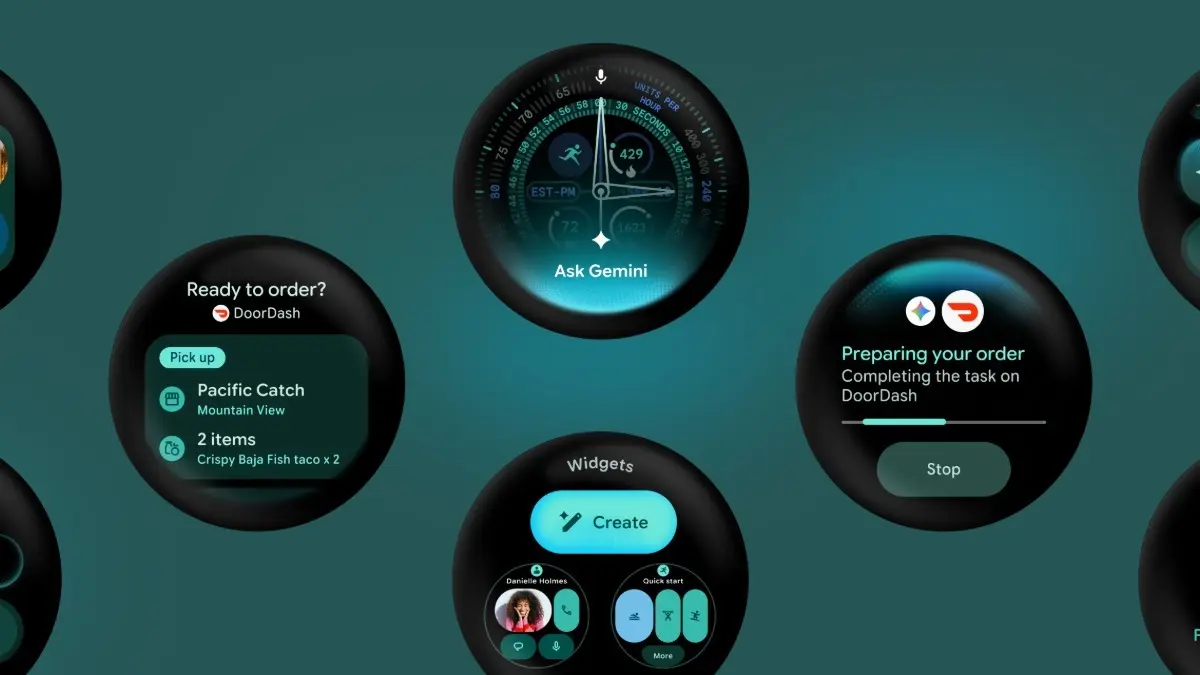
Google has announced Wear OS 7 at Google I/O 2026, marking one of the more substantive updates to its smartwatch platform in recent years. Built on Android 17, the new OS is available immediately for developers via the Wear OS 7 Canary Emulator, with the stable rollout for supported smartwatches expected later this year.
Wear Widgets Replace Tiles
The headline feature is Wear Widgets, and its significance lies in what it replaces. Tiles have been the bread and butter of the Wear OS experience for years. Wear Widgets are designed to be more dynamic and customisable for developers, closely mirroring what can be offered on smartphones. The new widgets support 2x1 and 2x2 layouts matching phone widget standards, and AI-generated widgets created through Android's Create My Widget tool can now sync directly to connected watches. In practical terms, a custom widget you build on your phone, whether for a fitness routine, a sports team's live score, or home automation, can now appear identically on your wrist without separate configuration.
Live Updates on Your Wrist
Advertisement
Another major upgrade is Live Updates, which surfaces persistent real-time information directly on the smartwatch for things like food deliveries, ride tracking, sports scores, and more. Notifications appear on the main watch face as a small icon, expanding to a dynamic card view, with delivery apps showing countdowns and ride apps showing live tracking in the notification card itself. Google first introduced Live Updates on Android phones last year. Its arrival on Wear OS 7 closes the gap between the phone and watch experience considerably.
Gemini Intelligence, With a Catch
Advertisement
Gemini Intelligence is coming to select smartwatches launching later in 2026, but requires Gemini Nano v3 support, the same hardware requirement that currently limits it to a handful of flagship Android phones, meaning only new 2026 watches will qualify. Older watches running Wear OS 7 get all the other features, but not Gemini Intelligence. The likely candidates at launch are the Pixel Watch 4 series and certain Galaxy Watch 8 models.
AppFunctions: Voice-Driven App Control
The AppFunctions API allows developers to integrate their apps with agents and assistants like Gemini, enabling users to complete tasks using voice, often replacing the need for step-by-step manual navigation. For example, to start a run with Samsung Health, users can simply tell Gemini: "Start tracking my run." Users can also order food through DoorDash without opening the app. The API essentially turns Gemini into a wrist-based agent capable of operating third-party apps through natural language, a meaningful step beyond the basic voice command features Wear OS has offered previously.
Battery Life and Fitness Tracking
Wear OS 7 promises 10 per cent better battery life than Wear OS 6 across the board through software-level optimisation alone, before any chipset efficiency gains from newer hardware. On the fitness side, Google has built a universal, standardised workout-tracking experience into Wear OS 7. Exercise apps can choose to use Google's built-in tracking experience and design language instead of building their own, with heart rate monitoring, media controls, and other features included. Google is partnering with ASICS Runkeeper on this initiative. A Remote Output Switcher also allows users to switch audio output between different headphones or speakers while streaming.
What It Means for the Platform
Wear OS 7 signals a deliberate effort to make the watch a first-class citizen in the Android ecosystem rather than a separate silo, with Wear Widgets aligning with the broader Android widget story, AppFunctions plugging into the same agent infrastructure as phones, and Navigation 3 bringing Wear OS in line with mobile Compose patterns. Whether that ambition translates into meaningful adoption will depend on hardware availability and how quickly Samsung and other OEMs push the update to their existing device lineups, a timeline Google has yet to confirm in full.