
White House pushes to extend internet subsidy program in Congress
Congress had earmarked $17 billion to aid lower-income families and those affected by COVID-19 in accessing broadband.
- Tech News
- 2 min read

;'%3e%3cpath%20d='m8,15.99c4.41,0,7.99-3.58,7.99-7.99S12.41,0,8,0,0,3.59,0,8s3.58,7.99,7.99,7.99Z'%20style='stroke:%23fff;%20stroke-miterlimit:10;%20stroke-width:.02px;'/%3e%3cpath%20d='m3.08,3.37l3.82,5.11-3.84,4.15h.87l3.37-3.64,2.72,3.64h2.94l-4.04-5.39,3.58-3.87h-.86l-3.1,3.35-2.5-3.35h-2.94Zm1.27.64h1.35l5.97,7.99h-1.35l-5.97-7.99Z'%20style='fill:%23fff;'/%3e%3c/g%3e%3c/svg%3e)


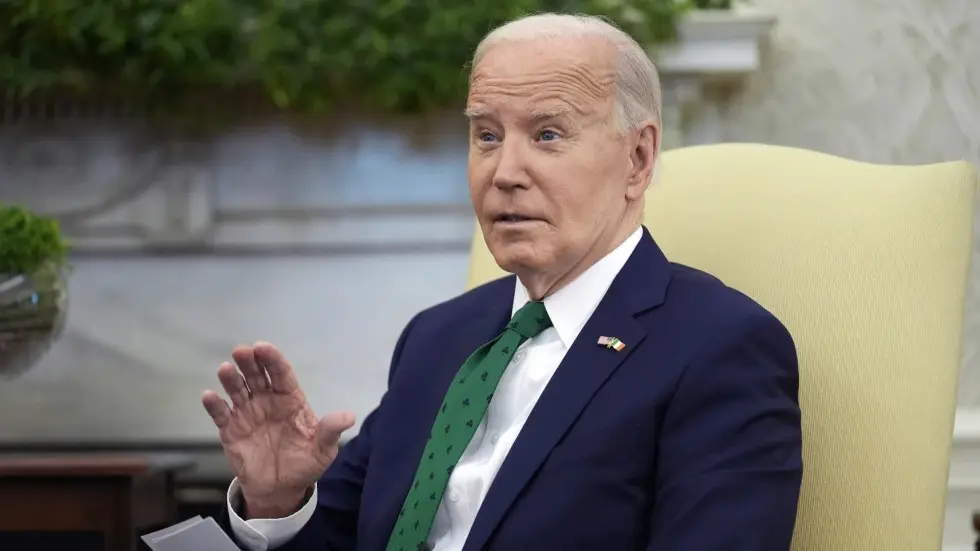
The White House is gearing up to renew its efforts in April to persuade Congress to extend an internet subsidy program used by 23 million American households, just as the current funding teeters on the brink of depletion, officials disclosed.
Back in October, the White House had sought $6 billion to prolong the program until December 2024; however, Congress has yet to allocate the funds, potentially imperilling the internet services of millions of households.
Federal Communications Commission Chair Jessica Rosenworcel informed lawmakers via letter that April marks the final month when participants will receive the full subsidy, with only partial subsidies available in May.
In an earlier move, Congress had earmarked $17 billion to aid lower-income families and those affected by COVID-19 in accessing broadband, offering a $30 per month voucher for internet service.
Advertisement
Rosenworcel emphasized the importance of continuing the program, stating, "We have made significant strides in promoting universal internet access. However, despite widespread support and the critical necessity of upholding this initiative to safeguard internet access for millions of households nationwide, no additional funding has yet been secured."
Enrollment for new users was halted by the FCC on February 8.
Advertisement
Telecom requests to extend program
The White House underscores the efficacy of the plan, known as the Affordable Connectivity Program, noting that it saves users over $500 million per month on their internet bills.
Major telecom companies including Verizon, Comcast, and AT&T have all urged Congress to extend the program.
Bipartisan legislation introduced by Senators Peter Welch, JD Vance, Jacky Rosen, and Kevin Cramer proposes allocating $7 billion for the program. Meanwhile, a one-year funding bill has been presented in the House, backed by 216 members.
Citing a survey, the FCC warned that if the program lapses, more than three-quarters of participating households "would face service disruptions or be forced to alter their existing plans or discontinue service altogether."
(With Reuters inputs)