
Redmi 15C 5G Long-Term Review: Good Option for Budget Buyers
Compared to earlier C-series models, the Redmi 15C 5G brings meaningful upgrades, particularly in performance and battery capacity.
- Tech News
- 6 min read

;'%3e%3cpath%20d='m8,15.99c4.41,0,7.99-3.58,7.99-7.99S12.41,0,8,0,0,3.59,0,8s3.58,7.99,7.99,7.99Z'%20style='stroke:%23fff;%20stroke-miterlimit:10;%20stroke-width:.02px;'/%3e%3cpath%20d='m3.08,3.37l3.82,5.11-3.84,4.15h.87l3.37-3.64,2.72,3.64h2.94l-4.04-5.39,3.58-3.87h-.86l-3.1,3.35-2.5-3.35h-2.94Zm1.27.64h1.35l5.97,7.99h-1.35l-5.97-7.99Z'%20style='fill:%23fff;'/%3e%3c/g%3e%3c/svg%3e)


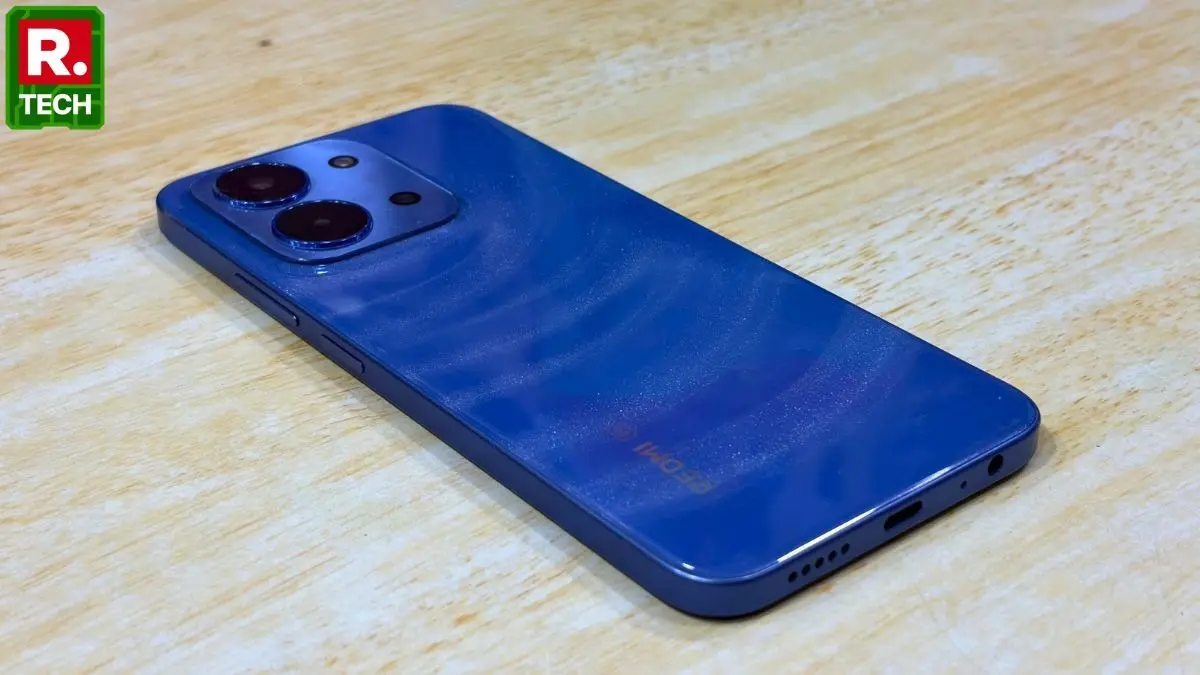
The Redmi 15C 5G strengthens Xiaomi’s hold in the budget smartphone space, aiming at users who want an affordable 5G device that covers the basics well. With a starting price of around ₹13,000, the phone focuses on offering a big display, strong battery life, and stable day-to-day performance without pushing costs too high.
Compared to earlier C-series models, the Redmi 15C 5G brings meaningful upgrades, particularly in performance and battery capacity. It comes with a large 6.9-inch HD+ display with a high refresh rate, is powered by the MediaTek Dimensity 6300 chipset, and houses a 6,000mAh battery. That said, it goes up against several strong alternatives such as the OPPO K14x 5G, iQOO Z10x, Lava Bold 5G, and Realme Narzo 80 Lite 5G, all of which offer similar pricing and competitive specifications.
After spending a significant amount of time with the Redmi 15C 5G, it becomes clear that this is a phone designed with a very specific user in mind. It doesn’t try to be flashy or over-ambitious. Instead, it focuses on delivering reliability, battery endurance, and a large-screen experience at a budget price.

But like most affordable smartphones, it comes with trade-offs. Some are easy to live with, while others might bother more demanding users.
Advertisement
Let’s break it down.
What’s Good
Battery Life
The Redmi 15C 5G is equipped with a 6,000mAh battery, and in long-term use, it consistently proves to be its strongest asset. In real-world conditions, I was able to get over a full day of battery backup of heavy usage, which included gaming, scrolling, binge-watching, and other activities. However, in moderate usage, it can even stretch to nearly two days.
Advertisement
Talking about charging, there is a 33W fast charger, which helps the Redmi 15C 5G to go from 0 to 100 per cent in about an hour, and additionally, it offers a 10W reverse charging, which adds real-world utility for accessories like your wireless neckband, earphones, and other devices. It was a useful feature that we felt when our earbuds ran out of charge, and we used our device to charge them.
Display
The Redmi 15C 5G comes with a 6.9-inch display equipped with up to a 120Hz refresh rate. This display is good, and it immediately stands out in daily usage. During our day-to-day usage, scrolling reels was fluid, and the long videos and binge-watching series and movies gave a good experience. Additionally, reading and browsing content on the news page or on websites was also comfortable.
The Redmi 15C 5G offers a good experience if you are considering this phone for YouTube and OTT consumption, daily social media usage or for casual gaming. While it’s not the sharpest panel and the bezels are slightly bigger, the sheer size and smoothness make it comfortable for everyday tasks.
Performance
The Redmi 15C 5G runs on the MediaTek Dimensity 6300 chipset, which is not the best in its segment, but it gets the basics right. During our long-term usage, there were no delays in app opening, and it opened smoothly, multitasking was manageable, and the gaming experience was also smooth enough. We played BGMI and other games, and we did not feel any lag or a drop in the frame rate. Though it is not a performance-focused chipset, but if you are a student, or upgrading to a smartphone for the first time, then it is a good chipset, and it does enough without frustration.
Hardware Design
The design of the Redmi 15C 5G is simple and practical, as it has a solid build with an IP64 rating for splash resistance. During Holi, we used it to click some images, and some splashes were also made, but it did not affect it. It still runs smoothly. Moreover, it has a side-mounted fingerprint sensor that works reliably, but you have to change the position of your hand every time, which can become quite cumbersome while performing intense tasks or when you are on a two-wheeler. Additionally, the Redmi 15C has a lightweight body, so it does not feel heavy enough for daily use.
Though it doesn’t feel premium, it doesn’t feel cheap either. It’s built to last typical daily wear and tear.
What’s Bad
Low-Resolution Display
Despite its large size and smooth refresh rate, the Redmi 15C has an HD+ (720p) resolution, which proved a noticeable compromise in everyday use. While using the phone for reading articles or browsing, I noticed that the text didn’t appear as sharp as I would expect, especially compared to Full HD panels. While binge-watching web series or movies, the lack of fine detail became more evident, where visuals didn’t look as crisp, particularly in higher-quality content. In 2026, the panel felt a bit dated by current standards, and on a screen as big as 6.9 inches, these limitations stand out more than they would on a smaller device.
Camera Performance
Regarding its camera performance, the Redmi 15C 5G is equipped with a 50MP main camera, but in my experience, its performance feels a bit inconsistent. In good daylight, the phone is capable of capturing decent shots with pleasing colours, and for casual photography, the results are perfectly usable. However, the limitations start to show once you move beyond ideal conditions.
Portrait shots often struggle with edge detection, sometimes blurring parts of the subject unevenly. When zooming in, details tend to soften quickly, and images lose clarity. While taking some low-light shots, the photos come out with less detail, and the noise was pretty evident. Overall, the camera feels more functional than impressive. It is decent to use in daily conditions, but it lacks the sharpness, consistency, and dynamic range you would expect, especially in more challenging lighting situations.
What is the price of the Redmi 15C?
The price of the Redmi 15 C is as follows:
- 4GB+128GB - ₹14,999
- 6GB+128GB - ₹15,999
- 8GB+128GB - ₹16,999
Verdict
Rating: 4/5
The Redmi 15C 5G comes across as a straightforward, no-frills budget smartphone that focuses on getting the basics right. In my usage, it clearly delivers where it matters most for its intended audience, battery life is dependable, the large display adds to everyday convenience, and overall usability remains smooth for routine tasks. At the same time, the compromises are hard to ignore. The lower display resolution affects visual sharpness, the camera performance is average at best, and the software experience isn’t as clean as it could be.
This isn’t a device built for enthusiasts or heavy users who demand high performance or premium features. Instead, it makes more sense for first-time smartphone buyers, those upgrading from much older devices, or users who simply want a phone that lasts long on a single charge. Over extended use, the phone proves to be consistent and reliable, even if it doesn’t feel particularly exciting. It delivers on its core promises, it but doesn’t go much beyond that.