
‘Go Back to India’: Family Running Japanese Curry Restaurant for 18 Years Faces Deportation After Japan Tightens Visa Rules
The Kumar family, originally from India, faces deportation after living in Japan for nearly 30 years and running a curry restaurant for 18 years. Their visa renewal was rejected under Japan’s stricter Business Manager Visa rules, sparking outrage and a petition with over 53,000 signatures.
- Viral News
- 3 min read

;'%3e%3cpath%20d='m8,15.99c4.41,0,7.99-3.58,7.99-7.99S12.41,0,8,0,0,3.59,0,8s3.58,7.99,7.99,7.99Z'%20style='stroke:%23fff;%20stroke-miterlimit:10;%20stroke-width:.02px;'/%3e%3cpath%20d='m3.08,3.37l3.82,5.11-3.84,4.15h.87l3.37-3.64,2.72,3.64h2.94l-4.04-5.39,3.58-3.87h-.86l-3.1,3.35-2.5-3.35h-2.94Zm1.27.64h1.35l5.97,7.99h-1.35l-5.97-7.99Z'%20style='fill:%23fff;'/%3e%3c/g%3e%3c/svg%3e)


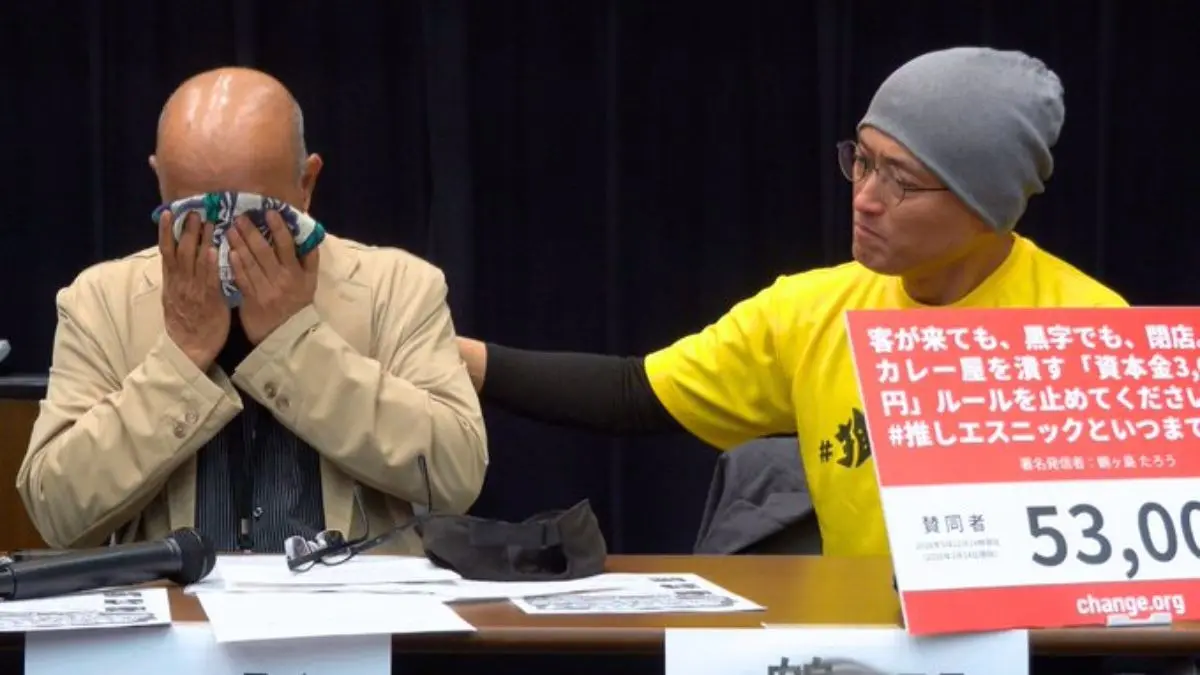
A family that spent three decades building a life in Japan is now facing the possibility of deportation after stricter immigration rules led to the rejection of their visa renewal application, triggering public outrage and a growing online campaign.
The Kumar family, originally from India, has lived in Japan for nearly 30 years and operated an Indian curry restaurant for 18 years in Saitama Prefecture. Known in the local community for their long-standing business and ties with residents, the family says they are now being told to leave the country despite spending most of their lives there.
Their case has become a symbol of the wider impact of Japan’s tougher “Business Manager Visa” rules introduced last October to prevent misuse of the visa system as a pathway to long-term residency.
Speaking at a rally held in Japan’s parliament this week, Indian restaurant owner Manish Kumar said immigration authorities recently denied his visa renewal, forcing him to shut down the restaurant he had operated for nearly two decades.
Advertisement
“My children were born and raised in Japan. They only speak Japanese. Their friends are Japanese. Yet we are being told to return to India,” he said during the event.
“I've done nothing wrong. It's cruel to tell people to return to their home country just because the rules have suddenly changed.”
Advertisement
The emotional case has drawn widespread support online, with more than 53,000 signatures collected through a petition demanding that Japanese authorities reconsider the policy and adopt a more practical evaluation system based on business history, tax contributions and employment records instead of only financial benchmarks.
The controversy comes after Japan sharply tightened requirements for its Business Manager Visa. Under the revised policy, applicants must now show at least ¥30 million in capital - six times higher than the earlier ¥5 million requirement. Business owners must also employ at least one full-time Japanese worker or permanent resident and demonstrate Japanese-language proficiency equivalent to JLPT N2 level.
According to data released by Japan’s Immigration Services Agency (ISA), applications for the visa dropped by 96% after the new rules came into effect. Monthly applications reportedly fell from around 1,700 to just 70.
Japanese officials defended the policy changes, saying they were necessary to stop misuse of the residency system. However, critics argue the rules are disproportionately hurting small foreign-run businesses, especially restaurants and family-owned shops that have operated legally in Japan for years but may not meet the new capital threshold.
Immigration advocates and supporters who attended the parliamentary rally urged authorities to provide more flexibility for long-term residents and businesses with proven records. Activist Taro Tsurugashima, who launched the online petition supporting affected business owners, called for immigration screening to focus on the “substance” of a business rather than just financial capital.
For many supporters, the Kumar family’s situation raises a deeper question about identity and belonging in modern Japan: whether families who have spent decades contributing to society can suddenly lose everything because the rules changed midway through their lives.