
'100 Missiles Worth Of Chemicals, Millions Of SIM Cards': China-to-Bangladesh Cargo Ship Seized In Indonesia
Indonesian Navy has seized a China-to-Bangladesh cargo ship carrying 405 tonnes of sodium perchlorate, a chemical used in rocket and missile propellants. The shipment could potentially make up to 100 missiles and also included millions of unregistered SIM cards.
- World News
- 3 min read


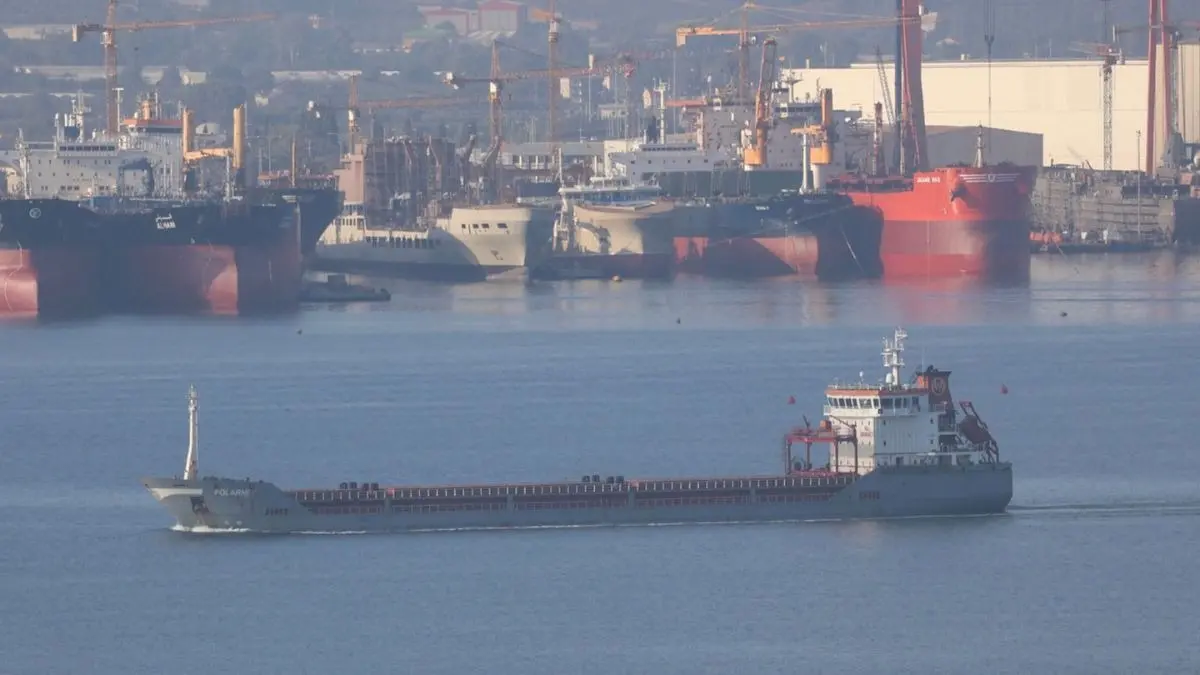
New Delhi: Indonesian naval authorities have seized a cargo ship travelling from China to Bangladesh after discovering 405 tonnes of sodium perchlorate, a chemical used in the manufacture of rocket and missile propellants. The shipment, which also contained millions of unregistered SIM cards, could potentially provide enough material to manufacture up to 100 missiles, according to an Indonesian Navy commander.
The Comoros-flagged vessel, MV Star Line, was travelling from China's Lianyungang Port to Mongla Port in Bangladesh when it was intercepted in Indonesian waters off Belawan, North Sumatra, on November 7.
The Indonesian Navy disclosed the seizure on November 20 during a press briefing at its Regional Command I headquarters in Belawan. The vessel had reportedly been scheduled to reach Mongla Port on November 8.
According to reports, the ship had made an unscheduled stop in Indonesian waters, reportedly citing the need to refuel. Personnel aboard the Indonesian Navy patrol vessel KRI Sigalu-857 noticed irregularities in its navigation patterns and became suspicious after finding that it was operating outside its designated route.
Advertisement
The patrol team reportedly attempted to contact the vessel over radio, but the crew allegedly failed to respond. This prompted naval personnel to intercept the ship and conduct a detailed inspection.
405 Tonnes Of Chemical Found In 15 Containers
An inspection of the ship's 36 containers revealed that 15 were carrying a total of 405 tonnes of sodium perchlorate. Naval personnel also discovered 54 pallets containing millions of unregistered blank 4G LTE SIM cards.
Advertisement
Rear Admiral Denny Septiana, commander of the Indonesian Navy Regional Command I (Koarmada I), said the chemical was a strategic oxidising agent used in the production of rocket and missile propellants. He indicated that the seized quantity could potentially be used to manufacture up to 100 missiles.
Sodium perchlorate is a strong oxidising chemical used in several industrial and laboratory applications. It is also used in the manufacture of rocket propellants, explosives and pyrotechnic products. However, the chemical is not itself an explosive or fuel, although it can support combustion under certain conditions.
The discovery of such a large quantity of the chemical has raised questions about the purpose of the shipment and the identity of the parties expected to receive it in Bangladesh.
Suspicious Documents, Registration Status Under Scanner
Indonesian authorities also found discrepancies in the vessel's registration and shipping documents during the inspection.
According to reports, the ship's documents listed its registration as valid until October 8, 2027. However, its registration status was marked as suspended. Authorities are examining the validity of its navigation permits, administrative records and compliance with regulations governing the transportation of dangerous goods.
The vessel was reportedly carrying the International Maritime Organization (IMO) number 8356962, official number 1902384 and call sign D-6A4384.
The Indonesian Navy has launched an investigation and is questioning the crew to establish the circumstances surrounding the shipment. Authorities are also examining discrepancies in the cargo manifest and the ownership of the seized materials.
The identity of the shipping company, cargo owners and intended recipients has not yet been disclosed.
The identity of the Bangladeshi importer also remains unknown. The Import General Manifest, which normally contains details of importers and the goods being transported, could help establish the ownership of the consignment. However, the ship was intercepted before reaching Bangladesh.
The seizure has drawn attention to the movement of potentially sensitive industrial chemicals through international shipping routes, with Indonesian authorities continuing their investigation into the cargo and the vessel's documentation.