
2023-24 El Nino Likely to Persist, Above Normal Temperatures Expected From March to May: WMO
Scientists say El Nino typically has the greatest impact on the global climate in the second year of its development — 2024, in this instance.
- World News
- 3 min read

;'%3e%3cpath%20d='m8,15.99c4.41,0,7.99-3.58,7.99-7.99S12.41,0,8,0,0,3.59,0,8s3.58,7.99,7.99,7.99Z'%20style='stroke:%23fff;%20stroke-miterlimit:10;%20stroke-width:.02px;'/%3e%3cpath%20d='m3.08,3.37l3.82,5.11-3.84,4.15h.87l3.37-3.64,2.72,3.64h2.94l-4.04-5.39,3.58-3.87h-.86l-3.1,3.35-2.5-3.35h-2.94Zm1.27.64h1.35l5.97,7.99h-1.35l-5.97-7.99Z'%20style='fill:%23fff;'/%3e%3c/g%3e%3c/svg%3e)


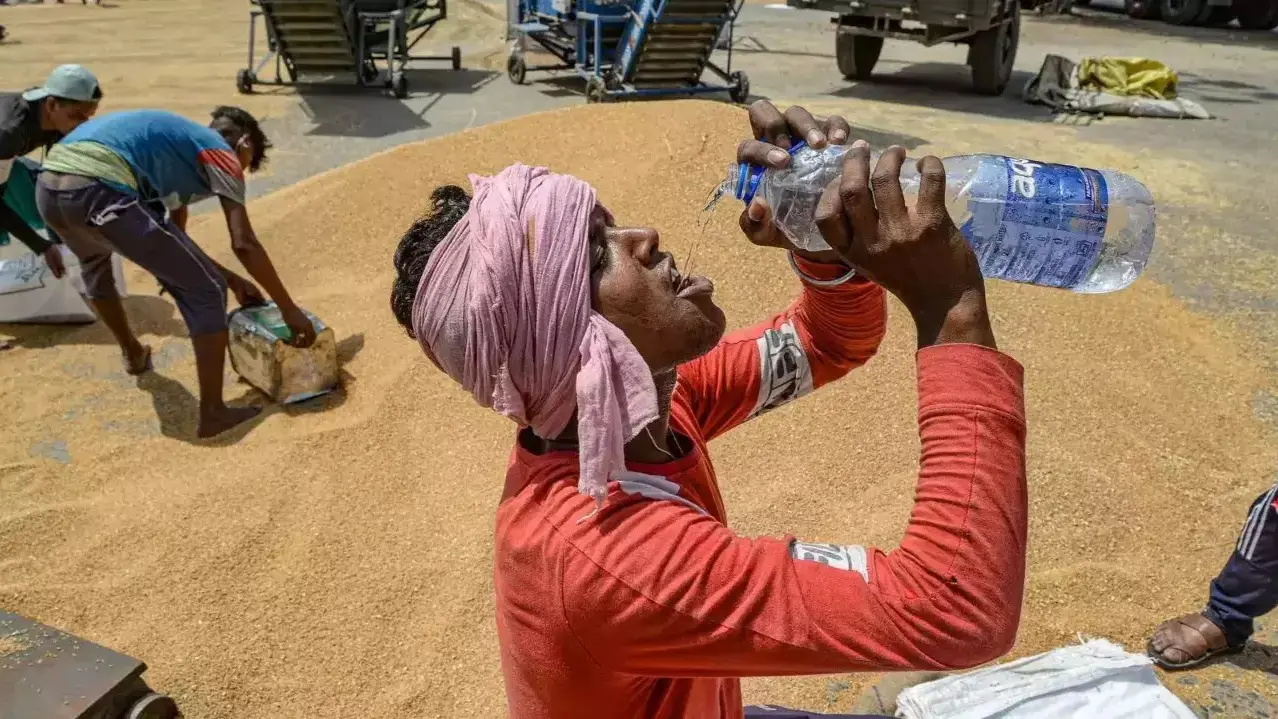
New Delhi: Despite a weakening trend, the 2023-24 El Nino, which peaked as one of the five strongest on record, is expected to continue affecting global temperatures in the coming months, the World Meteorological Organisation said on Tuesday. In its latest update, the WMO said that there is a 60 per cent chance that El Nino conditions could persist during March-May and an 80 per cent chance that neutral conditions (neither El Nino nor La Nina) will set in from April to June.
As such, the WMO has predicted above-normal temperatures over almost all land areas between March and May.
The UN agency noted that while there is a chance of La Nina conditions developing later in the year, the odds for the same presently remain uncertain.
Indian weather experts, in particular, are closely tracking such developments as La Nina conditions setting in by June-August will likely result in a significant increase in monsoon rains this year as compared to 2023.
Advertisement
El Nino — a periodic warming of the ocean surface in the central and eastern tropical Pacific Ocean — occurs every two to seven years on average, and typically lasts nine to 12 months.
It is associated with increased rainfall in the Horn of Africa and the southern US, and unusually dry and warm conditions in Southeast Asia, Australia and southern Africa.
Advertisement
"Every month since June 2023 has set a new monthly temperature record — and 2023 was, by far, the warmest year on record. El Nino has contributed to these record temperatures but heat-trapping greenhouse gases are unequivocally the main culprit," said WMO Secretary-General Celeste Saulo.
"Ocean surface temperatures in the equatorial Pacific clearly reflect El Nino. But sea-surface temperatures in other parts of the globe have been persistently and unusually high for the past 10 months. The January 2024 sea-surface temperature was by far the highest on record for January. This is worrying and cannot be explained by El Nino alone," she said.
Scientists say El Nino typically has the greatest impact on the global climate in the second year of its development — 2024, in this instance.
The continuing, albeit weaker, El Nino and predicted above-normal sea-surface temperatures over much of the global oceans are expected to lead to above-normal temperatures over almost all land areas in the next three months, and influence regional rainfall patterns, according to a Global Seasonal Climate Update issued by the WMO.
The current El Nino event, which developed in June 2023, was at its strongest between November and January. It displayed a peak value of about 2.0 degrees Celsius above the 1991 to 2020 average sea-surface temperature for the eastern and central tropical Pacific Ocean. This made it one of the five strongest El Nino events ever, though it was weaker than the 1997-98 and 2015-2016 events.
El Nino is mainly a seasonal climate phenomenon with climate impacts on seasonal climate averages but can make extreme weather and climate events more likely in certain regions.
The WMO said the seasonal forecasts are found to be more accurate during El Nino and La Nina events, particularly in the tropics, and this emphasises the pivotal role of early warnings to support decision-making and enhance preparedness and anticipatory action.
"El Nino events have a major impact on societies and economies. Accurate seasonal forecasts from the WMO community helped countries prepare in advance to try to limit the damage in climate-sensitive sectors like agriculture, water resources and health. Early warnings of weather and climate extremes associated with El Nino have saved countless lives," said WMO's Saulo.
With inputs from PTI.