
'America is Responsible for Any Violation by Its Allies,' Says Iran Ahead of June 19 MoU Signing in Switzerland
Iranian Foreign Ministry spokesperson Esmail Baghaei said the United States has a responsibility to uphold its commitments under the MoU and ensure that its allies in the region do not undermine the agreement.
- World News
- 4 min read

;'%3e%3cpath%20d='m8,15.99c4.41,0,7.99-3.58,7.99-7.99S12.41,0,8,0,0,3.59,0,8s3.58,7.99,7.99,7.99Z'%20style='stroke:%23fff;%20stroke-miterlimit:10;%20stroke-width:.02px;'/%3e%3cpath%20d='m3.08,3.37l3.82,5.11-3.84,4.15h.87l3.37-3.64,2.72,3.64h2.94l-4.04-5.39,3.58-3.87h-.86l-3.1,3.35-2.5-3.35h-2.94Zm1.27.64h1.35l5.97,7.99h-1.35l-5.97-7.99Z'%20style='fill:%23fff;'/%3e%3c/g%3e%3c/svg%3e)


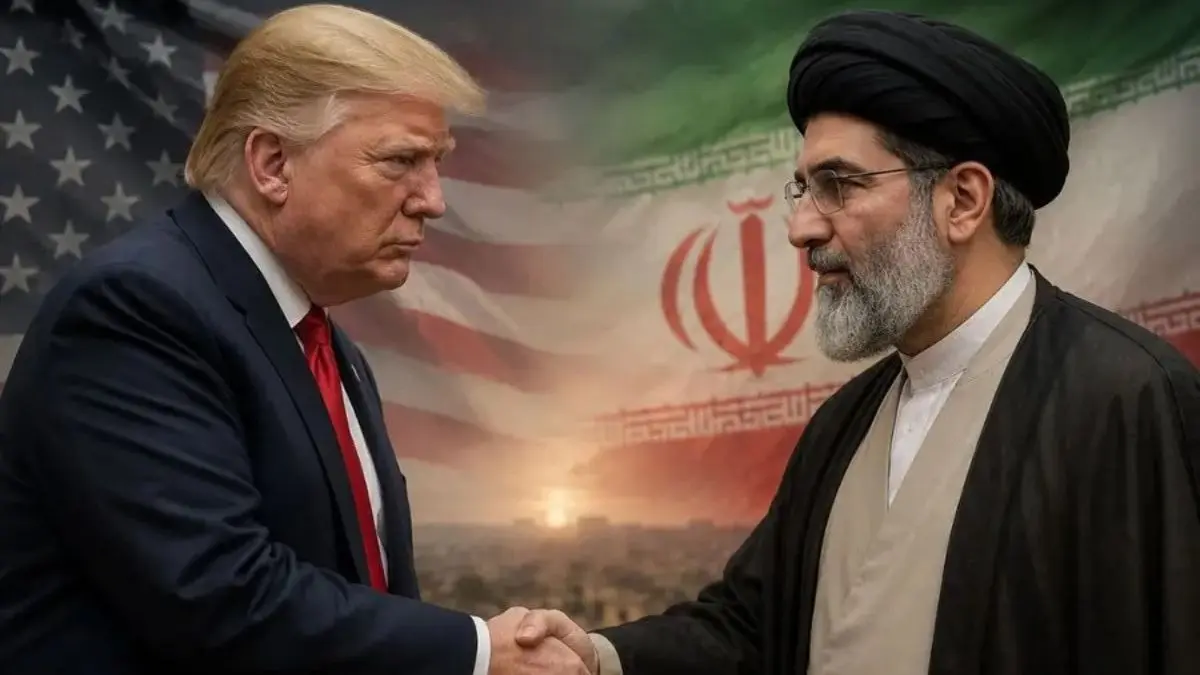
Iran on Monday asserted that Washington would be held accountable for any violation of the agreement by either the United States itself or its regional allies.
Iranian Foreign Ministry spokesperson Esmail Baghaei said the United States has a responsibility to uphold its commitments under the Memorandum of Understanding (MoU) and ensure that its allies in the region do not undermine the agreement.
"The U.S. is committed and has a duty to honour its side of the memorandum of understanding. The American side is responsible for any breach of agreement by other players or U.S. allies in the region," Baghaei said during his weekly press briefing in Tehran.
The statement came amid growing questions over the implementation of the proposed deal, which is expected to formally be signed later this week.
Advertisement
Peace Deal Aims to End Conflict
The remarks come after Iran and the United States announced a tentative agreement designed to end months of conflict and pave the way for wider negotiations on Iran's nuclear programme and sanctions relief.
The proposed MoU, brokered primarily through Pakistani mediation efforts, begins with the simultaneous lifting of Iran's restrictions in the Strait of Hormuz and the removal of the US naval blockade on Iranian ports.
Advertisement
Following these initial measures, both sides are expected to enter a 60-day negotiation period focused on Tehran's nuclear programme and the potential easing of sanctions.
Lebanon Could Become a Major Test for the Agreement
While both sides have projected the framework as a diplomatic breakthrough, concerns remain over whether the agreement can withstand regional tensions, particularly in Lebanon.
Iran has repeatedly maintained that any effort to end the broader conflict must include a halt to fighting in Lebanon. However, fresh uncertainty emerged after Israel's Defence Minister stated that Israeli forces would not withdraw from territories seized in Lebanon during operations against the Iran-backed Hezbollah group.
Israel, which joined the United States in launching military operations against Iran in February, is not a signatory to the agreement.
Prime Minister Benjamin Netanyahu's office has also indicated that Israel will continue taking measures it considers necessary for its security.
The developments have raised concerns that actions by regional players could complicate implementation of the proposed deal.
Iran Says Strait of Hormuz Services May Incur Charges
Baghaei also addressed reports regarding navigation through the Strait of Hormuz after the agreement takes effect.
He clarified that Iran does not intend to impose tolls but may charge for services provided to vessels transiting through the strategic waterway.
"We've always said we're not after charging tolls, but in exchange for services we will provide, including navigation, environmental protection services, insurance services and other services offered by Iran and Oman, necessary costs will be outlined and received," he said.
This comes after Trump declared on Sunday that the Strait of Hormuz would reopen and remain 'permanently toll-free'. However, Iran has indicated on Monday that it intended to charge fees for unspecified services in the strait.
Nuclear Issues Deferred to Future Talks
Addressing speculation regarding Iran's nuclear programme and its stockpile of enriched uranium, Baghaei indicated that those matters have not yet been discussed in detail.
"I think they once entered Iran and saw its outcome. So if they are wise they will not repeat that. Second, in the text of the memorandum of understanding, we have not discussed the details of the nuclear issue," he said.
Although the broad framework has been announced, the complete text of the Memorandum of Understanding has not yet been made public.
The agreement is scheduled to be formally signed on June 19 in Switzerland. If implemented successfully, it could lead to the reopening of the Strait of Hormuz, easing of sanctions on Iran and the launch of a new diplomatic process aimed at addressing one of the world's most complex geopolitical disputes.