
South Korean intelligence accuses Russia of helping North to launch spy satellite
Days after North Korea launched its satellite, the South Korean spy agency said that Russia was involved in the whole operation.
- World News
- 3 min read

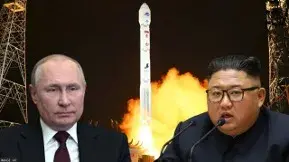
Days after North Korea launched its satellite, the South Korean spy agency said that Russia was involved in the whole operation. The South Korean National Intelligence Service (NIS) revealed Pyongyang is believed to have received technological assistance from Russia, news outlet Yonhap reported. The intelligence agency gave its assessment during a closed-door meeting of the parliamentary intelligence committee which was held on Thursday. During the meeting, Rep. Yoo Sang-bum of the ruling People Power Party said the spy satellite had successfully entered Earth’s orbit.
“We believe there has been Russia's help behind the success," Yonhap reported the NIS as saying. The intelligence suggested that after the September meeting between North Korean leader Kim Jong Un and Russian President Vladimir Putin, Pyongyang provided data on its two failed satellite launch attempts. In return, Moscow gave their analysis of why the two operations failed along with the areas for improvement. "During the North-Russia summit, Putin publicly expressed his commitment to providing support for North Korea's launch vehicles. There is intelligence that the North exchanged blueprints and data related to the vehicles used in its first and second attempts and Russia provided its analysis," Yoo said during the Thursday meeting.
Is North Korea planning to conduct a nuclear test?
During the parliamentary committee meeting, the South Korean agency noted that Pyongyang is believed to be in the early stages of developing a solid-fuel intercontinental ballistic missile (ICBM). The intelligence body noted there are no signs that North Korea will conduct a “nuclear test” in the near future. "We do not see a high chance of the North conducting a nuclear test in 2023. However, there is a possibility of the North carrying out a nuclear test any time in 2024 depending on leader Kim Jong-un's decision," the NIS reportedly said in its intelligence update. The agency concluded its update by saying that North is unlikely to conduct another satellite launch this year.
South Korea leans into self-defence
On Thursday, South Korean Defence Chief Shin Won-Sik said Seoul's partial suspension of a 2018 inter-Korean tension reduction deal is a “proportional response” and “a minimal defensive measure” against Pyongyang, following the satellite launch. Just hours after the satellite launch, South Korean President Yoon Suk Yeol approved a motion to suspend a clause in the accord that calls for setting up a no-fly zone around the Military Demarcation Line that separates the two Koreas. “North Korea's launch of what it calls a military spy satellite on Nov. 21 is a clear violation of the U.N. Security Council resolutions and a serious provocation against the international community, once again showing it has no will to abide by the military agreement," Shin said in a parliamentary session. "Therefore, the partial suspension of the agreement is an essential measure to protect people's lives and safety. It is a corresponding response to North Korea's provocation and a minimal defensive measure," he added. In response to the satellite launch, the country’s military mentioned that it will resume aerial surveillance operations near the border region.