
Augsburg Train Station Shut After Explosion, Suspicious Object Found Amid Germany-Russia Tensions
Augsburg's main train station was shut after an early-morning explosion and a second suspicious object was found, amid rising Germany-Russia tensions.
- World News
- 4 min read

;'%3e%3cpath%20d='m8,15.99c4.41,0,7.99-3.58,7.99-7.99S12.41,0,8,0,0,3.59,0,8s3.58,7.99,7.99,7.99Z'%20style='stroke:%23fff;%20stroke-miterlimit:10;%20stroke-width:.02px;'/%3e%3cpath%20d='m3.08,3.37l3.82,5.11-3.84,4.15h.87l3.37-3.64,2.72,3.64h2.94l-4.04-5.39,3.58-3.87h-.86l-3.1,3.35-2.5-3.35h-2.94Zm1.27.64h1.35l5.97,7.99h-1.35l-5.97-7.99Z'%20style='fill:%23fff;'/%3e%3c/g%3e%3c/svg%3e)


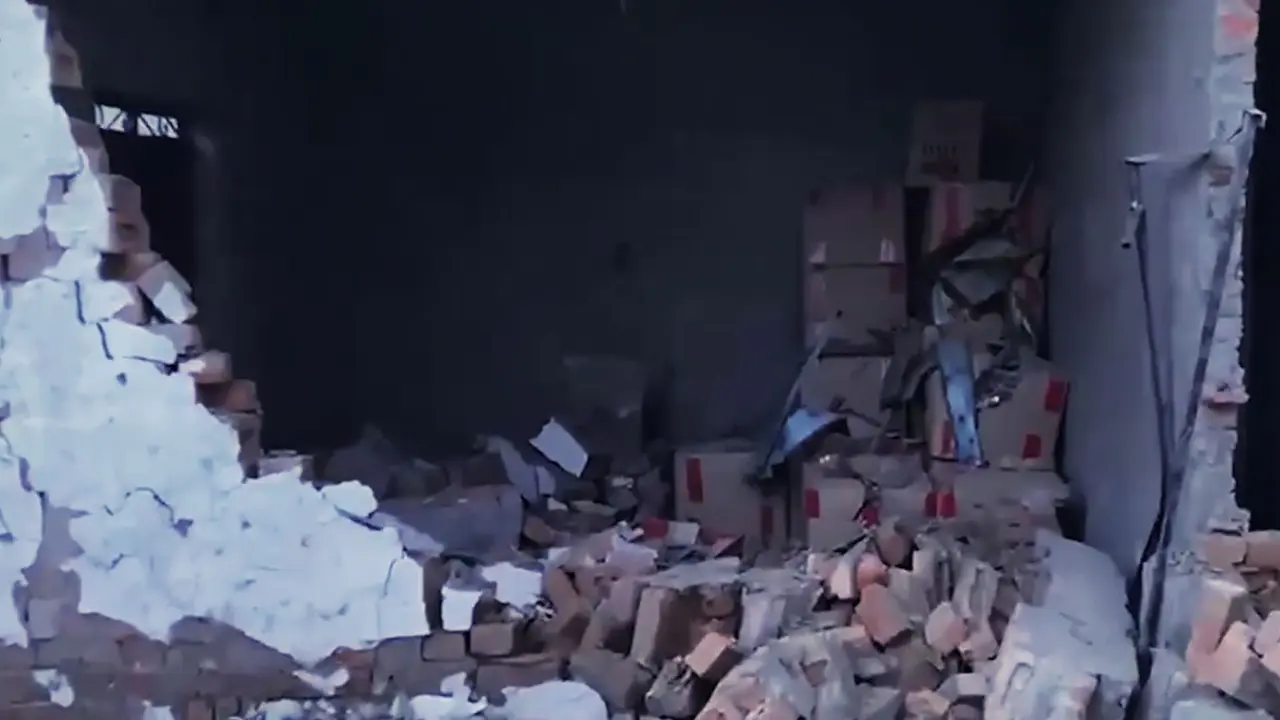
Augsburg: A major train station in the southern German city of Augsburg was shut down on Wednesday morning after an explosion near the premises and the discovery of another suspicious object. The incident comes a day after Germany publicly accused Russia of being behind an attempted drone attack at Leipzig airport.
The blast took place near Augsburg's main station at around 3:15 am local time, according to police. Two people suffered minor injuries, described as blast-related acoustic trauma, while the explosion also shattered windows in the area.
Authorities later found another object near the site that had not exploded. Explosives experts from Bavaria's state criminal police office were called in to examine it. The station building and platforms were closed as a precaution, while train services were diverted. Roads and public transport around the station were also affected as police sealed off several nearby streets and began investigating the incident.
Augsburg, which has a population of around 308,000, is located roughly 48 miles northwest of Munich. Authorities had not established the cause of the explosion or indicated whether it was linked to any other incident as of Wednesday morning.
Advertisement
What happened near Augsburg station?
Police are investigating how the unidentified object came to explode near the city's main railway station. The discovery of a second suspicious object has added to the security concerns, although authorities have not yet said whether the two objects were connected.
The second object did not detonate and was left for specialist teams to examine. With the investigation continuing, officials have so far stopped short of identifying a possible motive or suspect.
Advertisement
The incident caused significant disruption around one of Augsburg's key transport hubs, with both railway operations and local traffic affected during the police operation.
Why is the blast drawing attention in Germany?
The explosion comes at a particularly sensitive time for Germany, following Berlin's decision to publicly blame Russia for an attempted attack at Leipzig airport. On Tuesday, Interior Minister Alexander Dobrindt accused Moscow of being behind a drone operation at the airport last month. He described the wider activity as "daily hybrid warfare" against Germany and said it marked the first time Berlin had formally attributed an attempted attack on a German airport to Moscow.
The Leipzig incident took place on August 4. A quadcopter carrying around 800 grams of PETN explosive collided with the wing of an Antonov Airlines An-124 cargo aircraft while it was on the ground. The explosive device did not detonate.
The aircraft was operating as part of NATO's Strategic Airlift International Solution logistics network, with Leipzig/Halle serving as a hub for heavy cargo headed towards NATO's eastern flank. Later that night, a Boeing 757 freighter, which had been diverted after the airport was closed, was also involved in a second drone collision.
German authorities said their attribution of the Leipzig incident came only after weeks of investigation. Officials pointed to intelligence findings as well as the nature and pattern of the operation before concluding that agents acting for Russian state entities were responsible.
Germany announces further measures against Moscow
Berlin announced additional steps against Russia following the Leipzig allegations.
Foreign Minister Johann Wadephul said Germany would shut Russia's consulate-general in Bonn on September 18. Berlin will also terminate the contract for Russia House, a Russian state-backed cultural institution in the German capital.
Russia's ambassador was summoned by German authorities for a formal diplomatic reprimand. Moscow, however, rejected the accusations, with its embassy in Berlin calling them “unsubstantiated, absurd and contrary to common sense.”
Germany has also announced plans to tighten entry rules for Russian citizens. Berlin said it would work with other European Union countries to increase pressure on a network of ageing tankers that Western governments accuse Russia of using to transport oil while bypassing sanctions.
The Augsburg explosion has so far not been linked by German authorities to the Leipzig airport incident or to Russia. The investigation into the blast and the second suspicious object remains ongoing.