
China Sends Veiled Warning to US And Israel, Backs Iran’s Sovereignty Amid Escalating Conflict
Chinese Foreign Minister Wang Yi spoke with Iranian counterpart Seyed Abbas Araghchi, emphasizing support for Iran amid escalating tensions due to US military strikes. Acknowledging Iran's self-defense rights, Wang urged the US and Israel to cease military actions to prevent conflict spread.
- World News
- 3 min read

;'%3e%3cpath%20d='m8,15.99c4.41,0,7.99-3.58,7.99-7.99S12.41,0,8,0,0,3.59,0,8s3.58,7.99,7.99,7.99Z'%20style='stroke:%23fff;%20stroke-miterlimit:10;%20stroke-width:.02px;'/%3e%3cpath%20d='m3.08,3.37l3.82,5.11-3.84,4.15h.87l3.37-3.64,2.72,3.64h2.94l-4.04-5.39,3.58-3.87h-.86l-3.1,3.35-2.5-3.35h-2.94Zm1.27.64h1.35l5.97,7.99h-1.35l-5.97-7.99Z'%20style='fill:%23fff;'/%3e%3c/g%3e%3c/svg%3e)


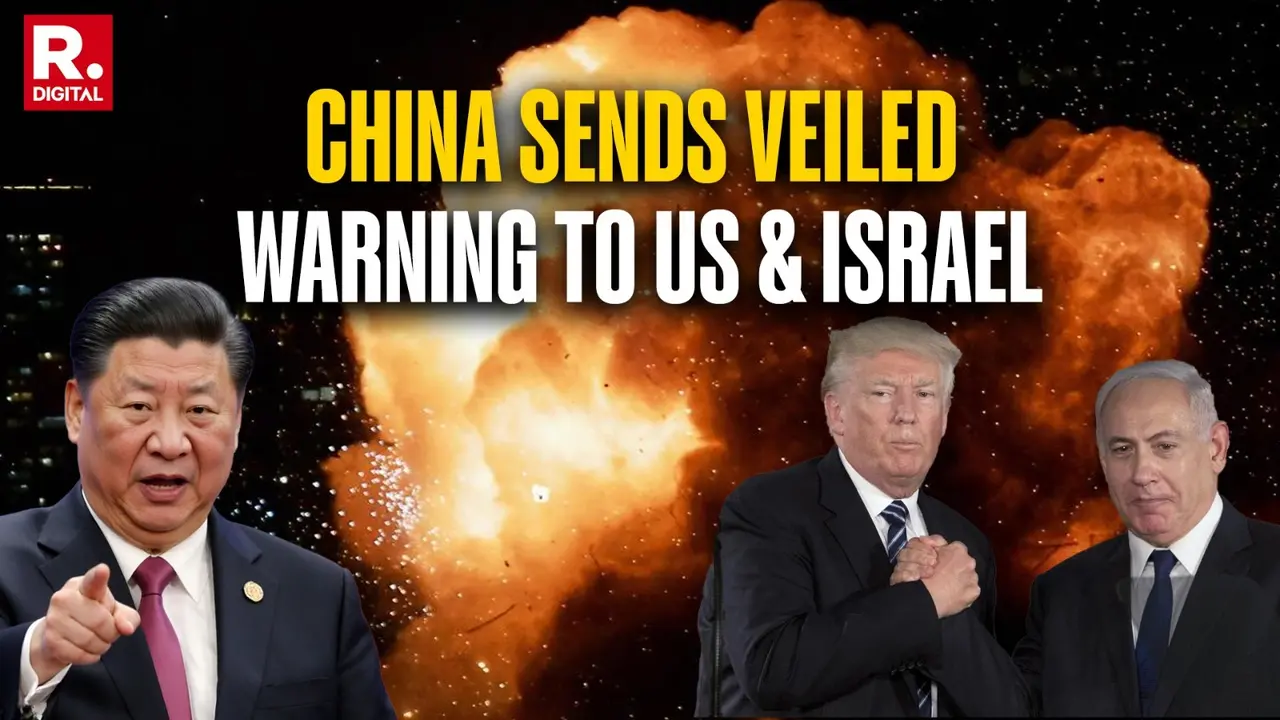
New Delhi: n a significant diplomatic move amid the deepening West Asia crisis, Chinese Foreign Minister Wang Yi held a phone conversation with his Iranian counterpart Seyed Abbas Araghchi on March 2, signalling Beijing’s strong backing for Tehran and issued a veiled warning to the United States and Israel.
The call came as tensions escalated following fresh US military strikes on Iranian targets, developments that Tehran has described as a “second war” launched during ongoing negotiations.
China Backs Iran’s Sovereignty
According to the statement from the Chinese Foreign Ministry, Araghchi briefed Wang on the latest developments in Iran, accusing Washington of violating international law and crossing Tehran’s red lines despite what he described as positive progress in recent negotiations.
Araghchi reportedly told Wang that Iran had “no choice but to defend itself at all costs”, while expressing hope that China would continue to play a proactive role in preventing further regional escalation.
Advertisement
Wang Yi reiterated China’s “principled position”, stressing that Beijing values its traditional friendship with Tehran and supports Iran in safeguarding its sovereignty, security, territorial integrity, and national dignity. He also affirmed China’s backing for what he termed Iran’s “legitimate and lawful rights and interests”.

Call for Immediate Ceasefire
Wang urged the United States and Israel to “immediately cease military actions” to prevent the conflict from spreading across the Middle East.
Advertisement
China’s Foreign Ministry went further, stating that US and Israeli military operations in Iran risk expanding the conflict and emphasizing the need to respect Iranian territorial sovereignty. While Beijing did not directly threaten action, the language reflected a sharpened tone compared to previous statements.
China has consistently positioned itself as advocating de-escalation in West Asia, particularly given its strategic energy interests and its expanding political footprint in the region.
In a separate phone call with Oman's foreign minister, Badr Albusaidi, Wang accused the United States and Israel of "violating the purposes and principles of the UN charter" by “deliberately instigating a war against Iran”.
"China is also willing to play a constructive role, including upholding justice, striving for peace, and stopping the war through the platform of the UN Security Council," Wang told Albusaidi, as cited by CCTV.
According to Al Arabiya English, in another conversation with France's Foreign Minister Jean-Noel Barrot, Wang warned that the world risked a "regression to the law of the jungle".
"Major powers cannot arbitrarily attack other countries based on their military superiority," Wang said, according to CCTV. He added that "the Iranian nuclear issue must ultimately return to the track of political and diplomatic settlement."
Security of Chinese Nationals Highlighted
Amid the volatile situation, Wang also underlined the importance of ensuring the safety of Chinese citizens and institutions in Iran. He expressed confidence that Tehran would maintain national and social stability while addressing concerns of neighboring countries.
Araghchi, in response, assured that Iran would do its utmost to guarantee the security of Chinese personnel and assets.
Strategic Significance
The conversation underscores Beijing’s growing engagement in West Asian geopolitics at a time of intensifying confrontation between Washington and Tehran. China has previously called for dialogue and restraint, but the latest remarks indicate a firmer stance against unilateral military action.
With the region on edge and fears of a broader conflict mounting, China’s diplomatic intervention signals that the crisis is no longer confined to regional actors but has taken on wider geopolitical dimensions.