
China denies WHO's request to inspect bat caves, animal farms for COVID-19 probe: Report
As China remains in the centre of the COVID-19 origin probe, Beijing drew more scrutiny for rejecting WHO's request to inspect bat caves and animal farms.
- World News
- 3 min read

;'%3e%3cpath%20d='m8,15.99c4.41,0,7.99-3.58,7.99-7.99S12.41,0,8,0,0,3.59,0,8s3.58,7.99,7.99,7.99Z'%20style='stroke:%23fff;%20stroke-miterlimit:10;%20stroke-width:.02px;'/%3e%3cpath%20d='m3.08,3.37l3.82,5.11-3.84,4.15h.87l3.37-3.64,2.72,3.64h2.94l-4.04-5.39,3.58-3.87h-.86l-3.1,3.35-2.5-3.35h-2.94Zm1.27.64h1.35l5.97,7.99h-1.35l-5.97-7.99Z'%20style='fill:%23fff;'/%3e%3c/g%3e%3c/svg%3e)


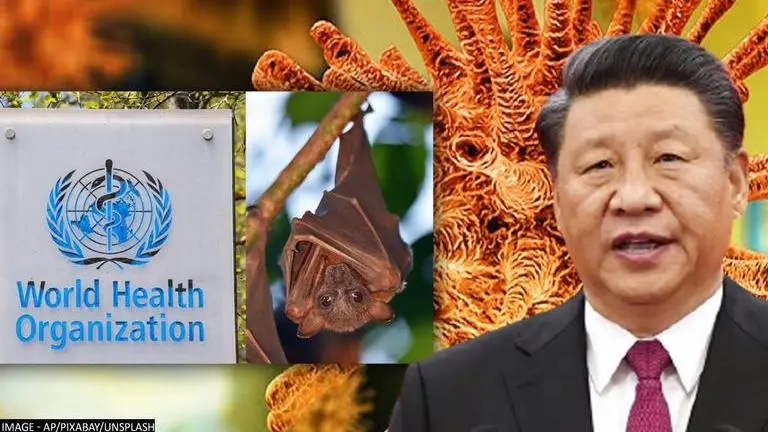
As China continues to remain in the centre of the COVID-19 origin probe, Beijing has drawn more scrutiny for rejecting the World Health Organization’s (WHO) request to inspect the bat caves and animal breeding farms to enhance knowledge about the Coronavirus. As per an exclusive report by Washington Post, Beijing denied WHO’s request to access China’s wildlife farming areas like Enshi even though the UN health agency called it a crucial step in the search for the origins of the novel Coronavirus.
The media outlet has stated that following the publication of the report, WHO spokesperson Tarik Jasarevic noted that the UN health agency has suggested the requirement to trace back the wildlife trade from markets in Wuhan, but there was no specific request to visit the Hubei area. These so-called ‘bat caves’ reportedly refer to the hundreds of caves spread throughout the mountains of Enshi prefecture in China which is also the nation’s agricultural corner in Hubei province.
Reportedly, out of those hundreds of caves, Tenglong or ‘flying dragon’ is the most majestic one as it is China’s largest karst cave system spanning 37 miles of passages that contain numerous bats. Notably, there are other small farms in its vicinity that collectively house hundreds of other wild mammals such as civets, ferret badgers and racoon dogs before the COVID-19 pandemic rocked the world. Moreover, Enshi is just a six-hour drive away from Wuhan, where the Coronavirus was first detected back in December 2019.
Citing its trip to Enshi, Washington Post stated that there was human traffic into the caves including domestic tourism, spelunking and even villages that were replacing a drinking water pump inside a cave, at the time. From the entrances, the 'defunct wildlife farms were only a mile away. Scientists briefed on media outlet’s reporting have said that it documents a ‘plausible pathway’ for the pathogen might have spread from bats to other animals before ultimately reaching the Wuhan markets.
Advertisement
US probe said Coronavirus is not a biological weapon
In the earliest days of the COVID-19 pandemic, when the world was scrambling its efforts to tackle what was emerging to be a global health emergency, the animal markets in Wuhan have been under fire. Even US President Joe Biden-directed 90-day investigation into the origins of Coronavirus concluded that Coronavirus was not a biological weapon but it might have been caused due to natural transmission or due to the lab leak.
China’s government and the WHO has said that the likeliest origin of the COVID-19 pandemic is natural transmission through wildlife. However, not enough progress has been made in establishing a definitive natural pathway from a bat to a Wuhan market. Even conflicting theories including a lab leak are yet to be proven because of China’s refusal to grant access to the scientists, stated the report.