
'Discriminatory ban': China cries foul after Australia bans TikTok from government phones
China has criticised Australia's decision to ban TikTok from all federal government owned devices. China argued that Australia should treat all firms fairly.
- World News
- 3 min read


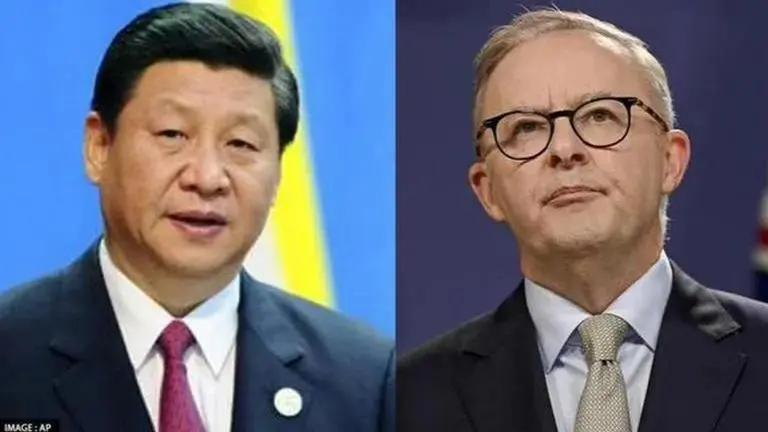
China has criticised Australian government's decision to ban TikTok from all federal government owned devices. China argued that Australia should treat all firms fairly. In China's estimation, Australia singled out TikTok. The Chinese government has claimed that Canberra's decision will undermine Australian national security. "Australia treated TikTok differently from other social media platforms and adopted discriminatory restrictive measures, which are not conducive to maintaining Australia's national security," read a statement from China's Ministry of Commerce.
According to a report from 9News, Chinese foreign ministry spokesperson Mao Ning has said that "China always believes that digital security should not be used as a tool to suppress foreign companies in an overstretch of the concept of national security and abuse of state power. We urge Australia to earnestly observe the rules of market economy and the principle of fair competition, and provide a fair, transparent and non-discriminatory environment for Chinese companies."
Australia isn't the only nation concerned about TikTok
Lee Hunter, TikTok's general manager for Australia and New Zealand, has claimed that the decision was driven by politics instead of facts. "Again, we stress that there is no evidence to suggest that TikTok is in any way a security risk to Australians and should not be treated differently to other social media platforms. Our millions of Australian users deserve a government which makes decisions based upon facts and who treats all businesses fairly, regardless of country of origin," Lee said.
It isn't clear why a decision taken to safeguard Australia's national security interest will undermine it. Australia isn't the first country which has decided to ban TikTok. Many other nations have taken the same decision, such as the US, the UK, Canada and New Zealand. It is worth mentioning that India has banned TikTok completely.
Advertisement
Why are nations worried about TikTok?
TikTok is a social media platform that has gained immense popularity worldwide, particularly among the younger generation. While it is primarily used for entertainment and fun, there have been concerns raised by several countries about its potential impact on national security and privacy.
Here are some reasons why nations are concerned about TikTok:
Advertisement
Data Security: One of the major concerns about TikTok is the data it collects from its users. TikTok has access to a vast amount of personal information, including location data, browsing history, and device information. There have been concerns that this data could be shared with the Chinese government, which could use it for intelligence-gathering purposes.
National Security: Several countries, including the United States, India, and Australia have expressed concerns about the potential threat TikTok could pose to national security. There have been allegations that the app could be used to spread propaganda, disinformation, or even conduct espionage activities.
Influence Operations: There have been concerns that TikTok could be used by foreign actors to influence public opinion, spread misinformation or propaganda, and even interfere in political elections. This is a significant concern for countries that are highly dependent on social media for political discourse.
User Privacy: Another major concern about TikTok is the lack of transparency about its data collection and sharing practices. There have been allegations that the app has been collecting data on users without their consent, and even sharing it with third-party companies.
Censorship: There have been concerns about TikTok's content moderation policies and censorship practices. There have been reports of the app censoring content related to sensitive topics such as Tibet, Hong Kong, and Xinjiang.