
‘Chose Flydubai For Tel Aviv Route’: Omani Co-Pilot Planned To Kill Indian Captain, Crash Flight At Ben Gurion
Omani co-pilot Hammam al-Hammami allegedly chose Flydubai for its Israel routes, planned to kill Captain Smit Machchhar and crash the flight at Ben Gurion Airport.
- World News
- 5 min read

;'%3e%3cpath%20d='m8,15.99c4.41,0,7.99-3.58,7.99-7.99S12.41,0,8,0,0,3.59,0,8s3.58,7.99,7.99,7.99Z'%20style='stroke:%23fff;%20stroke-miterlimit:10;%20stroke-width:.02px;'/%3e%3cpath%20d='m3.08,3.37l3.82,5.11-3.84,4.15h.87l3.37-3.64,2.72,3.64h2.94l-4.04-5.39,3.58-3.87h-.86l-3.1,3.35-2.5-3.35h-2.94Zm1.27.64h1.35l5.97,7.99h-1.35l-5.97-7.99Z'%20style='fill:%23fff;'/%3e%3c/g%3e%3c/svg%3e)


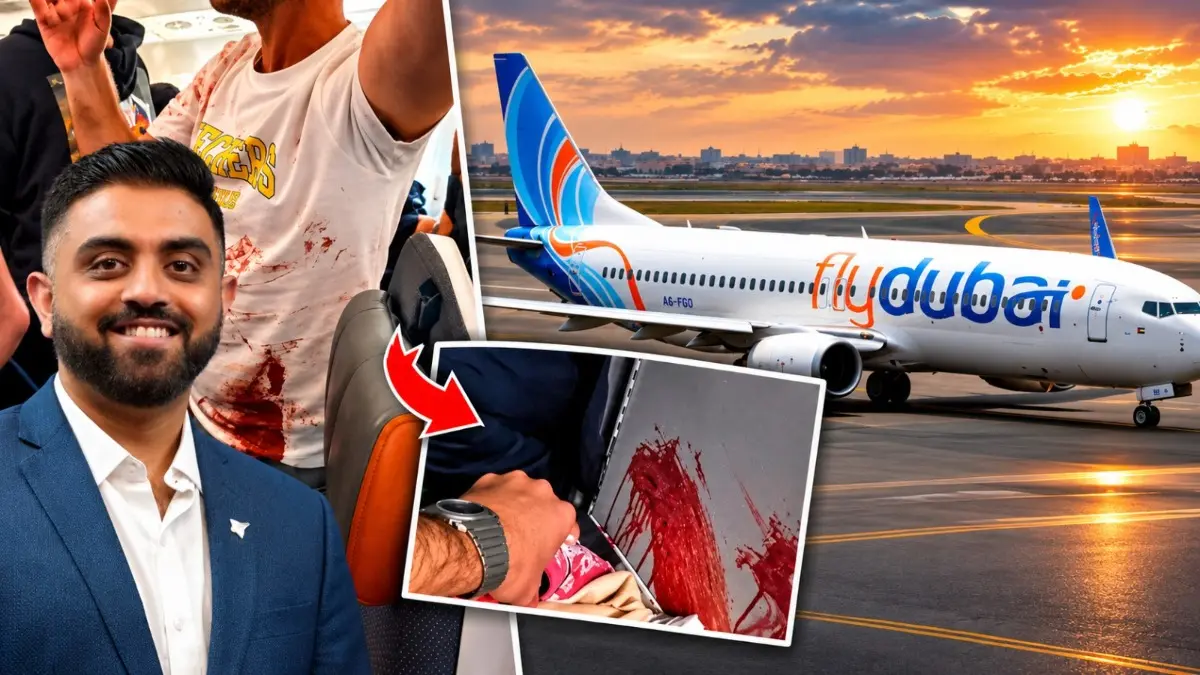
New Delhi: The Omani co-pilot accused of attacking Indian Captain Smit Machchhar inside the cockpit of Flydubai flight FZ1073 had allegedly joined the airline because it operated flights to Israel, and had planned to kill the captain before crashing the passenger aircraft at Ben Gurion Airport, according to a latest report.
Hammam al-Hammami allegedly told investigators that he had identified Flydubai after looking for an airline that flew to Tel Aviv. His reported plan was to kill Machchhar inside the cockpit, take control of the aircraft and crash it into a building or another aircraft at Israel's Ben Gurion Airport.
“I looked into which airline flies to Tel Aviv. That’s why I chose flydubai. I planned it even before I was accepted,” he said.
Israeli media reports said the alleged plan had been in place even before al-Hammami joined Flydubai. Channel 13 reported that he had selected the airline because of its Israel route.
Advertisement
Planned To Kill Indian Captain, Take Over Cockpit
According to the report in Italian newspaper Corriere della Sera, al-Hammami had allegedly planned to kill Machchhar and then take control of the aircraft. He is said to have initially targeted a skyscraper in Tel Aviv, while another reported version of the plan involved crashing the aircraft into a building or another plane at Ben Gurion Airport.
Investigators were also told that al-Hammami had used earlier trips to Israel to gather information and prepare for the alleged attack. He had reportedly planned to carry out the attack in July but changed his plans after becoming friendly with one of the crew members. If he could not reach Israel, his alleged alternative was to crash the aircraft into a US military base in Jordan.
Advertisement
A detailed reconstruction of the cockpit attack by Corriere della Sera was based on testimonies from people involved in the incident, reports submitted by the crew to aviation authorities, accounts from airport personnel and air traffic controllers, and information from specialised aviation platforms.
According to the report, al-Hammami allegedly pretended to pray before taking the crash axe and attacking Machchhar from behind. The Indian captain initially thought he had been hit by a broken part of the aircraft. He soon realised that he was being attacked.
Despite suffering serious head injuries, a badly injured arm and heavy blood loss, Machchhar managed to force open the cockpit door. Passengers rushed inside, restrained al-Hammami and helped regain control of the aircraft.
16,000-Foot Plunge Raises New Questions
The attack is said to have happened when the plane was flying over Jordan. During the incident, al-Hammami is said to have tried to take control of the plane's systems again after his first attempt to take over the flight was stopped.
According to Corriere della Sera, he turned off the autopilot and moved the control stick, causing the plane to start descending quickly. The plane lost about 16,000 feet in roughly 30 seconds and sped up to over 970 kmph, which is said to have caused damage to the tail rudder.
The report also mentioned that al-Hammami might have turned off the engines. Investigators are checking if he moved the engine fuel switches from "Run" to "Cutoff."
During the incident, the cabin's emergency lights also turned on, which made people wonder what caused the aircraft's electrical power to fail.
“In one of the videos, filmed between the seats and during the attempts to stop the first officer, the cabin emergency lights are visible. This is to help passengers evacuate the aircraft in an emergency or when the jet is grounded, and people need to disembark. Yet they turn on at high altitude. Why?… The emergency lights activate when the Boeing 737 loses its main power source (electricity) and switches to battery power. For this to happen, either the generators were turned off, or both engines were shut down," the report noted.
Passengers finally stopped al-Hammami, and two pilots who were not working at the time took over the plane and flew it to a safe place. The plane landed in Tabuk, Saudi Arabia. Machchhar was admitted to the hospital following the attack, and al-Hammami was given to Saudi authorities.
Australia Probe Into Co-Pilot's Past
Investigators are looking into al-Hammami's past, including his time living in Australia. The police are working together on an investigation after some reports came up saying he spent three years studying engineering in Melbourne from 2015 to 2017.
Australian authorities fighting terrorism are looking into his past, and they are checking if he became extremist while living in the country. People have also questioned how al-Hammami was able to fly a passenger plane to Israel. Reports mentioned that he had been stopped from flying by Oman before because they were worried about his extreme beliefs.
It is still not clear how he was allowed to fly a passenger plane on a route to Tel Aviv later. Israel called the event a "terror attack" and is looking into how an Omani pilot was allowed to enter the country even though there are strict security rules in place. Israeli Prime Minister Benjamin Netanyahu has directed a check of the security measures for international flights coming into Israel.