
Crisis Deepens, Talks With Gen Z Protesters On Cards: Nepal Army
Youth, violent clashes and regime change: How Nepal seems to be a repeat of Bangladesh political unrest
- World News
- 2 min read

;'%3e%3cpath%20d='m8,15.99c4.41,0,7.99-3.58,7.99-7.99S12.41,0,8,0,0,3.59,0,8s3.58,7.99,7.99,7.99Z'%20style='stroke:%23fff;%20stroke-miterlimit:10;%20stroke-width:.02px;'/%3e%3cpath%20d='m3.08,3.37l3.82,5.11-3.84,4.15h.87l3.37-3.64,2.72,3.64h2.94l-4.04-5.39,3.58-3.87h-.86l-3.1,3.35-2.5-3.35h-2.94Zm1.27.64h1.35l5.97,7.99h-1.35l-5.97-7.99Z'%20style='fill:%23fff;'/%3e%3c/g%3e%3c/svg%3e)


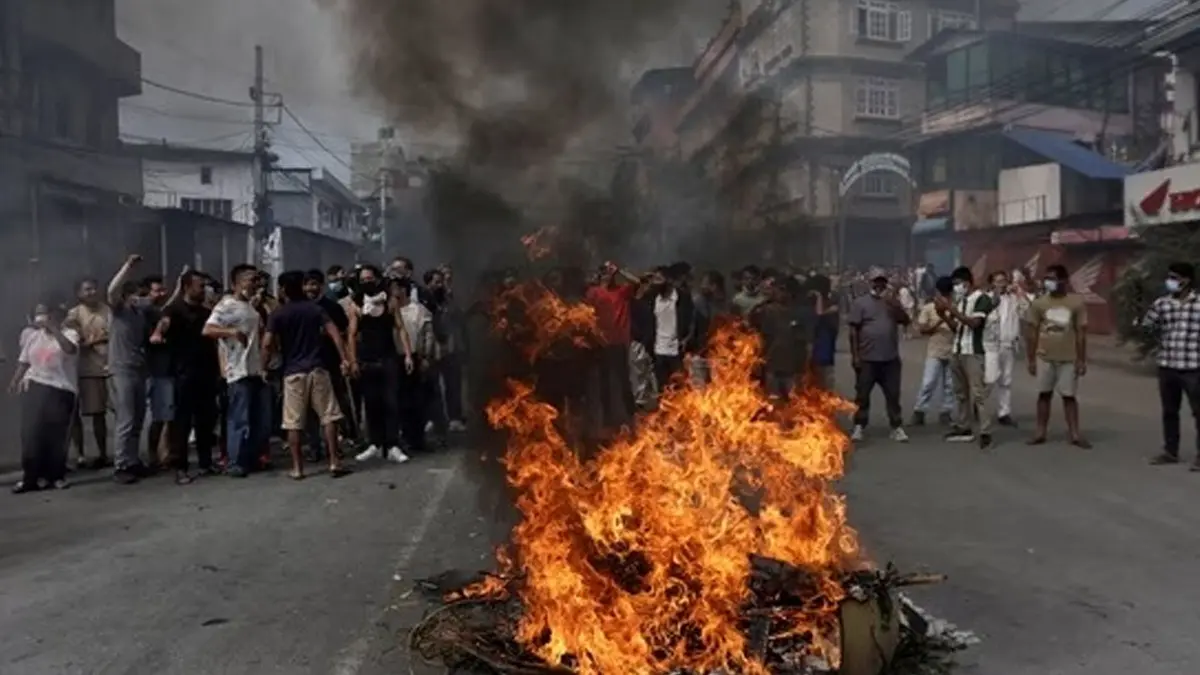
New Delhi: With protests intensifying across the county, the Nepal Army has decided to open a dialogue between student groups and Kathmandu Mayor Balendra Shah ‘Balen’, who is touted to be the interim Prime Minister after KP Sharma Oli resigned earlier during the day over alleged corruption.
“Talks will be held to control the situation,” a senior Rastriya Prajatantra Party (RPP) leader told The Republic.
In a Facebook post, Mayor Shah acknowledged the ongoing protests as “entirely a Gen Z movement”. “Dear Gen Z, your demand for the resignation of the government has been met. Now it is time to remain restrained," he wrote. He also cautioned against further damage to public and private property, adding, “The loss of the country's wealth is, in reality, a loss to our own property. It is now essential that we all act with restraint.”
Meanwhile, drawing stark similarities between the Bangladesh and Nepal protests, experts pointed out that widespread demonstrations in July 2024 ended the long rule of Sheikh Hasina in Bangladesh and brought in an interim administration. Similarly, youth-led demonstrations in Nepal over a social-media ban and corruption has ousted the Oli government.
Advertisement
In Bangladesh, protests over job quotas for government employment had expanded rapidly into a wider anti-government movement and student-led marches across Dhaka and other cities had accused the administration of suppressing dissent and concentrating power. Clashes with security forces had left scores dead and the country paralysed. By early August, Sheikh Hasina had left Dhaka and sought refuge in India. An interim government headed by Nobel laureate Muhammad Yunus took charge, with the task of restoring calm and preparing the ground for new elections.
In both the cases, students and young citizens played leading roles, using networks and presence in public spaces to scale protests quickly. Social media has acted both as an organising tool and as a flashpoint, and bans or restrictions only accelerated the protests rather than containing them.