
Crypto Deal Seals A Quiet Axis Between Donald Trump And Pakistan
Pakistan ranks among the top 10 countries globally in crypto adoption, with an estimated 20 million users engaging in digital asset transactions despite regulatory ambiguity.
- World News
- 5 min read

;'%3e%3cpath%20d='m8,15.99c4.41,0,7.99-3.58,7.99-7.99S12.41,0,8,0,0,3.59,0,8s3.58,7.99,7.99,7.99Z'%20style='stroke:%23fff;%20stroke-miterlimit:10;%20stroke-width:.02px;'/%3e%3cpath%20d='m3.08,3.37l3.82,5.11-3.84,4.15h.87l3.37-3.64,2.72,3.64h2.94l-4.04-5.39,3.58-3.87h-.86l-3.1,3.35-2.5-3.35h-2.94Zm1.27.64h1.35l5.97,7.99h-1.35l-5.97-7.99Z'%20style='fill:%23fff;'/%3e%3c/g%3e%3c/svg%3e)


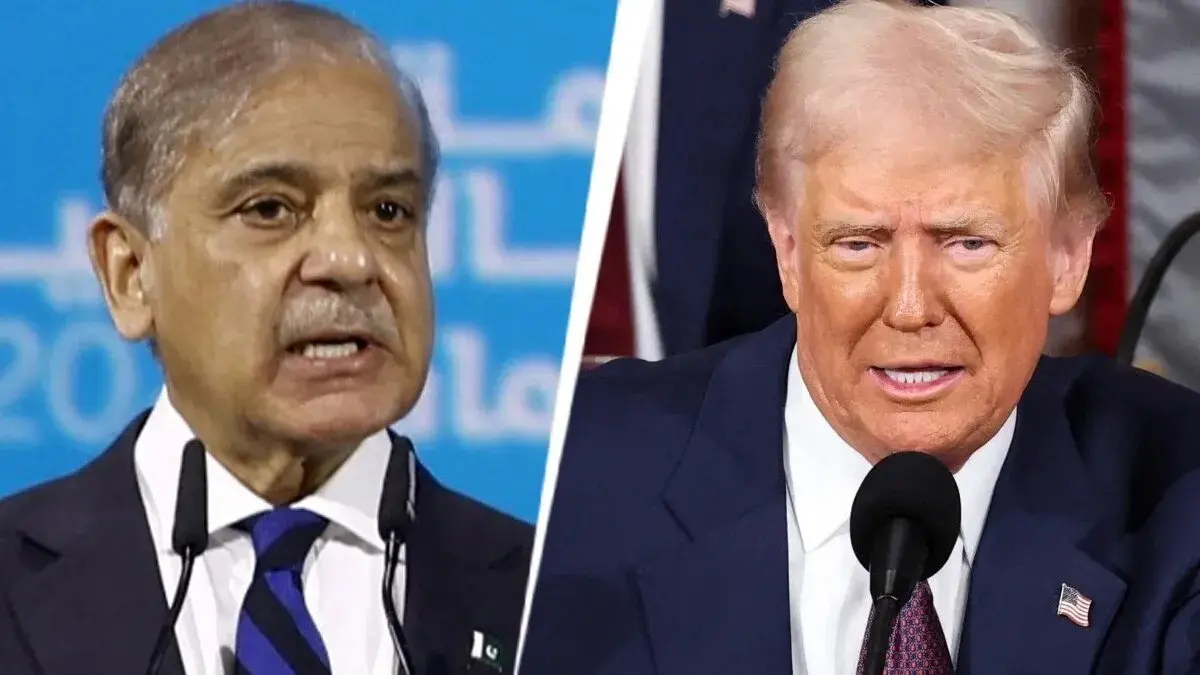
In geopolitics, rhetoric is theatre, but hard data reveals intent - and the numbers behind Pakistan’s recent crypto pivot, combined with its formal engagement with a Trump-linked financial network, tell a story far more consequential than any diplomatic statement.
At the centre of this evolving equation is Donald Trump, whose growing involvement in digital finance has transformed cryptocurrency from a fringe innovation into a tool of political and economic leverage. In January 2026, Pakistan signed a memorandum of understanding with World Liberty Financial, a crypto venture tied to Trump’s extended business ecosystem, to integrate a dollar-backed stablecoin (USD1) into its cross-border payment infrastructure. This was not symbolic experimentation - it was a data-driven decision rooted in economic necessity and strategic calculation.
Consider Pakistan’s macroeconomic realities. The country’s foreign exchange reserves have frequently hovered in the precarious range of $8-10 billion, barely sufficient to cover a few months of imports, while its currency has undergone repeated devaluations, losing over 40% of its value against the US dollar between 2022 and 2025. At the same time, Pakistan remains heavily dependent on remittances, which reached approximately $38 billion annually, making it one of the top remittance-receiving countries in the world. Traditional remittance channels often incur costs of 5-7% per transaction and delays of several days. A blockchain-based stablecoin system can reduce these costs to under 1-2% and enable near-instant settlement. When viewed through this lens, the decision to integrate a dollar-pegged digital currency is not ideological - it is mathematically compelling.
But the numbers go deeper. Pakistan ranks among the top 10 countries globally in crypto adoption, with an estimated 20 million users engaging in digital asset transactions despite regulatory ambiguity. Peer-to-peer trading volumes have consistently placed Pakistan high on global crypto indexes, reflecting a thriving parallel financial ecosystem that operates beyond formal banking structures. By institutionalising a stablecoin linked to a Trump-associated platform, Pakistan is effectively formalising what was previously informal - bringing scale, structure, and state backing to an already active digital economy.
Advertisement
For Trump’s ecosystem, the data is equally revealing. His crypto ventures, including NFT launches and associated digital assets, have reportedly generated tens of millions of dollars in revenue, demonstrating both market traction and political monetisation potential. By embedding a stablecoin into a national financial system, this ecosystem gains something far more valuable than revenue: recurring transactional volume. If even 10-15% of Pakistan’s $38 billion remittance flow transitions to a USD1-based system, that represents a potential annual transaction pipeline of $3.8-5.7 billion flowing through a Trump-linked financial architecture. This is not just adoption-it is scale.
The strategic implications of these numbers are profound. Pakistan’s decision effectively creates a digital financial corridor that connects its economy to a privately controlled, politically adjacent network. Unlike traditional financial systems governed by institutions such as SWIFT or the IMF, this corridor operates on decentralised infrastructure, where oversight is limited, and influence is embedded within the technology itself. The involvement of intermediaries like Zachary Witkoff, who engaged directly with Pakistan’s leadership, highlights how this corridor is being constructed - not through formal diplomacy, but through what can only be described as data-driven dealmaking.
Advertisement
Pakistan’s broader crypto strategy reinforces this trajectory. The establishment of a national crypto council in 2025, the exploration of Bitcoin mining initiatives leveraging surplus energy, and discussions around holding digital assets as part of national reserves all point toward a systematic shift. This is not a country dabbling in innovation; it is a country attempting to re-engineer its financial architecture under constraints. With inflation frequently exceeding 20% and external debt obligations crossing $125 billion, Pakistan’s pivot to crypto is as much about survival as it is about strategy.
For Trump, this alignment extends his influence into a region that has historically been geopolitically sensitive. By anchoring a financial instrument within Pakistan’s economy, his network gains indirect access to a market of over 240 million people, as well as proximity to key geopolitical corridors. The deal effectively transforms crypto from a domestic political tool into an instrument of international engagement, where financial integration precedes political alignment.
What emerges from this convergence is not a traditional alliance but a shared economic architecture built on data, scale, and necessity. Pakistan gains efficiency, liquidity, and partial insulation from traditional financial pressures. Trump’s ecosystem gains adoption, volume, and geopolitical relevance. And both operate within a framework that offers high utility with relatively low visibility.
For India, the data signals a clear warning. When financial flows begin to migrate to decentralised systems, the effectiveness of conventional monitoring mechanisms diminishes. If even a fraction of regional transactions shift to blockchain-based stablecoins, it complicates efforts related to financial surveillance, sanctions enforcement, and economic intelligence. India, which has one of the fastest-growing digital economies and a strong fintech backbone, must now consider not just regulation but strategic participation. Investment in blockchain analytics, real-time transaction monitoring, and sovereign digital currency frameworks becomes essential in a landscape where financial power is increasingly network-driven.
Because ultimately, the significance of the Trump-Pakistan crypto deal lies in its numbers. Billions in remittance flows, millions of users, percentage reductions in transaction costs, and the scale of potential adoption - all point toward a structural shift that cannot be ignored. This is not about ideology or speculation; it is about measurable impact. Crypto, in this context, is not merely a currency - it is infrastructure. And as Pakistan plugs into a Trump-linked financial network, it signals the emergence of a new kind of geopolitical alignment, one defined not by treaties or alliances, but by data, transactions, and code.