
Despite US-Iran Ceasefire, Israel Says, 'Will Target Hezbollah'; Tehran Warns of Retaliation on Tel Aviv Over Lebanon Strikes
The Israel Defense Forces said it has "ceased fire in the operation against Iran" but remains "highly prepared to respond defensively against any violation." The IDF emphasized targeted ground operations against Hezbollah in Lebanon remain ongoing. Iran has vowed retaliation if Lebanon is targeted.
- World News
- 3 min read

;'%3e%3cpath%20d='m8,15.99c4.41,0,7.99-3.58,7.99-7.99S12.41,0,8,0,0,3.59,0,8s3.58,7.99,7.99,7.99Z'%20style='stroke:%23fff;%20stroke-miterlimit:10;%20stroke-width:.02px;'/%3e%3cpath%20d='m3.08,3.37l3.82,5.11-3.84,4.15h.87l3.37-3.64,2.72,3.64h2.94l-4.04-5.39,3.58-3.87h-.86l-3.1,3.35-2.5-3.35h-2.94Zm1.27.64h1.35l5.97,7.99h-1.35l-5.97-7.99Z'%20style='fill:%23fff;'/%3e%3c/g%3e%3c/svg%3e)


The Israel Defense Forces (IDF) declared a halt to its offensive operations against Iran on Wednesday, following directives from Israel's political leadership, amid a broader U.S.-brokered pause in hostilities between the two countries.
In an official statement, the IDF said it has "ceased fire in the operation against Iran" but remains "highly prepared to respond defensively against any violation." The move comes after an intense overnight campaign in which Israeli forces carried out a wide-scale wave of strikes on Iranian missile launch sites and launchers, aimed at significantly degrading Tehran's ability to fire projectiles at Israel.
"Overnight, the IDF conducted a wide-scale wave of strikes targeting missile launch sites and launchers across Iran, in order to significantly degrade its launching capabilities," the statement read.
At the same time, the IDF emphasized that operations in Lebanon would continue unabated. Targeted ground operations against Hezbollah remain ongoing, with the military vowing to "continue to operate across all fronts to defend Israel."
Advertisement
The announcement aligns with reports of a two-week ceasefire involving the United States and Iran, which Israel has welcomed for the Iranian theater but explicitly stated does not extend to its campaign against Hezbollah in Lebanon. Prime Minister Benjamin Netanyahu's office has reiterated that the truce leaves Israel free to address threats from the Iran-backed group.
The IDF's statement underscores a dual-track approach: de-escalation with Iran under international mediation, paired with sustained defensive and offensive actions on its northern border to counter Hezbollah's entrenched positions.
Advertisement
Violence in Lebanon
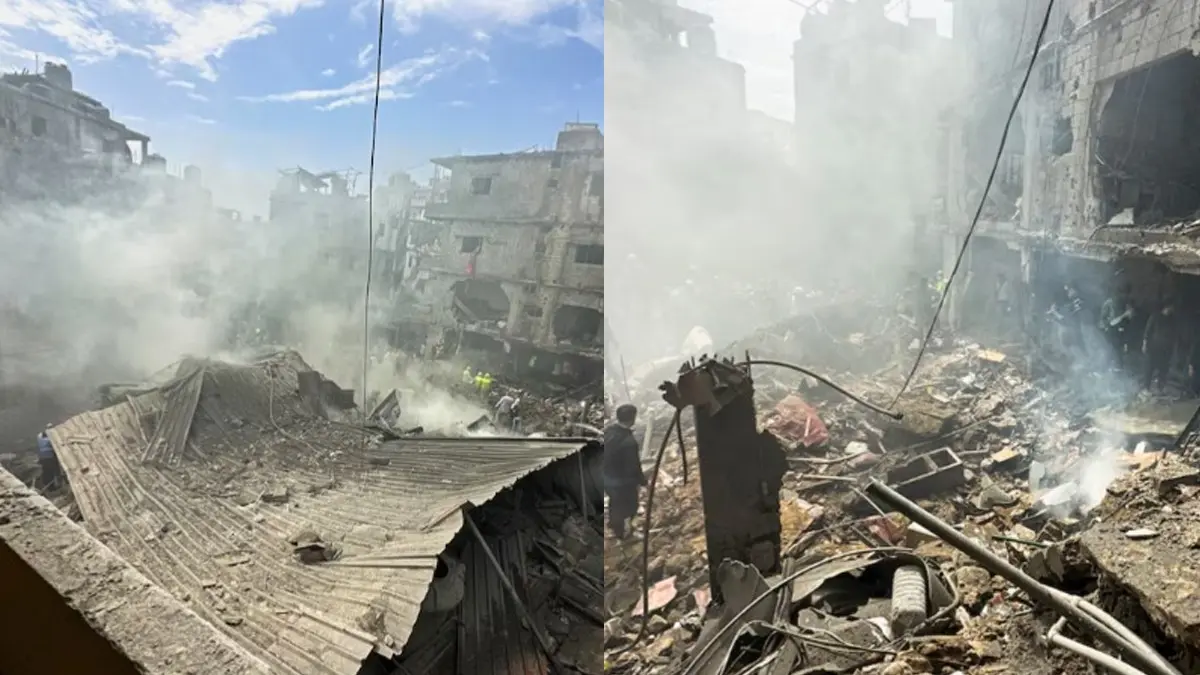
Even as the United States and Iran announced a temporary two-week ceasefire to de-escalate spiraling regional tensions, fresh violence has erupted in southern Lebanon.
According to reports, an Israeli airstrike hit an ambulance in the town of Al-Qlailah in the Tyre district of southern Lebanon, killing at least four people. The strike occurred just hours after the ceasefire announcement, raising immediate questions about the truce’s scope and enforceability.
Iran’s state broadcaster IRIB reported the attack via a post on X.
Israel has clarified that its military operations in Lebanon will continue unaffected. In an official statement, the Israeli Prime Minister’s Office said the temporary truce applies strictly to direct hostilities between Israel and Iran and does not extend to Lebanon.
“Israel supports President Donald Trump’s decision to suspend strikes against Iran for two weeks,” the statement read. It added that the pause is conditional on Iran reopening the Strait of Hormuz and ceasing attacks on the United States, Israel, and regional partners. However, it stressed that “the two-week ceasefire does not include Lebanon.”
Iran Issues Warning
Iran has issued a stark warning to Israel, stating it will launch strikes on Tel Aviv if Israeli military actions in southern Lebanon do not cease immediately.
In a strongly worded statement, Iranian officials accused Israel of escalating tensions along the Lebanon border and vowed a direct response targeting Israel's commercial capital should the firing persist. The threat comes amid ongoing cross-border exchanges between Israeli forces and Hezbollah militants in the region.
"Any continuation of aggression in southern Lebanon will be met with a decisive strike on Tel Aviv," a senior Iranian source was quoted as saying, according to state media reports.
This development follows weeks of escalating exchanges, including Iranian missile barrages and Israeli airstrikes on military infrastructure.