
Field Marshal Asif Munir Gets Legal Immunity as Pakistan Adopts Unified Command Structure
The Commander of Defence Forces will head the new Unified Command of the Pakistan Armed Forces. Under the new law, Field Marshal Asif Munir will be granted legal immunity in Pakistan and can only be removed through impeachment.
- World News
- 4 min read

;'%3e%3cpath%20d='m8,15.99c4.41,0,7.99-3.58,7.99-7.99S12.41,0,8,0,0,3.59,0,8s3.58,7.99,7.99,7.99Z'%20style='stroke:%23fff;%20stroke-miterlimit:10;%20stroke-width:.02px;'/%3e%3cpath%20d='m3.08,3.37l3.82,5.11-3.84,4.15h.87l3.37-3.64,2.72,3.64h2.94l-4.04-5.39,3.58-3.87h-.86l-3.1,3.35-2.5-3.35h-2.94Zm1.27.64h1.35l5.97,7.99h-1.35l-5.97-7.99Z'%20style='fill:%23fff;'/%3e%3c/g%3e%3c/svg%3e)


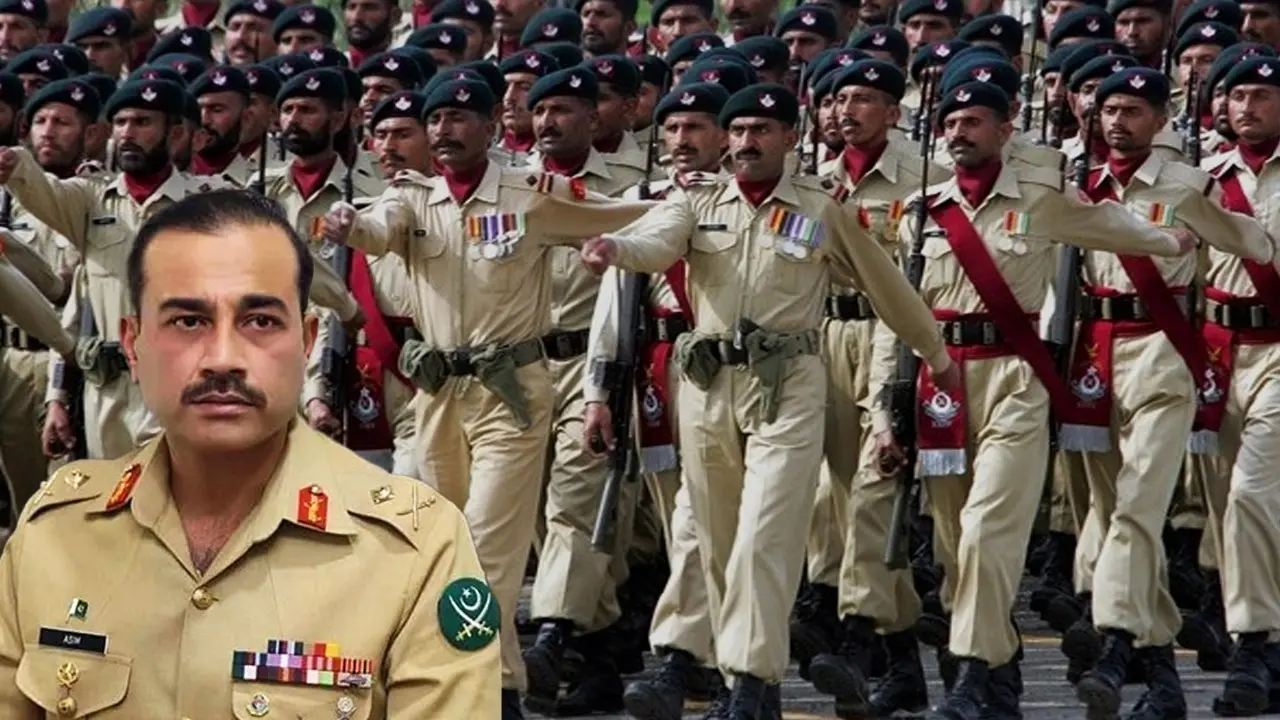
Pakistan's armed forces are set to receive expanded powers following the government's approval of the 27th Constitutional Amendment, which will establish a new Unified Command.
The Commander of Defence Forces will head the new Unified Command of the Pakistan Armed Forces. Under the new law, Field Marshal Asif Munir will be granted legal immunity in Pakistan and can only be removed through impeachment.
The post of Chairman of the Joint Chiefs of Staff Committee (CJCSC), currently held by General Sahir Shamshad Mirza, is scheduled to be abolished on November 27, 2025, as per the 27th Constitutional Amendment.
These decisions were made during the Federal Cabinet Meeting chaired by Prime Minister Shehbaz Sharif. Reports said that Sharif presided over the cabinet meeting via video link from Baku.
Advertisement
The Federal Cabinet unanimously approved the draft of the 27th Constitutional Amendment and extended its full welcome. Following the Cabinet's approval, the amendment draft will now be presented to Parliament.
The President of Pakistan, Asif Ali Zardari, was reportedly taken into confidence regarding the amendment and willingly gave his consent.
Advertisement
Pakistan-Afghanistan Peace Talks Reach Dead End
This comes as the third round of peace talks between Afghanistan and Pakistan concluded without an agreement, with both sides blaming each other for the impasse.
The Taliban-led Afghan government accused Pakistan of being "irresponsible and uncooperative," saying Pakistan shifted the blame for its security issues to Afghanistan while refusing to take responsibility for its own security.
A Taliban Spokesperson said that upon the mediation by Qatar and Turkey, Afghanistan and Pakistan engaged in peace talks on November 6 and 7.
"The Islamic Emirate of Afghanistan once again thanks the Republic of Turkey and the State of Qatar -- the two brotherly countries -- for hosting and mediating the talks between Afghanistan and Pakistan in Istanbul," the Taliban Spokesperson said.
Taliban spokesman Zabihullah Mujahid stated that Pakistan's delegation didn't demonstrate any willingness to assume responsibility for either Afghanistan's security or its own.
"Representatives of the Islamic Emirate of Afghanistan, by special direction of the leadership, participated in Istanbul in good faith and with appropriate authority on two consecutive days (November 6 and 7), hoping that this time the Pakistani side, after consultation with its leaders, would approach the issue seriously and constructively, with a responsible attitude, and present realistic and implementable demands to reach a fundamental solution," he said.
The talks, held in Istanbul with mediation from Turkey and Qatar, aimed to address cross-border terrorism and prevent further escalation.
"During the talks, the Pakistani side attempted to refer all responsibilities regarding its security to the Afghan government, while at the same time it did not demonstrate any willingness to assume responsibility for either Afghanistan's security or its own. The irresponsible and non-cooperative attitude of the Pakistani delegation resulted in no outcome, despite the Islamic Emirate's good intentions and the efforts of the mediators," he said.
The Taliban reiterated its commitment to preventing Afghan territory from being used against other countries, while Pakistan warned it would respond to attacks from Afghan soil.
"The Islamic Emirate of Afghanistan reiterates its principled position: it will not allow anyone to use Afghan territory against another country, nor will it permit any country to use its territory to take actions against or support actions that undermine Afghanistan's national sovereignty, independence, or security," he said.
Meanwhile, Pakistan's Defence Minister Khawaja Asif declared a "complete deadlock," saying the Afghan delegation refused to sign written accords, insisting on verbal assurances only.
The update on the talks by Pakistan's Information Minister Attaullah Tarar on Friday came after an Afghan official said four Afghan civilians were killed and five others wounded in clashes between Pakistani and Afghan forces along their shared border despite the joint negotiations, as per Al Jazeera.
The collapse marks another setback for efforts to ease tensions between the two neighbors, who have seen repeated border clashes and escalating mistrust.
(With inputs from agencies)