
Friendly Fire: Three US F-15E Strike Eagles 'Mistakenly' Shot Down by Kuwait, Crew Safe
Three US Air Force F-15E Strike Eagle fighter jets were shot down over western Kuwait in an "apparent friendly fire incident" early Monday morning.
- World News
- 4 min read

;'%3e%3cpath%20d='m8,15.99c4.41,0,7.99-3.58,7.99-7.99S12.41,0,8,0,0,3.59,0,8s3.58,7.99,7.99,7.99Z'%20style='stroke:%23fff;%20stroke-miterlimit:10;%20stroke-width:.02px;'/%3e%3cpath%20d='m3.08,3.37l3.82,5.11-3.84,4.15h.87l3.37-3.64,2.72,3.64h2.94l-4.04-5.39,3.58-3.87h-.86l-3.1,3.35-2.5-3.35h-2.94Zm1.27.64h1.35l5.97,7.99h-1.35l-5.97-7.99Z'%20style='fill:%23fff;'/%3e%3c/g%3e%3c/svg%3e)


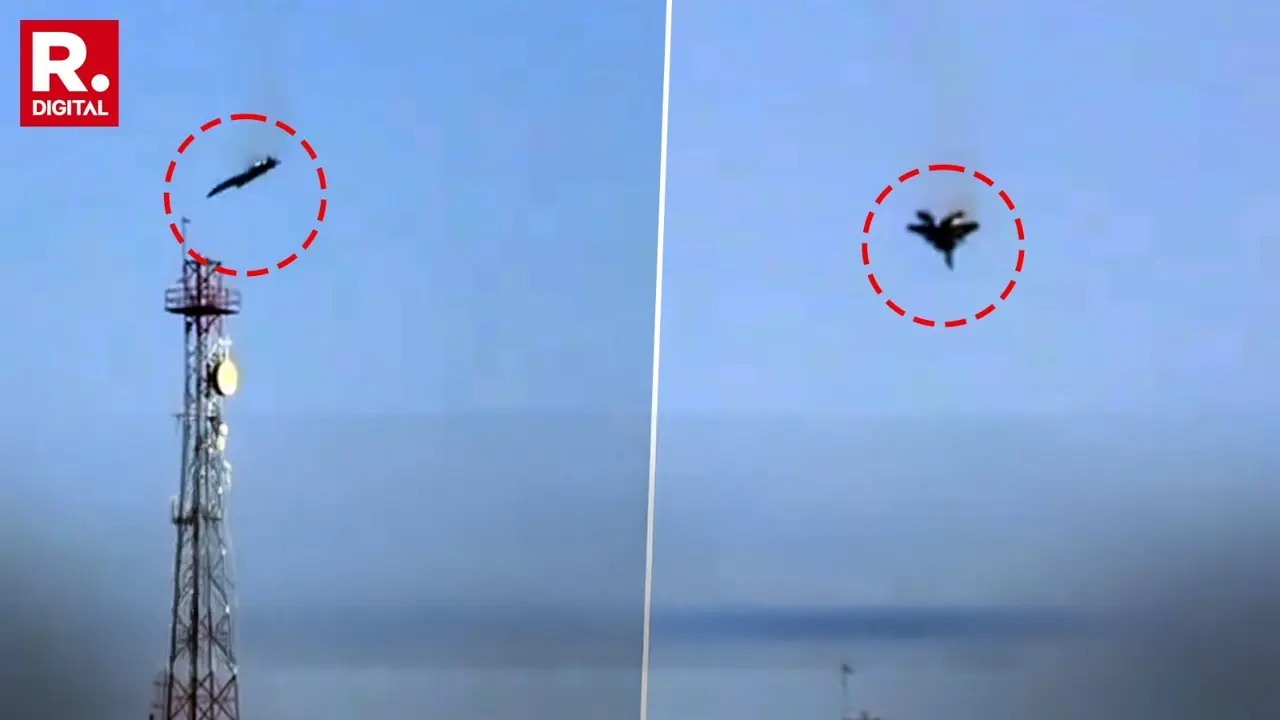
New Delhi: United States Central Command (CENTCOM) has confirmed that three US F-15E Strike Eagles were "mistakenly shot down" by Kuwaiti air defence, highlighting an “apparent friendly fire incident” amid ongoing regional hostilities.
The incident took place during active combat operations that included attacks from Iranian aircraft, ballistic missiles and drones.
According to US Central Command, at 11:03 p.m. ET on March 1, three F-15E Strike Eagles went down over Kuwait. US officials said the fighter jets were mistakenly shot down by Kuwaiti air defences amid the ongoing engagement.
All six crew members safe
The US military also said that all six aircrew members aboard the three aircraft ejected safely. “All six aircrew ejected safely, have been safely recovered, and are in stable condition,” the statement said.
Advertisement
It added that Kuwait has acknowledged the incident and expressed gratitude for the support provided by Kuwaiti defence forces during the operation.
The cause of the incident is currently under investigation, and additional information will be released as it becomes available.
Advertisement
The US-Israeli Operations
The joint U.S.-Israeli military attack on Iran on February 28, 2026, represents the most significant shift in Middle Eastern geopolitics in decades.
The operations began with a massive wave of coordinated airstrikes and cruise missile launches targeting Iran’s nuclear facilities, ballistic missile sites, and the Islamic Revolutionary Guard Corps (IRGC) command centres across major cities, including Tehran, Isfahan, and Qom.
The U.S. and Israeli attack on Iran killed Supreme Leader Ayatollah Ali Khamenei, triggered retaliatory strikes on multiple countries in the region and has reverberated around the world.
President Donald Trump and Prime Minister Benjamin Netanyahu released joint statements framing the mission as a preemptive necessity to eliminate an imminent nuclear threat and calling on the Iranian people to "seize their destiny" and overthrow the remaining clerical establishment.

In immediate retaliation, Iran launched what it termed a response, firing hundreds of ballistic missiles and drones not only at Israel but at U.S. military installations across the Persian Gulf.
While the U.S. and Israel claim to have significantly degraded Iran's air defences and naval capabilities, the situation on the ground in Iran is increasingly chaotic, with reports of widespread internet blackouts and burgeoning anti-government protests clashing with security forces still loyal to the regime.
Israel said it had worked with the United States for months to plan the attacks. The U.S. military said targets in Iran included Revolutionary Guard command facilities, air defence capabilities, missile and drone launch sites and military airfields.
Iranian state media said more than 200 people have been killed. In southern Iran, at least 165 people were killed when a girls’ school was struck, the state-run IRNA news agency reported. The Israeli military said it was not aware of strikes in the area. The U.S. military said it was looking into the reports.
The strikes elicited mixed global reactions, including angry protests, celebrations and calls by world leaders for a return to negotiations and peace.
At least 22 people were killed in clashes with police in northern Pakistan and in the southern port city of Karachi after hundreds of protesters stormed the U.S. Consulate there, authorities said.
Shipping companies suspended their vessels’ traffic through the Suez Canal. The strikes could rattle global markets, particularly if Iran makes the Strait of Hormuz unsafe for commercial traffic. A fifth of the worldwide traded oil passes through the Strait.
There were global repercussions from disrupted air travel in the region, with hundreds of thousands of travellers stranded or diverted to other airports after Israel, Qatar, Syria, Iran, Iraq, Kuwait and Bahrain closed their airspace.