
Indian Industries Poised for Growth as US-China Tariff Barriers Fall
For India, the new trade environment brings both challenges and opportunities. US tariffs on Indian exports remain high at 50%, much higher than those for Chinese goods, putting pressure on core sectors like textiles, gems, leather, auto parts, and chemicals.
- World News
- 4 min read

;'%3e%3cpath%20d='m8,15.99c4.41,0,7.99-3.58,7.99-7.99S12.41,0,8,0,0,3.59,0,8s3.58,7.99,7.99,7.99Z'%20style='stroke:%23fff;%20stroke-miterlimit:10;%20stroke-width:.02px;'/%3e%3cpath%20d='m3.08,3.37l3.82,5.11-3.84,4.15h.87l3.37-3.64,2.72,3.64h2.94l-4.04-5.39,3.58-3.87h-.86l-3.1,3.35-2.5-3.35h-2.94Zm1.27.64h1.35l5.97,7.99h-1.35l-5.97-7.99Z'%20style='fill:%23fff;'/%3e%3c/g%3e%3c/svg%3e)


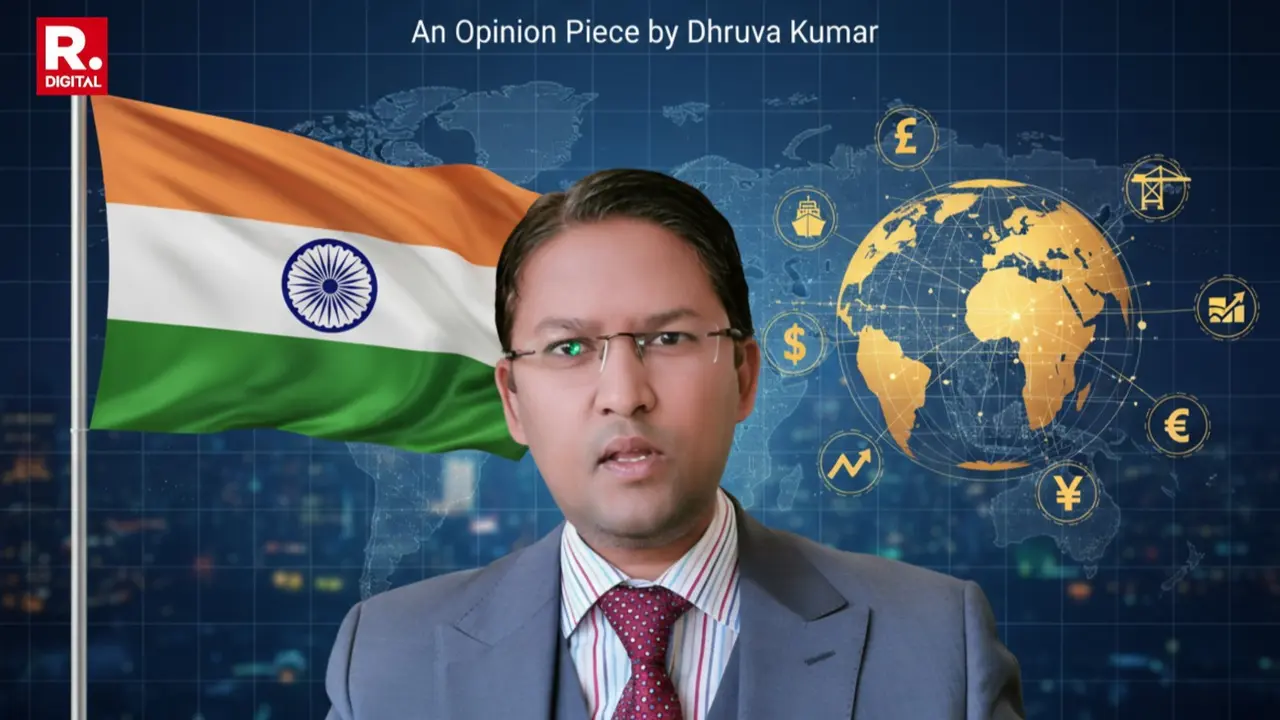
The recent US-China tariff détente sparked by high-profile negotiations between President Trump and President Xi marks a potential turning point that promises rippling effects across the global economic landscape, India included. In October 2025, the United States announced a cut in tariffs on Chinese goods from 57% to 47%, alongside withdrawals of certain fentanyl-linked duties and renewed Chinese commitments on critical rare earth exports and agricultural purchases.
Impact on India’s Export Dynamics
For India, several direct and indirect consequences arise. While the US tariff reduction on China could reintroduce competitive Chinese products to the American market, making the export race tougher for Indian manufacturers, Indian goods still face US tariffs at a daunting 50%, substantially higher than those levied on China. This disparity impacts key export sectors such as textiles, gems, leather, auto parts, and chemicals, threatening to trim India’s GDP growth by up to 0.5% in 2026 and reducing dollar earnings by 4-5 billion USD in the short term.
Opportunities Amid Challenges
Advertisement
However, the evolving US-China trade architecture can offer India unexpected windows of opportunity. As high tariffs make Chinese goods more expensive in the US, demand for alternate suppliers is already shifting toward India, especially in textiles, toys, and select electronics. US retail majors like Target have approached Indian exporters for new portfolios, reinforcing India’s potential to replace China for American buyers if it can scale production, cut logistics costs, and ensure quality.
Advertisement
Product-Level Adaptation and MSME Protection
For labour-intensive sectors such as textiles and seafood, shifting product portfolios and classifying goods under more favourable tariff codes is essential. Comprehensive support for MSMEs, including subsidies, export insurance, easier access to foreign loans, and working capital relief, is being rolled out to weather tariff shocks and sustain employment-intensive industries.
Indian sectors that stand to gain most from the recent US-China tariff easing and related trade shifts include textiles, toys, gems and jewellery, auto parts, seafood (especially shrimp), pharmaceuticals, electronics, and steel and aluminium. These sectors have traditionally faced tough competition from Chinese exporters, but higher US tariffs on Chinese goods, now at 130% for many product categories, are making Indian products significantly more attractive to US buyers.
Key Beneficiary Sectors
Textiles and Apparel: India’s textile industry is expected to benefit greatly, as US buyers seek alternatives for apparel, home furnishings, and raw materials, with major retailers reportedly shifting orders especially in cotton goods.
Toys: American retailers are approaching Indian toy exporters due to sharply increased tariffs on Chinese toys, enabling growth for large- and small-scale toy manufacturers in India.
Gems and Jewellery: This sector has gained since Chinese products became costlier, boosting India’s exports of cut and polished diamonds, gold jewellery, and stones.
Auto Parts: Indian companies exporting engineered auto components are seeing rising demand, as American buyers diversify away from China, supporting stocks of leading players.
Seafood and Shrimp: India already accounts for over 50% of US seafood and shrimp imports; tariff reductions make Indian exports even more competitive, leading to surging demand and stock appreciation for major exporters.
Pharmaceuticals and Chemicals: US buyers, wary of supply chain concentration in China, are sourcing more APIs, finished medicines, and specialty chemicals from India for reliability and cost stability.
Electronics and Industrial Goods: Indian electronics makers may capture opportunities to supply consumer devices and industrial components, especially as US importers look for alternatives amid high tariffs on Chinese electronics.
Steel and Aluminium: Reduction of tariffs in these sectors will help India’s exports of raw materials and value-added products such as rolled steel and sheets, improving balance of trade and related company valuations.
Sustained gains in these sectors depend on India’s ability to maintain quality, scale output, respond swiftly to buyer requirements, and ensure compliance with US standards. The government’s export incentives, infrastructural upgrades, and production-linked schemes further reinforce India’s competitive position in the wake of US-China tariff reforms.
By pursuing a robust, multi-pronged strategy—diversification, trade pacts, MSME support, supply chain upgrades, and firm negotiation—India can mitigate the adverse effects of US tariffs and maintain its trajectory as a fast-growing exporter in the global market
Disclaimer: The views expressed in this article are purely informational and Republic Media Network does not vouch for, promote or endorse any opinions stated by any third party.