
Internal Security Breach Behind Ali Khamenei's Assassination Remains Unresolved, Warns Abbas Araghchi
Iran Foreign Minister Abbas Araghchi warns that the critical intelligence leak that led to the assassination of Ali Khamenei remains unresolved.
- World News
- 4 min read

;'%3e%3cpath%20d='m8,15.99c4.41,0,7.99-3.58,7.99-7.99S12.41,0,8,0,0,3.59,0,8s3.58,7.99,7.99,7.99Z'%20style='stroke:%23fff;%20stroke-miterlimit:10;%20stroke-width:.02px;'/%3e%3cpath%20d='m3.08,3.37l3.82,5.11-3.84,4.15h.87l3.37-3.64,2.72,3.64h2.94l-4.04-5.39,3.58-3.87h-.86l-3.1,3.35-2.5-3.35h-2.94Zm1.27.64h1.35l5.97,7.99h-1.35l-5.97-7.99Z'%20style='fill:%23fff;'/%3e%3c/g%3e%3c/svg%3e)


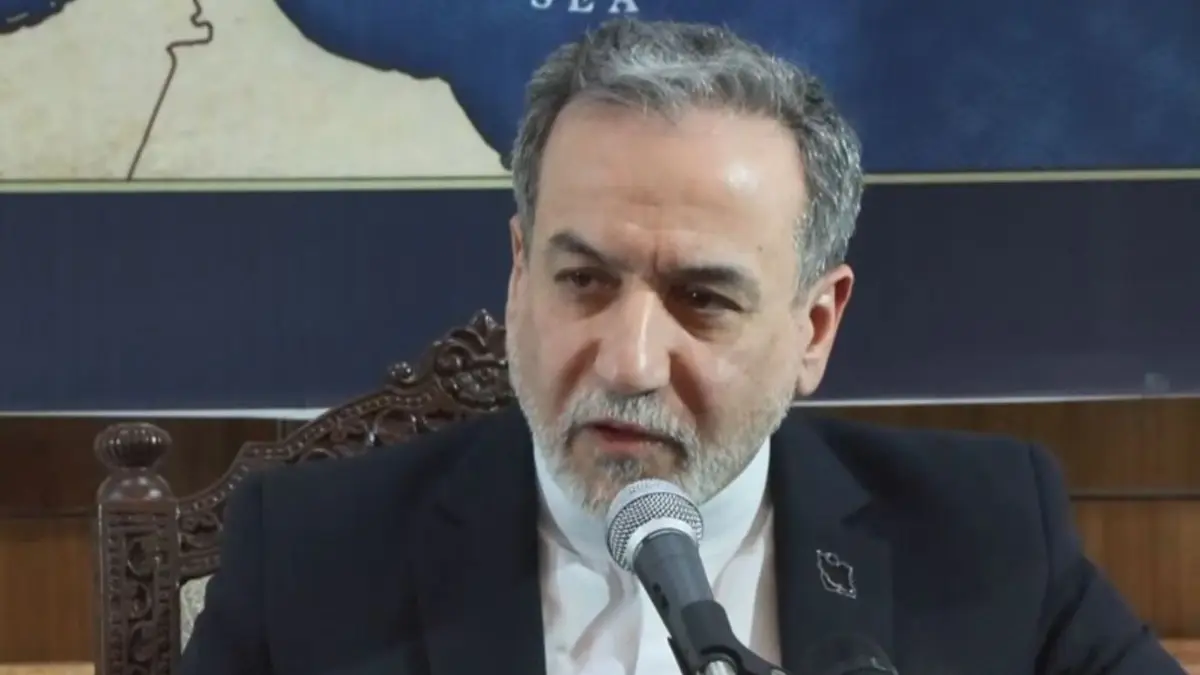
Is Iran’s national security still deeply compromised? Iranian Foreign Minister Abbas Araghchi stated on Sunday that the security breach enabling the assassination of former Supreme Leader Ali Khamenei has not yet been resolved. He strongly hinted that the very vulnerability that allowed the fatal strike to occur may still exist within the country's security apparatus.
Speaking to a news channel, Araghchi explained that the bombing of Khamenei’s residence during the war's opening phase was executed because the perpetrators possessed highly detailed intelligence. The attackers, he noted, had precise knowledge of the former Supreme Leader’s daily routine and the high-profile meetings scheduled inside the compound.
Intelligence Leak Enabled Precise Compound Strike
According to Araghchi, the attackers were fully aware of Khamenei’s morning schedule and knew exactly when critical government sessions were taking place nearby.
“They knew that the Leader (Ali Khamenei) was in the office every morning. As I understand it, the command center meeting was also being held two or three buildings away, and they chose exactly that moment. The Intelligence Ministry’s meeting was also taking place at that time," Araghchi stated.
Advertisement
The Foreign Minister emphasized that the strike succeeded due to a critical lapse in security that officials have yet to completely fix. “Therefore, the attack on the Leader’s office happened because of a security vulnerability, and that vulnerability probably still exists," he warned. Recalling the volatile events of February 28, Araghchi shared that he had explicitly warned President Masoud Pezeshkian that “the atmosphere is war" before heading to a 9 a.m. meeting with Ali Asghar Mir Hijazi, a senior aide to Khamenei.
Shortly after that warning, Israeli forces launched a strike on the Tehran compound where Khamenei was participating in a high-level leadership summit. Araghchi pointed out that while hosting multiple strategic sessions at once was standard practice at the time, the enemy's precise intelligence pointed to a severe internal compromise. “Holding simultaneous meetings was not unusual in those days, but the enemy’s knowledge of these meetings was the result of an information breach that probably still exists."
Advertisement
The targeted air strikes resulted in the deaths of Khamenei and several top Iranian military commanders, delivering a massive blow to the nation's core command structure.
Returning to Diplomacy When 'War Was Certain'
Despite firmly believing that a wider military conflict was inevitable, Araghchi revealed that Iran chose to resume negotiations with the United States anyway.
“I was certain (war would happen again)… our military forces were certain; we ourselves were certain," Araghchi recalled.
He explained that Tehran deliberately returned to the diplomatic table to ensure the Islamic Republic could not be blamed for rejecting a peaceful resolution.
“Because we were certain, we said one or two rounds of negotiation should take place. Perhaps the other side would back down from the zero-enrichment demand, though that was unlikely. If they didn’t, we would have our justification. No one, not the international community, not people at home, could then say it was our fault, that we should have negotiated. That was the philosophy behind our entry into negotiations."
Araghchi strongly pushed back against political rivals who argued that engaging in diplomacy had compromised Iran's strength. “I don’t accept that," he said flatly.
“We are not here to do something for our own personal credibility or to preserve our own reputation. I am the foreign minister of the Islamic Republic of Iran. My responsibility is to preserve the interests of the Islamic Republic, not my personal reputation."
Final Decision on War Rests with the Supreme Leader
Addressing the official chain of command, Araghchi reiterated that any ultimate directive regarding military action or ceasefires remains solely with Iran's Supreme Leader. “The Supreme National Security Council is responsible for assessing the situation regarding war or a ceasefire, but the final decision rests with the Supreme Leader."
He noted that the decision to restart talks occurred after Washington renewed its demands for Tehran to entirely halt uranium enrichment, backed by threats of potential military action. The diplomatic pivot was intended to prove that Iran had completely exhausted every available peaceful avenue.
Closing the interview, Araghchi briefly addressed public speculation surrounding Mojtaba Khamenei, noting that he has never met him face-to-face. “Only a handful of people have met him," Araghchi remarked. These revelations come right after Iran announced on Saturday that it has officially suspended its ceasefire agreement with the US, citing repeated American violations of the Islamabad MoU.