
Iran, Oman Agree on New Entry, Exit Routes for Strait of Hormuz: Report
Tehran reports that Iran and Oman have finalized new entry and exit routes for the Strait of Hormuz, intending to brief Gulf countries at a regional meeting in Muscat on Monday. This development arises amid escalating tensions in West Asia.
- World News
- 4 min read

;'%3e%3cpath%20d='m8,15.99c4.41,0,7.99-3.58,7.99-7.99S12.41,0,8,0,0,3.59,0,8s3.58,7.99,7.99,7.99Z'%20style='stroke:%23fff;%20stroke-miterlimit:10;%20stroke-width:.02px;'/%3e%3cpath%20d='m3.08,3.37l3.82,5.11-3.84,4.15h.87l3.37-3.64,2.72,3.64h2.94l-4.04-5.39,3.58-3.87h-.86l-3.1,3.35-2.5-3.35h-2.94Zm1.27.64h1.35l5.97,7.99h-1.35l-5.97-7.99Z'%20style='fill:%23fff;'/%3e%3c/g%3e%3c/svg%3e)


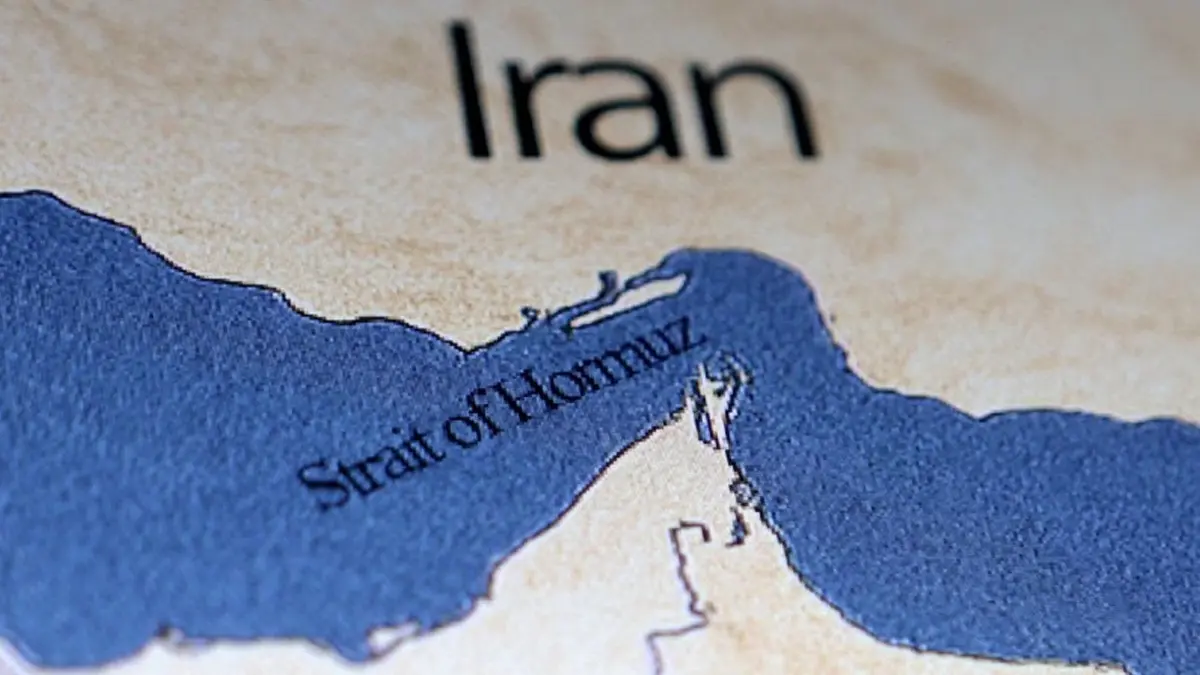
Tehran: Iran and Oman have agreed on the details of new entry and exit routes for the Strait of Hormuz and will brief Gulf countries on the outcome of their consultations at a regional meeting in Muscat on Monday, Iranian officials said on Saturday, according to Xinhua News.
The development comes amid heightened tensions in West Asia, with the strategic waterway remaining a key focus of regional and international attention.
The Iranian and Omani sides reached an understanding on the new routes following consultations, with details set to be presented to Gulf countries at the regional meeting in Muscat, Xinhua reported.
Against this backdrop, Iranian President Masoud Pezeshkian, in an exclusive interview with India Today on the sidelines of the BRICS Summit, said BRICS was created to counter the "unilateral sanctions regime" of the United States.
Advertisement
"The objective of BRICS and what we have come here for is that, regarding the trend which has begun by the US and, you know, actually it sanctions any country it wishes. On the other hand, the BRICS intention is to break this kind of totalitarianism. That is why BRICS was developed," Pezeshkian said.
He said BRICS members should develop alternative forms of trade and cooperation independent of sanctions imposed by individual countries.
Advertisement
"We're supposed to change the type of interactions and the type of trade and cooperation, regardless of and independent of the fact that one country may be, you know, at whim to sanction other countries," he said.
Pezeshkian added that BRICS members should support each other to counter unilateralism.
"We are here to help each other and to support each other so that this unilateralism can be fought against," he said, adding that the objective was to "derail America from this unilateralism".
The remarks came amid renewed tensions involving Iran and the United States and heightened focus on stability and security in the West Asia region.
Meanwhile, BRICS countries reached a consensus on the situation in West Asia, with dialogue and diplomacy emerging as the guiding principles for addressing conflicts, Secretary (Economic Relations) in the Ministry of External Affairs Sudhakar Dalela said on Saturday.
Addressing a media briefing after the BRICS Leaders’ Summit, Dalela said the diverse development experiences and economic systems of BRICS members required space for discussions on national perspectives before building consensus.
“I would say that within the BRICS and in the preparation for the BRICS summit, we have been discussing these issues for some time, and I think it is the essence of the BRICS view is captured in para 28 of the New Delhi Declaration. In a grouping like BRICS, where we have members with diverse development experiences and diverse economic systems, it is important that we allow discussions to evolve and emerge, and we, as Chair, have provided a forum for very transparent discussion among us, and we have ensured that everybody is comfortable expressing their national perspective, and then within that framework, we try to build consensus and see which are the lending zones, which are the comfort areas," he said.
"I would say that we are very happy that we have an agreed approach on West Asia, and the centrepiece of that approach is that we all believe that dialogue and diplomacy should be the guiding parameter for addressing any conflict, any situation that requires a solution, and that is the only way to build lasting peace, security, and stability in any part of the world,” Dalela added.
His remarks came after BRICS leaders unanimously adopted the New Delhi Declaration 2026 at the 18th BRICS Summit in New Delhi.
The declaration expressed deep concern over the continued escalation of tensions in West Asia and called for maximum restraint and avoidance of actions that could further aggravate the situation.
The BRICS countries urged the protection of civilians and civilian infrastructure, respect for sovereignty and territorial integrity, and increased efforts through dialogue and diplomacy towards lasting peace, security and stability in the region. They also stressed the need to maintain the smooth flow of global trade, supply chains and energy in accordance with international law.
The declaration expressed serious concern over deliberate attacks on civilian infrastructure and peaceful nuclear facilities under full safeguards of the International Atomic Energy Agency, stressing that nuclear safeguards, safety and security must be upheld even during armed conflicts.