
Iran Rejects Latest US Ceasefire Proposal, Lists 10-Point Demand; Trump Says 'Going To Pay Big Price'
Iran has rejected the latest ceasefire proposal by US and wants a permanent end to the war, the country's state-run IRNA news agency said, as Donald Trump's Tuesday deadline to open the Strait of Hormuz draws closer.
- World News
- 5 min read

;'%3e%3cpath%20d='m8,15.99c4.41,0,7.99-3.58,7.99-7.99S12.41,0,8,0,0,3.59,0,8s3.58,7.99,7.99,7.99Z'%20style='stroke:%23fff;%20stroke-miterlimit:10;%20stroke-width:.02px;'/%3e%3cpath%20d='m3.08,3.37l3.82,5.11-3.84,4.15h.87l3.37-3.64,2.72,3.64h2.94l-4.04-5.39,3.58-3.87h-.86l-3.1,3.35-2.5-3.35h-2.94Zm1.27.64h1.35l5.97,7.99h-1.35l-5.97-7.99Z'%20style='fill:%23fff;'/%3e%3c/g%3e%3c/svg%3e)


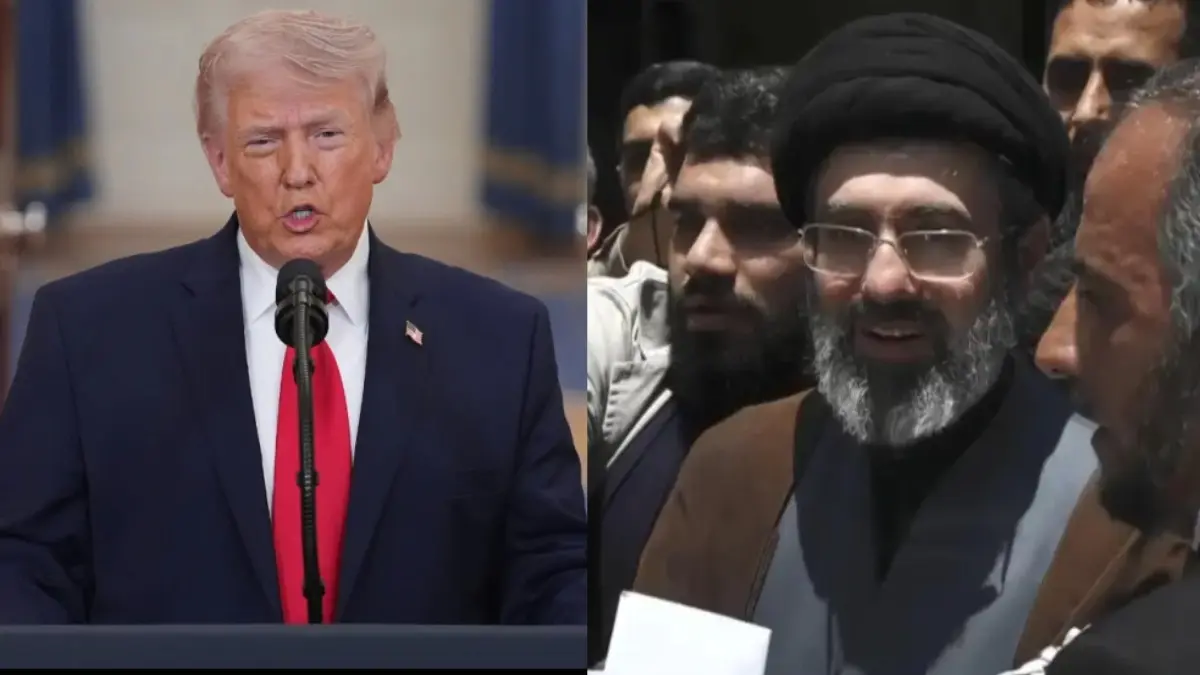
Tehran: Hours after Iran rejected the latest ceasefire proposal, United States president Donald Trump said that the Middle Eastern country is “going to pay a big price”.
“I am very upset they are going to pay a big price,” Trump said, marking yet another escalation in rhetoric by the US administration. He emphasised that the war “could end very quickly” if Iran is willing to accept certain conditions. “They have to do certain things. They know that. The people there now are much more reasonable than the lunatics that you had in phase 1 and phase 2,” he said while speaking to reporters.
However, signaling that there is still hope at the negotiation table, Trump said that Iran had made a “significant proposal,” though it fell short of expectations. “It’s not good enough, but it’s a very significant step,” he stressed.
In another controversial claim, Trump said that the US has managed to change the regime in Iran, adding, “They are more moderate. They are much smarter.”
Advertisement
Trump also reiterated that failure to come to an agreement by 8 pm EDT (0000 GMT) on Tuesday could lead to severe consequences.
Tehran has hinted that it is not interested in a temporary ceasefire, rather it wants a permanent one to end the war, the country's state-run Islamic Republic News Agency (IRNA) said, as reported by Associated Press. This comes as Donald Trump's Tuesday deadline to begin bombing Iranian energy and infrastructure draws closer.
Advertisement
What Has Tehran Demanded
“We won’t merely accept a ceasefire,” Mojtaba Ferdousi Pour, head of the Iranian diplomatic mission in Cairo, told The Associated Press, adding, “We only accept an end of the war with guarantees that we won’t be attacked again.”
Tehran has reportedly conveyed its response through Pakistan, which has emerged to be a mediator in this war that has dragged on for more than a month. Iran has expressed its unwillingness to accept any temporary truce, but has stressed on the need for a “permanent end to war.”
As per reports, Iran’s reply is in the form of a 10-clause framework that extends the purview of an immediate ceasefire, including ending conflicts across the Middle East, regulations to ensure safe passage of ships through Hormuz, lifting of sanctions on the country that have put pressure on its economy, among several others.
Iran's response was in the form of a 10-clause framework that extends beyond an immediate ceasefire and sought to end to the war beyond its borders, in Lebanon and Gaza, with firm guarantees that the conflict will not flare up at a later time. Iran has also demanded recognition of its control over the Strait of Hormuz, which includes its right to regulate traffic and collect tolls. Tehran has also reportedly sought the right to enrich its uranium under the Nuclear Non-Proliferation Treaty (NPT), as well as demanded reparations for the war.
The rejection of the ceasefire comes at the back of negotiations between both the nations through intermediaries, especially Pakistan.
Earlier, a senior Iranian official said that Tehran does not believe Washington is ready for a permanent ceasefire and the country is not willing to accept pressure or imposed deadlines. Iran's foreign ministry spokesperson Esmaeil Baghaei said the US 15-point proposal is “excessively demanding”, adding that the country has “compiled and formalized” its own set of demands.
The ‘Islamabad Accord’
Iran and the United States were negotiating on a new two-tier proposal to halt hostilities. The strategy suggests reopening the Strait of Hormuz as part of the initial ceasefire. Within 15 to 20 days, a more comprehensive deal will be reached to end hostilities permanently. The mediation is allegedly being organized through Pakistan, and is reportedly known as the “Islamabad Accord.”
Reports claim that Pakistan Army Chief Asim Munir held overnight calls with key officials, including US Vice President JD Vance, United States Special Envoy to the Middle East Steve Witkoff, and Iran’s foreign minister Abbas Araghchi.
Iran, however, has not committed to any plan, sources indicate that it is looking for assurances that the US and Israel won't attack it in the future.
‘Open the F***in’ Strait’
Amid Trump's frequent back-and-forth between claims of negotaitions and a hardline approach to coerce Iran into opening the Strait of Hormuz, US President Donald Trump, in an expletive-ridden Truth Social post demanded that chokepoint should be reopened. He warned Iran of dire repercussions, even threatening to take significant military action if a deal could not be reached.
Iran has firmly rejected Trump's 48-hour deadline, stating that the vital waterway will remain closed until all war damages are compensated. The Iranian President's office lashed out at Trump's warnings of an all-out attack, calling him a "desperate and raving fool" and accusing him of igniting a full-scale war in the region.
The Strait of Hormuz, a crucial global oil route, has been shut by Iran, raising concerns about energy supplies and the wider economy. It is a critical waterway through which 20% of the world's oil passes.