
Iran Strikes Kuwait, Bahrain And Jordan After 10th Night Of US Attacks
Iran attacked Kuwait, Bahrain and Jordan on Tuesday after 10 nights of US strikes, with the Kuwaiti air defences intercepting missiles, and Trump vowed retaliation and regional fears grew over Hormuz shipping and a Houthi blockade plan.
- World News
- 3 min read

;'%3e%3cpath%20d='m8,15.99c4.41,0,7.99-3.58,7.99-7.99S12.41,0,8,0,0,3.59,0,8s3.58,7.99,7.99,7.99Z'%20style='stroke:%23fff;%20stroke-miterlimit:10;%20stroke-width:.02px;'/%3e%3cpath%20d='m3.08,3.37l3.82,5.11-3.84,4.15h.87l3.37-3.64,2.72,3.64h2.94l-4.04-5.39,3.58-3.87h-.86l-3.1,3.35-2.5-3.35h-2.94Zm1.27.64h1.35l5.97,7.99h-1.35l-5.97-7.99Z'%20style='fill:%23fff;'/%3e%3c/g%3e%3c/svg%3e)


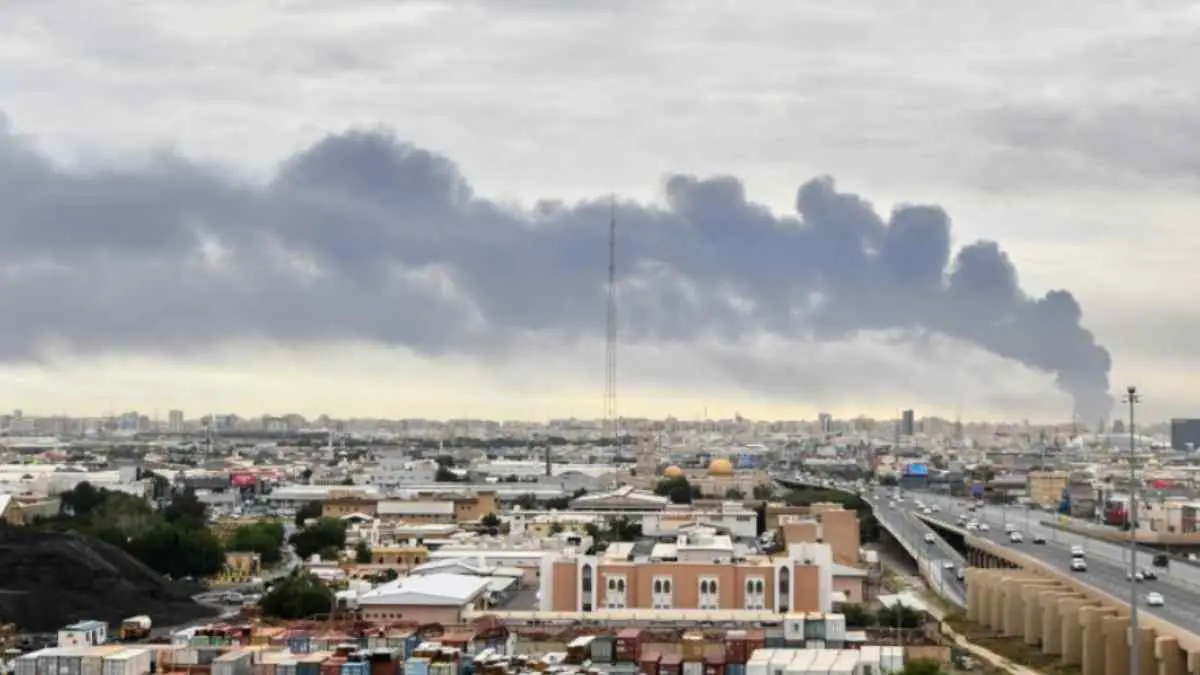
Tehran: Iran carried out a fresh wave of attacks across the Persian Gulf on Tuesday, in retaliation against US allies, hours after American forces concluded a 10th straight night of strikes on Iranian targets. As Iran resorted to a retaliatory response, the air raid sirens were heard across Kuwait, with the missiles and drones targeting facilities linked to the United States (US) and other critical infrastructure. According to regional reports, the Kuwaiti officials had not published casualty figures or a full assessment of the damage by Tuesday morning.
Reports suggested that the barrage came in direct response to US Central Command’s (CENTCOM) announcement that it had completed the latest round of strikes inside Iran, action taken after 4 American service members were killed in the region over the weekend. US President Donald Trump has promised that Iran will “pay many times over” for those deaths and has ordered the Pentagon to step up its operations.
Amidst the strikes and counter-strikes, the escalation was not confined to Kuwait. Iran also launched strikes on Bahrain and Jordan, while regional nerves were frayed by renewed threats to commercial shipping through the Strait of Hormuz and by an announcement from Yemen’s Houthis of plans for a naval blockade for Saudi Arabia.
Kuwait Under Attack
In Kuwait, the morning started with the wail of sirens and the sound of interceptions overhead, with the Kuwaiti Army issuing a statement confirming its air defences were engaged. “Kuwaiti Air Defenses are currently responding to hostile missile and drone threats…….the General Staff of the Army notes that if explosion sounds are heard, they are the result of the air defense systems intercepting the hostile attacks,” the statement said on Tuesday morning.
Advertisement
The army urged calm and compliance with official guidance, adding, “Everyone is requested to adhere to the security and safety instructions issued by the competent authorities.” However, no immediate figures on casualties or damage were released.
Iran's Retaliation Across The Gulf
The Iranian strikes extended beyond Kuwait’s borders, with Iran's IRGC targeting Bahrain and Jordan, which pointed to a clear widening of Tehran’s attack against countries seen as partners of Washington. The Iranian strikes followed CENTCOM’s confirmation that it had wrapped up another night of operations inside Iran, part of a sustained US response that has now run for 10 consecutive nights. The US action itself was triggered by the weekend deaths of 4 American troops, an incident that has hardened the tone in Washington.
Advertisement
In the meantime, beyond the missile exchanges, concern grew over the safety of maritime traffic, as fresh threats were issued regarding passage through the Strait of Hormuz, one of the world’s most vital oil chokepoints. Adding to the pressure, Yemen’s Houthi movement announced plans for a naval blockade targeting Saudi Arabia, a move likely to further complicate security in already volatile Gulf waters. The combined effect has left US allies in the region on high alert as the cycle of strikes and counter-strikes shows little sign of abating.