
Iran-US Peace Deal Expected in Geneva to Include Hormuz Reopening, Ceasefire Extension: Reports
The development comes after US President Donald Trump on Thursday spoke of a "great settlement" that could end the conflict with Iran, indicating that the agreement could be finalised in the coming days.
- World News
- 5 min read

;'%3e%3cpath%20d='m8,15.99c4.41,0,7.99-3.58,7.99-7.99S12.41,0,8,0,0,3.59,0,8s3.58,7.99,7.99,7.99Z'%20style='stroke:%23fff;%20stroke-miterlimit:10;%20stroke-width:.02px;'/%3e%3cpath%20d='m3.08,3.37l3.82,5.11-3.84,4.15h.87l3.37-3.64,2.72,3.64h2.94l-4.04-5.39,3.58-3.87h-.86l-3.1,3.35-2.5-3.35h-2.94Zm1.27.64h1.35l5.97,7.99h-1.35l-5.97-7.99Z'%20style='fill:%23fff;'/%3e%3c/g%3e%3c/svg%3e)


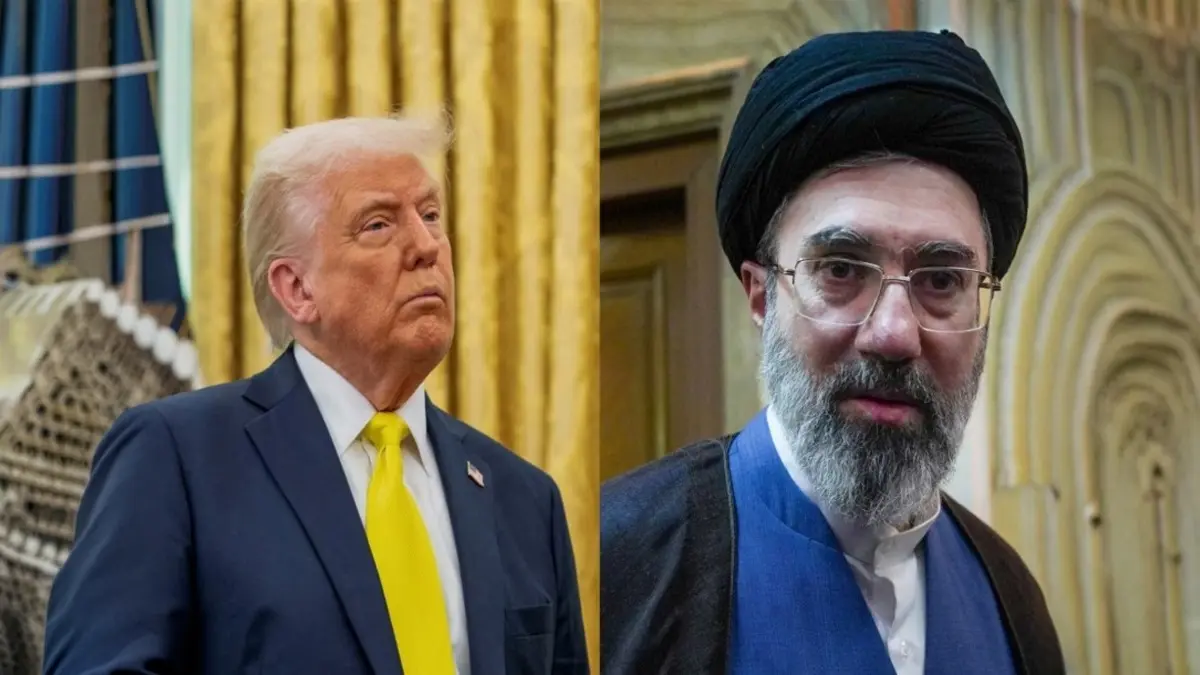
Washington DC, US: Despite Iranian officials maintaining that reports of a deal with the US to end the conflict in West Asia remain "merely speculation", a memorandum of understanding between Tehran and Washington is expected to be signed in Geneva, Switzerland, with the proposed agreement reportedly including an extension of the ceasefire, reopening of the Strait of Hormuz and a framework for further talks on the Islamic Republic's nuclear programme, as reported by CNN citing multiple diplomatic sources.
According to CNN, two sources familiar with the diplomatic negotiations said Geneva was being considered as the venue for the signing ceremony for the deal, with one source stating that the event would mark the beginning of "phase two" of diplomatic engagement, focused on implementing the memorandum of understanding.
The development comes after US President Donald Trump on Thursday spoke of a "great settlement" that could end the conflict with Iran, indicating that the agreement could be finalised in the coming days.
Trump had also suggested that a signing ceremony could take place soon in Europe and may be attended by Vice President JD Vance.
"We just made a great settlement of the war with Iran, and we're going to be subject to finalisation of documents. We should get done over the next few days. We'll probably have a signing, maybe in Europe," Trump told reporters at the Oval Office.
Advertisement
"The Strait will officially open as soon as we sign, which could be soon, very soon, maybe over the weekend in Europe. I won't be able to be there, but JD will be there, the Vice President, and some of the people. Steve Witkoff did a great job," he further added.
CNN further reported that the proposed agreement is being referred to by several sources as the "Islamabad Agreement" or "Islamabad Declaration", acknowledging Pakistan's role in facilitating discussions, despite them failing to negotiate a deal between the two sides earlier.
Advertisement
However, the report noted that no official confirmation has been issued regarding the name of the deal, while an Iranian source indicated that Vienna, Austria, was also being considered as a possible venue.
Citing a diplomat briefed on the matter, CNN reported that the interim agreement would extend the existing ceasefire, reopen the Strait of Hormuz and create a framework for further discussions on Iran's nuclear programme.
The diplomat told CNN that both sides had agreed to the text of the memorandum of understanding, although it was still awaiting final approval.
According to details shared by the diplomat and reported by CNN, the agreement envisages a 60-day ceasefire "on all fronts", including Lebanon, beginning immediately upon signing.
The Strait of Hormuz would be reopened without Iran imposing any transit charges, ensuring the uninterrupted movement of energy supplies and commercial shipments.
Maritime traffic through the strategic waterway would gradually return to pre-conflict levels within 30 days of the agreement's signing, the report added.
CNN also reported that the proposed arrangement includes lifting the US blockade of Iranian ports and providing limited sanctions relief, with the diplomatic source stating that such relief would be granted "based on the progression of the deal and continued engagement in good faith", although no specific timeline has been outlined.
On the nuclear front, the diplomat said the agreement "satisfies all US requirements on the nuclear issue", including Iran's commitment not to acquire nuclear weapons and addressing concerns related to its stockpile of highly enriched uranium.
However, it did not clarify whether the agreement includes the release of billions of dollars in frozen Iranian assets, a key demand reportedly raised by Tehran during negotiations.
Meanwhile, Iran's Foreign Ministry spokesperson Esmail Baghaei dismissed reports suggesting that a deal with the United States has been finalised, stating that no final agreement has been reached so far, as reported by Iranian State Media Press TV.
Baghaei said that Qatar and Pakistan continue to play an active mediating role, but noted that the diplomatic process has been complicated by the changing stance of the United States.
According to Press TV, Iran had been aware of the status of the negotiations from the outset and that most of the draft text had already been agreed upon, adding that the US repeatedly altered its position during the talks.
"The status of the negotiations was clear to us from the beginning, and the majority of the text had been finalised, but the Americans kept changing their positions," Baghaei said as quoted by Press TV.
Reiterating Tehran's position, Baghaei asserted that Iran would not compromise on issues it considers its "red lines".
Amid these diplomatic developments, Pakistan's Ministry of Foreign Affairs on Friday welcomed the "progress" in efforts between the US and Iran, signalling that an interim agreement between the two sides may be nearing fruition.
According to a statement issued by the ministry, Pakistan's Foreign Minister Muhammad Ishaq Dar discussed the latest developments concerning the Iran-US talks during a telephone conversation with the European Union's High Representative for Foreign Affairs and Security Policy and Vice-President of the European Commission, Kaja Kallas.
The statement noted that "both sides welcomed the progress achieved through sustained diplomatic engagement and expressed hope that these efforts will soon lead to a durable understanding and peaceful resolution."