
Iranian Envoy Thanks India for Condolences on Khamenei's 'Martyrdom'; Assures Safe Passage to 'Friend' Amid Hormuz Tensions
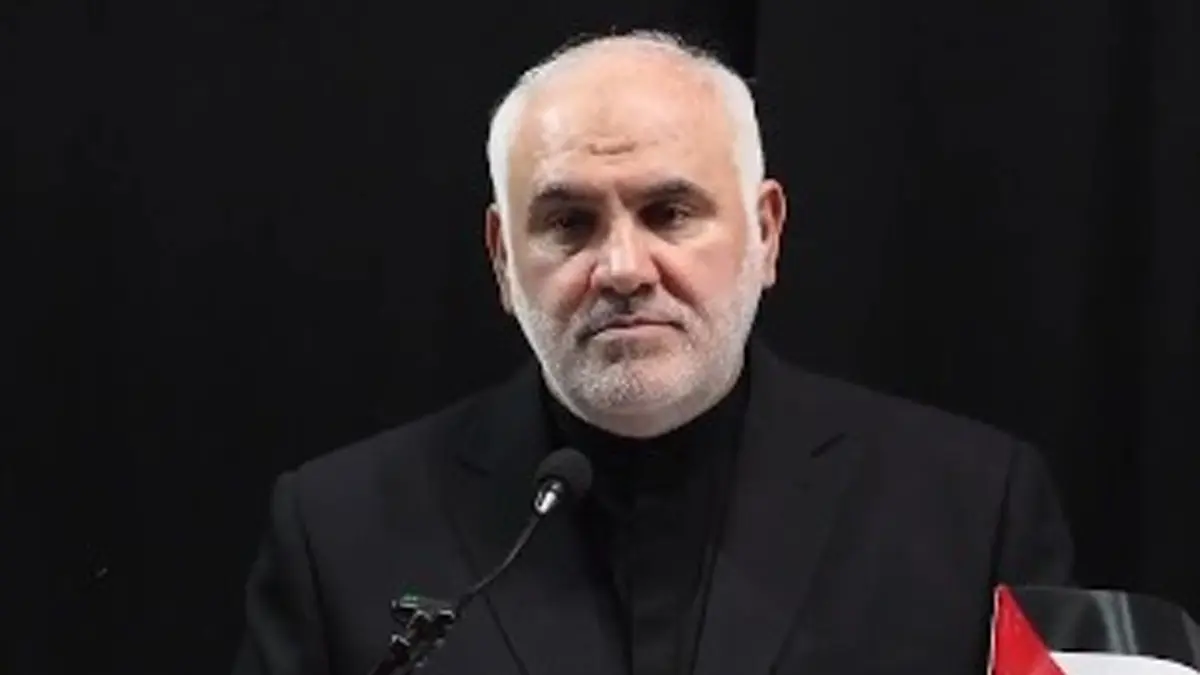
Amid the West Asia tensions, Iran's Ambassador to India, Mohammad Fathali, addressed the International Quds Day Conference in Delhi, emphasizing gratitude toward India for conveying condolences following Ayatollah Khamenei's death and reaffirming bilateral ties in the face of regional instability.
- World News
- 5 min read

;'%3e%3cpath%20d='m8,15.99c4.41,0,7.99-3.58,7.99-7.99S12.41,0,8,0,0,3.59,0,8s3.58,7.99,7.99,7.99Z'%20style='stroke:%23fff;%20stroke-miterlimit:10;%20stroke-width:.02px;'/%3e%3cpath%20d='m3.08,3.37l3.82,5.11-3.84,4.15h.87l3.37-3.64,2.72,3.64h2.94l-4.04-5.39,3.58-3.87h-.86l-3.1,3.35-2.5-3.35h-2.94Zm1.27.64h1.35l5.97,7.99h-1.35l-5.97-7.99Z'%20style='fill:%23fff;'/%3e%3c/g%3e%3c/svg%3e)


New Delhi: The escalating US-Israel war against Iran, now in its second week, has triggered widespread missile exchanges, strikes on Iranian nuclear and military sites, and disruptions across the Middle East. Following the assassination of Supreme Leader Ali Khamenei in late February airstrikes, Iran has launched repeated ballistic missile barrages at Israel, including cluster munitions to overwhelm defenses, while Israel and the US continue deep strikes into Iranian territory. The conflict has effectively closed or severely restricted the Strait of Hormuz, through which a significant portion of global oil flows, spiking crude prices above $100 per barrel and threatening energy supplies worldwide.
Amid this turmoil, Iran's Ambassador to India, Mohammad Fathali, addressed the International Quds Day Conference in Delhi, emphasizing gratitude toward India and reaffirming bilateral ties in the face of regional instability.
Fathali expressed deep appreciation for India's condolences on the "martyrdom" of Khamenei, stating: “Finally, I would like to express my gratitude to the people of India for the manner in which they conveyed their condolences and sympathies regarding the martyrdom of our leader. I am deeply thankful to all of you. Such messages and expressions from you serve as a testament to the depth of the historical and cultural ties that have long existed between India and Iran; the true extent of this profound bond can be gauged by the sentiments expressed by the people here.”
Reflecting on recent diplomatic engagement, he highlighted a positive conversation between Prime Minister Narendra Modi and Iranian President Pezeshkian: "They had a good conversation. Modi and Pezeshkian believe that they should try their best. We have announced several times that we do not want war, but we are ready for it if necessary. We have re-entered negotiations with the United States. Unfortunately, those negotiations were disturbed and destroyed at the table. Now we say to all governments: Iran does not want war, but Iran is ready for it..."
Advertisement
The ambassador underscored mutual support and shared interests.
"This is our suffering, and vice versa. For this reason, the Government of India helps us, and we should also help the Government of India, because we share common faith and common interests. As the Ambassador in India, we believe that we have a common faith in the region. For this reason, all the high-ranking officials from Iran have instructed the Embassy of Iran in India to pave the way for cooperation between the Iranian and Indian governments," he said.
Advertisement
In a key assurance amid shipping disruptions, Fathali confirmed Iran's commitment to facilitating safe passage for Indian vessels through critical maritime routes.
"Yes, because India is our friend. You will see it within two or three hours. We believe that Iran and India share common interests in the region," he said.
He further noted strong ongoing relations: "... We have a good relationship with the Government of India. All high-ranking officials held discussions yesterday. I believe we should pray to Allah to remove all obstacles in different fields. We have tried our best to resolve the problems, and I think you will hear good news in this regard in the near future."
These remarks come at a critical juncture for India, which relies heavily on Gulf oil imports--over 50% of which transit the Strait of Hormuz. The conflict has already driven up global oil prices, widened India's trade deficit risks, increased inflation pressures, and disrupted aviation and export logistics. Diplomatic efforts, including talks between External Affairs Minister S. Jaishankar and his Iranian counterpart, have reportedly secured safe passage for Indian-flagged tankers, providing temporary relief to energy security concerns despite broader regional volatility.
Iran's outreach highlights its view of India as a "friend" and partner with aligned regional interests, even as the war shows no immediate signs of abating.