
Iran’s New Supreme Leader, Rising Death Toll, Oil Shock: Where Things Stand As US-Israel-Iran War Enters Day 10
As the US-Israel-Iran War enters Day 10, Mojtaba Khamenei, the son of Iran's former supreme leader Ali Khamenei, has taken over leadership, while the intensifying war sparks rising casualties, regional retaliation, and global economic turmoil.
- World News
- 5 min read

;'%3e%3cpath%20d='m8,15.99c4.41,0,7.99-3.58,7.99-7.99S12.41,0,8,0,0,3.59,0,8s3.58,7.99,7.99,7.99Z'%20style='stroke:%23fff;%20stroke-miterlimit:10;%20stroke-width:.02px;'/%3e%3cpath%20d='m3.08,3.37l3.82,5.11-3.84,4.15h.87l3.37-3.64,2.72,3.64h2.94l-4.04-5.39,3.58-3.87h-.86l-3.1,3.35-2.5-3.35h-2.94Zm1.27.64h1.35l5.97,7.99h-1.35l-5.97-7.99Z'%20style='fill:%23fff;'/%3e%3c/g%3e%3c/svg%3e)


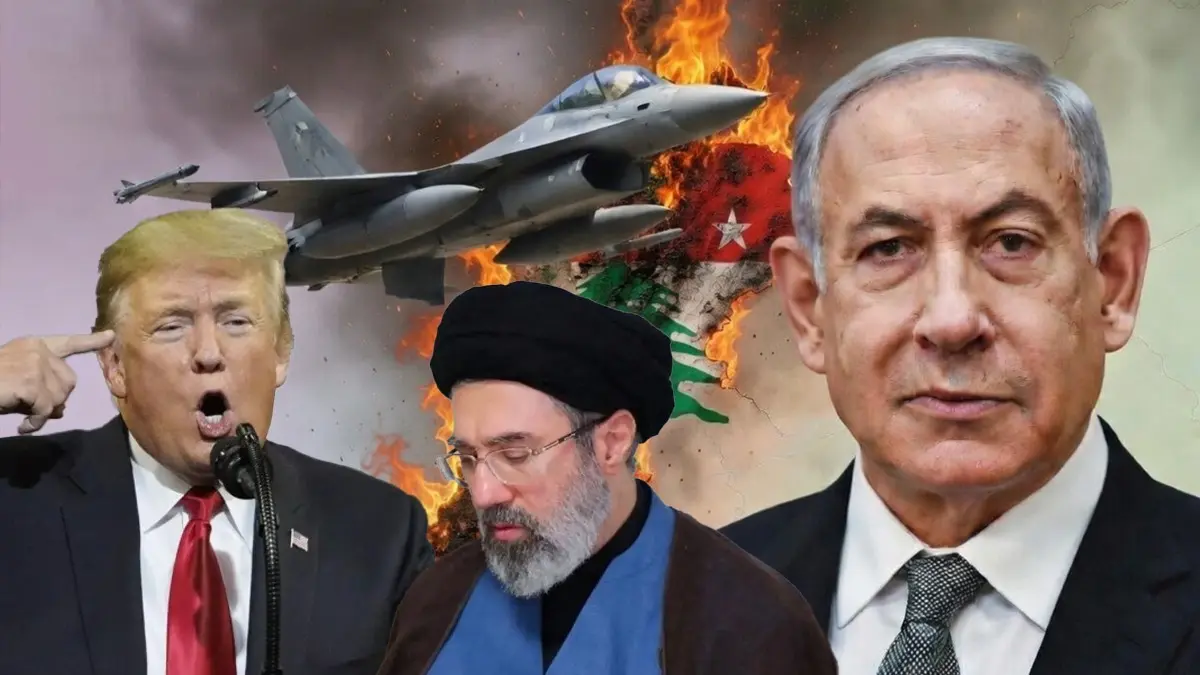
The conflict involving Iran, Israel, and the United States has entered Day 10, with major political developments unfolding over the weekend. It began on February 28 and has now expanded across the Middle East, triggering rising casualties, regional tensions, and global energy concerns.
Here’s where things stand as the war enters Day 10:
Mojtaba Khamenei named Iran’s new supreme leader

A major development on Day 10 came as Mojtaba Khamenei, the son of Iran’s late Supreme Leader Ayatollah Ali Khamenei, was named the country’s new supreme leader.
Iranian state television reported that the 88-member Assembly of Experts appointed the 56-year-old cleric as the third leader of the Islamic Republic.
Advertisement
Mojtaba Khamenei had long been considered a possible successor, even before Israeli strikes at the start of the war killed his father. Known for his close ties with the Islamic Revolutionary Guard Corps (IRGC), he is now expected to play a central role in shaping Iran’s war strategy.
The powerful paramilitary Revolutionary Guard has reportedly pledged allegiance to him following the announcement.
Advertisement
Trump reacts cautiously to leadership change
US President Donald Trump declined to give a detailed reaction to Mojtaba Khamenei’s elevation.
“We’ll see what happens,” Trump said when asked about the appointment.
Earlier, Trump had expressed strong opposition to the younger Khamenei, calling him a “lightweight” and an “unacceptable” candidate. He also said any future Iranian leader would struggle to remain in power without Washington’s approval.
War began with US-Israeli joint strikes on Iran
The conflict began on February 28, when Israel launched what it described as “preventive strikes” against Iranian targets in an operation named “Roar of the Lion” and called it “Operation Epic Fury”.
The strikes targeted locations in Tehran, including areas near the offices of Supreme Leader Ayatollah Ali Khamenei, and Iranian authorities later confirmed that Khamenei had been killed in the attacks.
The opening strikes also reportedly hit an Iranian girls’ school in the city of Minab, causing dozens of deaths and drawing criticism from the United Nations and human rights groups.
Israel expands strikes on Iran and Lebanon
Israel has continued its military campaign against Iranian targets while also striking positions linked to the Iran-backed Hezbollah group in Lebanon.
Israeli Prime Minister Benjamin Netanyahu said joint operations with the United States had achieved near-total control over Iranian airspace.
“We achieved almost complete control over the skies of Tehran,” Netanyahu said in a video message.
He also stated that the campaign aimed to reshape the Middle East's power balance after the Hamas attacks on October 7, 2023.
Iran retaliates with missiles and drones
Iran has responded with a series of missile and drone strikes targeting US bases and allied nations across the Middle East.
Several countries, including Bahrain, Qatar, the United Arab Emirates, Kuwait and Jordan, reported intercepting Iranian projectiles.
Explosions were also reported near the US Navy’s Fifth Fleet headquarters in Bahrain, while missiles struck infrastructure across the region.
Regional tensions and global involvement grow
The conflict has received criticism from regional organisations and governments.
The head of the Arab League described Iran’s war strategy as "reckless", as multiple Gulf nations reported intercepting missiles and drones.
Ukraine has also indicated it will send experts to assist US and Middle Eastern allies in countering Iranian drone attacks.
Rising casualties across the region
The death toll continues to rise as the conflict intensifies.
Officials say at least 1,230 people have been killed in Iran, while more than 300 people have died in Lebanon, and around a dozen fatalities have been reported in Israel.
The United States also confirmed that seven American service members have died from injuries sustained in Iranian attacks, including reservists killed during a March 1 attack at a Kuwaiti port.
Gulf countries have also reported several additional deaths as a result of falling military debris and missile strikes.
Global energy markets thrown into turmoil
The war has severely disrupted global energy markets, with oil prices surging above $100 per barrel.
The crisis has intensified after the Strait of Hormuz, a critical oil and gas shipping route, came under Iranian control, drastically reducing tanker traffic.
Goldman Sachs warned that the drop in Middle Eastern oil output could be 17 times larger than the peak disruption caused during the Ukraine war, pushing global prices sharply higher.
Europe faces growing energy crisis
The energy shock has pushed several European countries toward a potential supply crisis.
Reports indicate that the United Kingdom’s gas reserves have fallen to just two days of supply, while panic buying has been reported in countries such as Spain amid fears of fuel shortages.
Experts caution that the conflict could lead to escalating inflation and global economic instability due to the disruption of supply chains.
Shipping and travel disrupted across the region
The war has also disrupted global travel and shipping.
Airports across the Middle East have faced security alerts and temporary closures, and thousands of travellers remain stranded in the region.
The US State Department said over 32,000 American citizens have left the Middle East since the war began, while hundreds of oil tankers remain stranded near the Strait of Hormuz as tensions escalate.