
Israel To Vote On October 27, Netanyahu Eyes Another Term As Prime Minister
Israel has announced a general election for October 27, with Prime Minister Benjamin Netanyahu eyeing another term as political parties prepare for the upcoming vote, with ex-general Gadi Eisenkot emerging as a leading challenger after wars in Gaza, Lebanon and Iran.
- World News
- 3 min read

;'%3e%3cpath%20d='m8,15.99c4.41,0,7.99-3.58,7.99-7.99S12.41,0,8,0,0,3.59,0,8s3.58,7.99,7.99,7.99Z'%20style='stroke:%23fff;%20stroke-miterlimit:10;%20stroke-width:.02px;'/%3e%3cpath%20d='m3.08,3.37l3.82,5.11-3.84,4.15h.87l3.37-3.64,2.72,3.64h2.94l-4.04-5.39,3.58-3.87h-.86l-3.1,3.35-2.5-3.35h-2.94Zm1.27.64h1.35l5.97,7.99h-1.35l-5.97-7.99Z'%20style='fill:%23fff;'/%3e%3c/g%3e%3c/svg%3e)


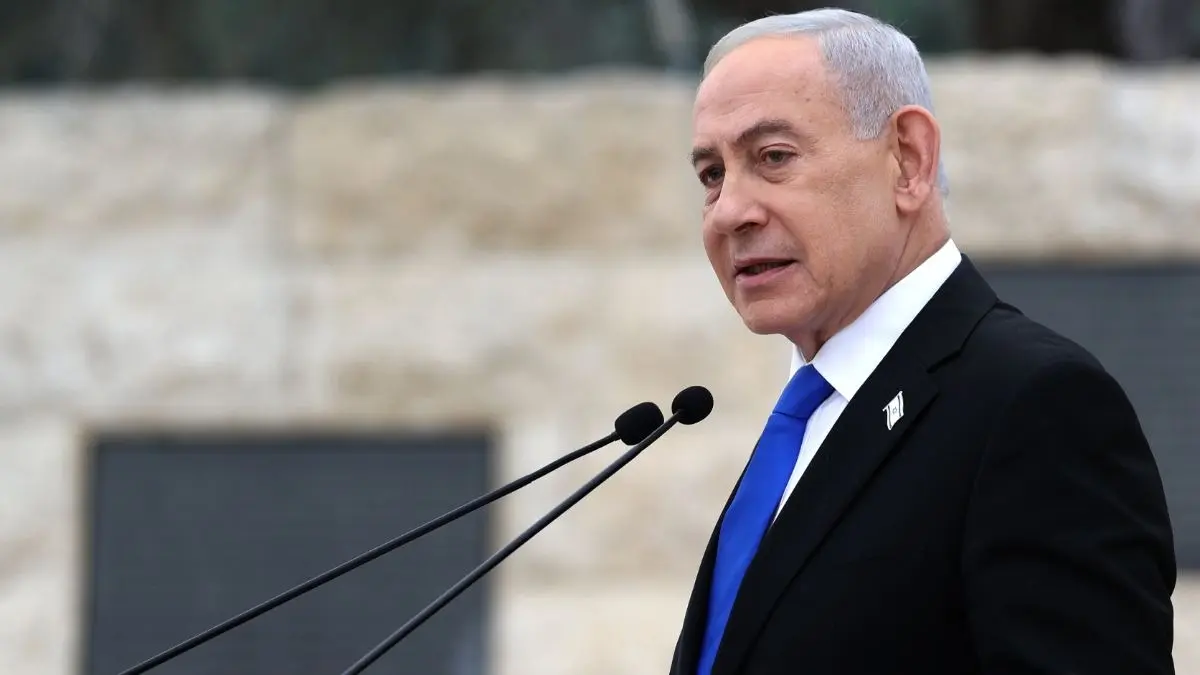
Jerusalem: Israel will head to the polls on October 27, the latest date allowed under law, the governing coalition headed by Prime Minister Benjamin Netanyahu confirmed on Sunday. According to the information, the announcement, first reported by Haaretz, means the current government would serve a full term. Amidst the ongoing tensions with Iran, Lebanon and in Gaza, the upcoming general elections are expected to be crucial for Netanyahu.
Notably, the timing of the polls lands more than 3 years after the October 7, 2023 Hamas assault that set off the war in Gaza, an event for which Netanyahu has faced sustained public fury over intelligence and security lapses in the lead-up. The trauma of that day is still expected to shape Israeli politics, as the vote will be the first national election since the country was drawn into successive conflicts in Gaza, Lebanon and, most recently, Iran.
The Knesset is anyway scheduled to dissolve automatically on July 15, at the close of its summer session. The procedural deadline has now been aligned with a campaign that Netanyahu intends to fight on a platform of national security rather than narrow ideology.
Netanyahu’s Pitch: A ‘Broad National Government’
The veteran Israeli PM, who has clocked nearly 2 decades in office across several stints, has made clear he will contest the election. Speaking last month, he had framed his ambition in deliberately unifying terms. “I intend to establish a broad national government, not a right-wing government, not a left-wing government that depends on Arab parties, but a broad national government,” Netanyahu said.
Advertisement
Aides suggested that he planned to centre his campaign on Israel’s military operations against Iran and the Lebanese militant group Hezbollah, seeking to shift the narrative from fractious coalition politics to a mandate built around defence and deterrence.
The framing immediately drew criticism from within his own bloc, with far-right National Security Minister Itamar Ben Gvir rejecting the overture, calling the remarks “very disturbing” and insisting on a different direction. “The government that Prime Minister Netanyahu must form should be a fully right-wing government,” he said.
Advertisement
Challenger Emerges From The Ranks
Reports suggested that Netanyahu’s most credible rival may come from the security establishment itself, as former military chief Gadi Eisenkot (66) has been climbing in opinion surveys and is positioned to become the prime minister’s principal challenger.
Gadi Eisenkot, who lost a son in Gaza and is associated with the ‘Dahiyeh doctrine’ advocating overwhelming force, has presented himself as an outsider-soldier whose modest background and personal loss contrast with Netanyahu’s long tenure and ongoing corruption cases. His image as a security hawk without party baggage has resonated with voters exhausted by political infighting.
Public Mood Turns After Iran Ceasefire
The political analysts suggested that the polling pointed to deep discontent as Israelis prepare to vote. Support for Netanyahu’s premiership has slid sharply, from 40.5 percent in early March to 29.4 percent in June, according to a survey by the Hebrew University of Jerusalem.
The decline accelerated after a war between Israel and the US on one side and Iran on the other in late February, followed by ceasefire talks from which Israel was excluded. The resulting deal between Tehran and Washington was seen in Israel as disadvantageous.
The perception has hardened, as the same Hebrew University poll found that over 92 percent of Israelis believed Iran had come out on top in the confrontation. Amidst the anger over October 7, war-weariness, and diplomatic setbacks converging, the October ballot is shaping up as a referendum not just on Netanyahu, but on how Israel defines security in a changed region.