
Karachi Residents Store Gas in Plastic Balloons for Cooking Amid Fuel Shortage
Locals described the method as a "last resort," citing the severity of the gas crisis in Karachi. Many households reportedly struggle to carry out basic daily tasks due to erratic supply, forcing them to adopt such unconventional and risky alternatives.
- World News
- 2 min read

;'%3e%3cpath%20d='m8,15.99c4.41,0,7.99-3.58,7.99-7.99S12.41,0,8,0,0,3.59,0,8s3.58,7.99,7.99,7.99Z'%20style='stroke:%23fff;%20stroke-miterlimit:10;%20stroke-width:.02px;'/%3e%3cpath%20d='m3.08,3.37l3.82,5.11-3.84,4.15h.87l3.37-3.64,2.72,3.64h2.94l-4.04-5.39,3.58-3.87h-.86l-3.1,3.35-2.5-3.35h-2.94Zm1.27.64h1.35l5.97,7.99h-1.35l-5.97-7.99Z'%20style='fill:%23fff;'/%3e%3c/g%3e%3c/svg%3e)


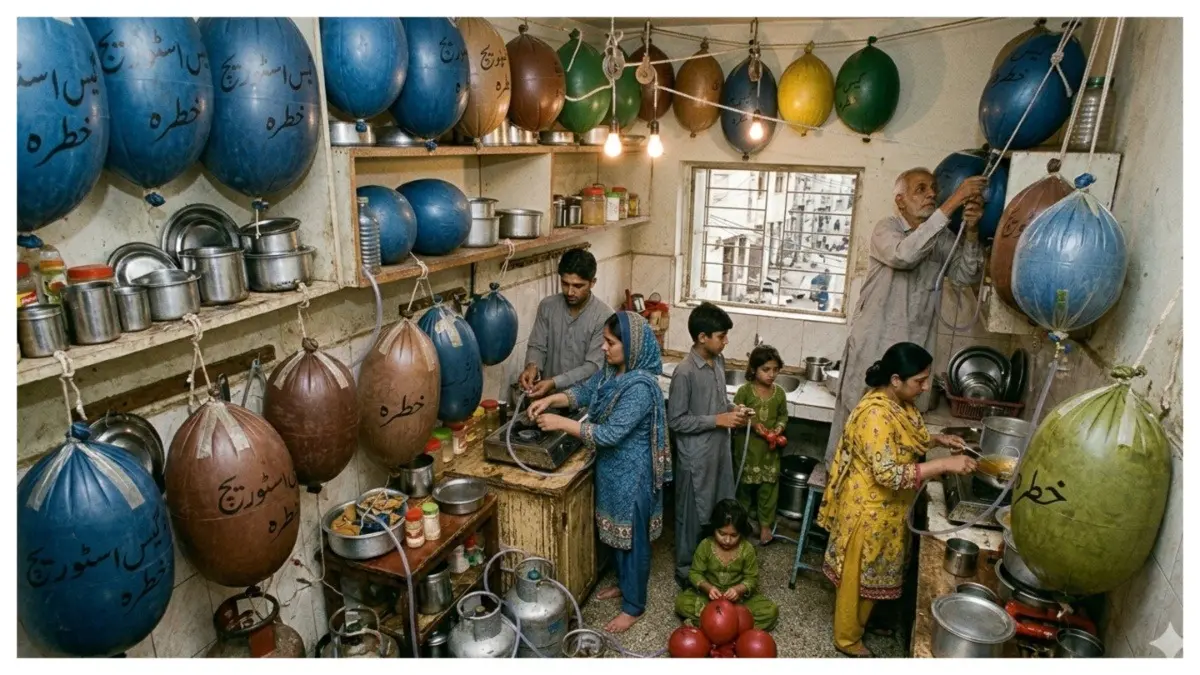
Karachi: Residents of Karachi have resorted to storing gas in plastic balloons in parts of Karachi as prolonged gas load-shedding and low pressure continue to disrupt daily life, according to a report by ARY News.
The alarming practice has surfaced particularly in Karachi's Orangi Town area, including Mominabad, where residents say they have been left with little choice due to inconsistent gas supply.
According to ARY News, specially designed plastic balloons are being filled with gas during brief periods of supply and later used for household cooking.
Residents said the balloons, available in local markets for around Rs 1,000 to Rs 1,500, are filled when gas supply is restored for short durations. Once filled, the balloons are disconnected and used as a makeshift storage system throughout the day to meet cooking needs.
Advertisement
Locals described the method as a "last resort," citing the severity of the gas crisis in Karachi. Many households reportedly struggle to carry out basic daily tasks due to erratic supply, forcing them to adopt such unconventional and risky alternatives.
However, experts have raised serious safety concerns over the practice, warning that storing gas in plastic balloons poses extreme hazards. Safety analysts described the balloons as a "mobile bomb," cautioning that even minor friction, heat exposure, or a spark could trigger an explosion, potentially leading to devastating consequences in densely populated residential areas.
Advertisement
The presence of such gas-filled balloons inside homes has heightened fears of fire accidents, with experts urging immediate intervention by authorities.
As per ARY news, analysts have called on gas utility companies and local administrations to address the worsening supply situation and prevent the spread of what they termed a "life-threatening" trend.
The development comes amid broader geopolitical tensions impacting energy supply chains. The ongoing conflict involving the United States and Iran has led to disruptions in global energy flows, including concerns surrounding the Strait of Hormuz, a critical route for global oil shipments.