
LeT Co-Founder Amir Hamza Shot At In Pakistan’s Lahore, Critical
Unidentified gunmen opened fire at Lashkar-e-Taiba co-founder Amir Hamza in Pakistan’s Lahore, leaving the 66-year-old critically injured. No group has claimed responsibility so far.
- World News
- 3 min read

;'%3e%3cpath%20d='m8,15.99c4.41,0,7.99-3.58,7.99-7.99S12.41,0,8,0,0,3.59,0,8s3.58,7.99,7.99,7.99Z'%20style='stroke:%23fff;%20stroke-miterlimit:10;%20stroke-width:.02px;'/%3e%3cpath%20d='m3.08,3.37l3.82,5.11-3.84,4.15h.87l3.37-3.64,2.72,3.64h2.94l-4.04-5.39,3.58-3.87h-.86l-3.1,3.35-2.5-3.35h-2.94Zm1.27.64h1.35l5.97,7.99h-1.35l-5.97-7.99Z'%20style='fill:%23fff;'/%3e%3c/g%3e%3c/svg%3e)


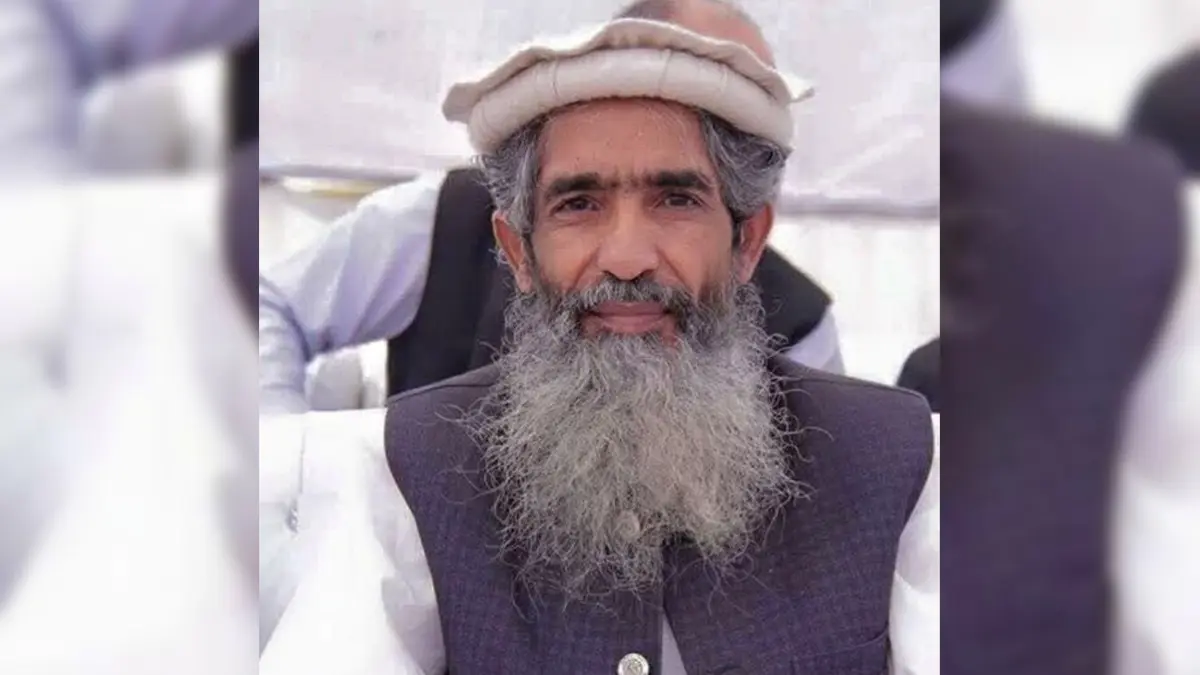
Amir Hamza, the co-founder of Lashkar-e-Taiba (LeT) and one of the key architects of the terror outfit’s ideological machinery, was reportedly shot at on Wednesday by unidentified gunmen in Lahore and is in a critical condition.
According to preliminary reports, Hamza was inside his vehicle near a news channel office when unknown attackers opened fire, leaving the 66-year-old seriously injured. He was rushed to a nearby hospital, where his condition is reported to be critical.
No group has claimed responsibility so far, but the brazen daylight attack on one of Pakistan’s most prominent terror-linked figures has already set off intense speculation.
Who Is Amir Hamza?
Hamza is widely regarded as one of the founding ideologues of Lashkar-e-Taiba, the Pakistan-based terror organisation responsible for some of the deadliest attacks in India, including the 2008 Mumbai terror attacks. A close associate of Hafiz Saeed, Hamza helped shape LeT’s propaganda, recruitment and radicalisation network for decades.
Advertisement
His shooting, carried out with precision and by “unknown gunmen”, has triggered speculation around who wanted one of Pakistan’s most entrenched jihadist leaders dead? Reports claim the reason may be internal factional rivalries, financial disputes or external retaliation.
Hamza’s association with Lashkar-e-Taiba goes back to the 1980s, when the organisation was taking shape in Pakistan’s expanding jihadist ecosystem.
Advertisement
Recruited during the early phase of militant mobilisation, Hamza went on to become one of the organisation’s most influential propagandists. He was once the editor of LeT’s official publication and played a major role in creating the ideological literature that fed the group’s recruitment engine.
Through books, speeches and publications, Hamza pushed extremist narratives that helped Lashkar expand its influence across Pakistan.
He also played an important role in the activities of Markaz al-Dawa wal-Irshad, the religious organisation that later evolved into Lashkar-e-Taiba’s wider operational network.
From Lashkar To Jaish-e-Manqafa
In 2018, amid growing international scrutiny and financial crackdowns on LeT-linked fronts, Hamza reportedly distanced himself from the main organisation and floated a splinter outfit called Jaish-e-Manqafa.
The group was believed to function as a parallel channel to sustain militant operations and maintain financial flows under a new name.
This kind of organisational rebranding has long been seen as a tactic used by Pakistan-based militant groups to evade sanctions and global scrutiny, while continuing their activities under altered identities.
Even after the split, Hamza was believed to maintain links with Lashkar’s leadership, making him a central figure in the larger militant ecosystem.
Declared Global Terrorist, Yet Operating Freely
Despite being designated a global terrorist by the US in 2012, Hamza remained active in Pakistan’s radical circles.
His ability to continue operating, publishing and allegedly maintaining ties with militant networks despite international sanctions has often been cited as proof of the infrastructure available to extremist groups in the country.
Internal Rivalry, Revenge Or Covert Hit?
With no official clarity on the attackers, theories are already swirling.
Was it an internal purge linked to rival militant factions or a revenge strike from hostile networks or a covert operation aimed at dismantling old terror nodes?
Though there are no answers at the moment, only a high-profile shooting that has exposed the volatile undercurrents within Pakistan’s militant ecosystem.
Why This Matters
Amir Hamza was not just another extremist name in Pakistan.
He was one of the founding architects of Lashkar-e-Taiba’s ideological machinery, a figure who helped build the propaganda and recruitment systems that sustained one of South Asia’s deadliest terror outfits. His shooting is more than an isolated act of violence.