
Mary E Brunkow, Fred Ramsdell, Shimon Sakaguchi Get Nobel In Medicine For Discoveries On Peripheral Immune Tolerance
The laureates, Brunkow and Ramsdell (USA), and Sakaguchi (Japan), have been credited by the prize-awarding body with laying the foundation for a new field of research that has already spurred new treatments for conditions like cancer and autoimmune diseases.
- World News
- 3 min read

;'%3e%3cpath%20d='m8,15.99c4.41,0,7.99-3.58,7.99-7.99S12.41,0,8,0,0,3.59,0,8s3.58,7.99,7.99,7.99Z'%20style='stroke:%23fff;%20stroke-miterlimit:10;%20stroke-width:.02px;'/%3e%3cpath%20d='m3.08,3.37l3.82,5.11-3.84,4.15h.87l3.37-3.64,2.72,3.64h2.94l-4.04-5.39,3.58-3.87h-.86l-3.1,3.35-2.5-3.35h-2.94Zm1.27.64h1.35l5.97,7.99h-1.35l-5.97-7.99Z'%20style='fill:%23fff;'/%3e%3c/g%3e%3c/svg%3e)


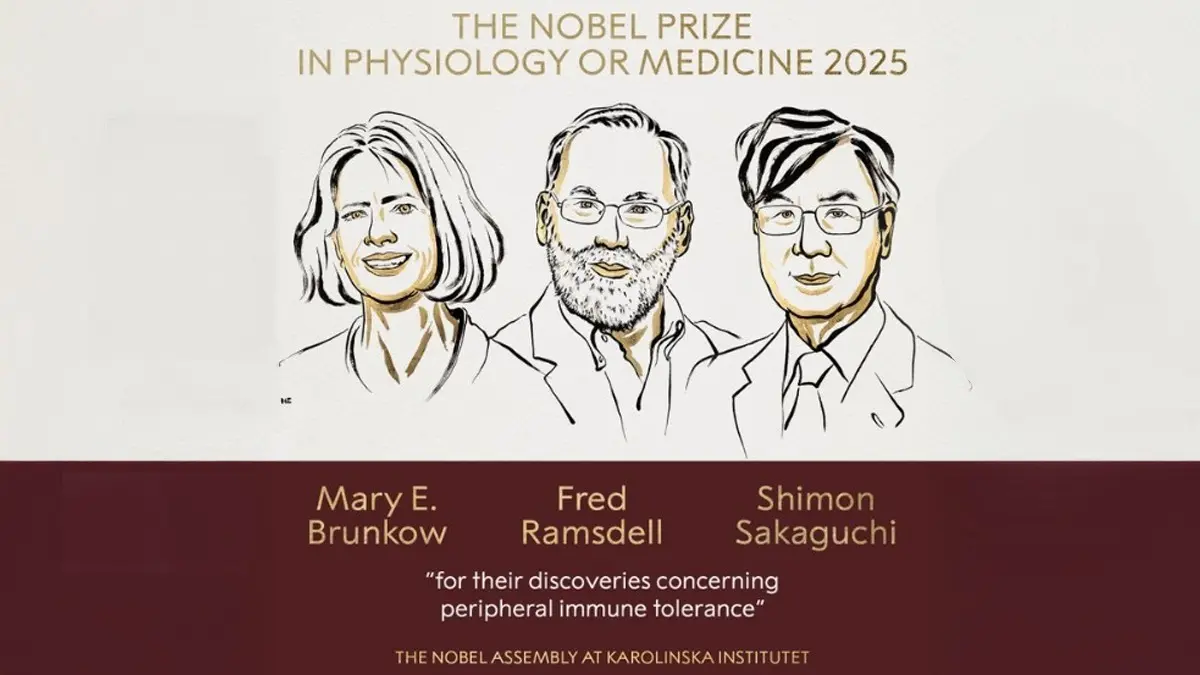
Stockholm: Mary E Brunkow, Fred Ramsdell, Shimon Sakaguchi got the Nobel prize in Medicine for 2025 for their discoveries concerning peripheral immune tolerance.
The Nobel Prize in Medicine 2025: Key Points
This year's Nobel Prize in Physiology or Medicine recognizes discoveries vital to controlling the immune system, specifically, how it can effectively fight microbes while avoiding autoimmune diseases, as noted by Karolinska Institute professor Marie Wahren-Herlenius.
The laureates, Brunkow and Ramsdell (USA), and Sakaguchi (Japan), have been credited by the prize-awarding body with laying the foundation for a new field of research that has already spurred new treatments for conditions like cancer and autoimmune diseases.
The prize is selected by the Nobel Assembly of the Karolinska Institute and includes 11 million Swedish crowns (about $1.2 million) and a gold medal.
Advertisement
The Nobel Prize Authority acknowledged the contribution of Brunkow, Ramsdell and Sakaguchi in a post on their X handle by describing the complexities of the immune system of the human body.
In the X post, the Nobel Prize stated, “Our immune system is an evolutionary masterpiece. Every day it protects us from the thousands of different viruses, bacteria and other microbes that attempt to invade our bodies. Without a functioning immune system, we would not survive…One of the immune system’s marvels is its ability to identify pathogens and differentiate them from the body’s own cells. The microbes that threaten our health do not wear a uniform – they all have different appearances. Many have also developed similarities to human cells, as a form of camouflage. So how does the immune system keep track of what to attack and what to protect? Why doesn’t the immune system attack our bodies more frequently?”
Advertisement
“Researchers long believed they knew the answer to these questions: that immune cells mature through a process called central immune tolerance. However, our immune system turned out to be more complex than they believed. Mary Brunkow, Fred Ramsdell and Shimon Sakaguchi have been awarded the 2025 Nobel Prize in Physiology or Medicine for their discoveries concerning peripheral immune tolerance,” the post added.
The Nobel Tradition
The Nobel Prizes, established by the 19th-century will of wealthy Swedish businessman and dynamite inventor Alfred Nobel, have been honoring outstanding global contributions in science, literature, and peace since 1901. The economics prize, funded by Sweden's central bank, was added later.
Process: Winners are chosen by expert committees from various institutions.
Location: All prizes are awarded in Stockholm, except for the Peace Prize, which is presented in Oslo, a nod to the historical political union between Sweden and Norway.
Ceremony: The awards are steeped in tradition, culminating in ceremonies and lavish banquets attended by the royal families of Sweden and Norway on December 10, the anniversary of Alfred Nobel's death.
The Medicine Prize is traditionally the first to be announced, kicking off the annual series of what are considered the most prestigious prizes in their respective fields. Past recipients include Alexander Fleming for penicillin (1945) and scientists whose breakthroughs enabled the development of COVID-19 vaccines. Last year, the Medicine Prize recognized Victor Ambros and Gary Ruvkun for their discovery of microRNA and its role in how organisms grow.