
Stealth Guardians: American F-35s join forces in the Middle East to deter adversaries
As tensions continue to escalate in the region, the US Defense Department has decided to reinforce its presence to maintain stability of the region.
- World News
- 3 min read

;'%3e%3cpath%20d='m8,15.99c4.41,0,7.99-3.58,7.99-7.99S12.41,0,8,0,0,3.59,0,8s3.58,7.99,7.99,7.99Z'%20style='stroke:%23fff;%20stroke-miterlimit:10;%20stroke-width:.02px;'/%3e%3cpath%20d='m3.08,3.37l3.82,5.11-3.84,4.15h.87l3.37-3.64,2.72,3.64h2.94l-4.04-5.39,3.58-3.87h-.86l-3.1,3.35-2.5-3.35h-2.94Zm1.27.64h1.35l5.97,7.99h-1.35l-5.97-7.99Z'%20style='fill:%23fff;'/%3e%3c/g%3e%3c/svg%3e)


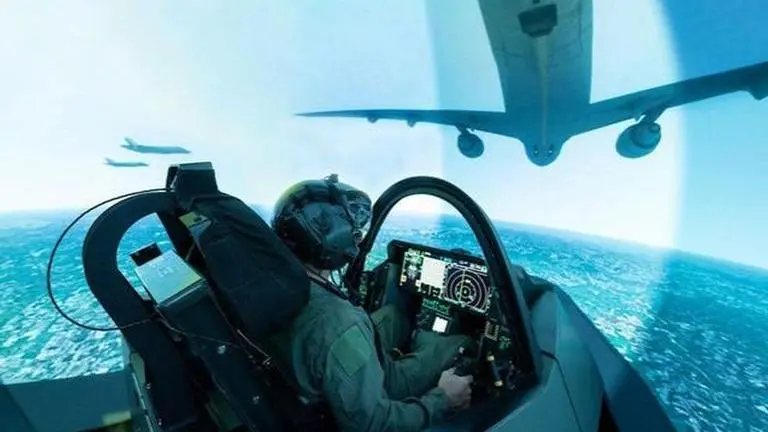
In a significant move to strengthen its airpower and counter potential threats from Iran and Russia, the U.S. Central Command (CENTCOM) has received a boost with the deployment of a dozen F-35 stealth fighters to the Middle East. This deployment comes in the wake of increasing harassment of U.S. aircraft by Russian jets over Syria. The F-35 deployment, coupled with the recent arrival of stealth F-22s to Jordan, showcases the U.S.'s commitment to safeguarding its interests and ensuring the freedom of navigation in the crucial Strait of Hormuz.
As tensions continue to escalate in the region, the U.S. Defense Department's decision to reinforce its presence underscores the importance of maintaining stability and security in this strategic part of the world. The U.S. Central Command has received a significant reinforcement with the arrival of a dozen F-35 stealth fighters in the Middle East. The move is aimed at bolstering airpower in the region and deterring potential adversaries, especially Iran and Russia.
Strategic Significance of Deploying Stealth Fighters
The deployment comes amidst escalating harassment of U.S. aircraft by Russian jets over Syria, adding to the already heightened hostilities in the area. The deployment of F-35 stealth fighters signifies the U.S.'s commitment to strengthening its capabilities in the region. With the presence of the F-35s, the U.S. aims to showcase its advanced airpower, surpassing competing fighter jets like the Russian-Chinese JF-17, and reinforcing its role as a dominant force in the region. The stealth technology of the F-35 enhances its ability to operate undetected, providing a tactical advantage in surveillance and defense operations.
U.S. Air Force F-35’s deploy to the U.S. Central Command Area of Responsibility to help defend U.S. interests, promote regional security and safeguard freedom of navigation.https://t.co/V2pTvlqIKJ@CENTCOM @DeptofDefense @usairforce pic.twitter.com/cKbAncsj8S
— US AFCENT (@USAFCENT) July 26, 2023
Notably, the deployment of F-35s is in response to recent alarming events in the Strait of Hormuz, a crucial narrow passage that connects the Persian Gulf and the Gulf of Oman. As approximately 20 percent of the global oil supply flows through this strategic waterway, ensuring the freedom of navigation is vital for international trade and economic stability. The presence of advanced fighter aircraft like the F-35 serves as a deterrent against potential threats and acts as a safeguard for U.S. interests in the region.
Advertisement
Heightened Hostilities and American contingency
In recent times, tensions in the Middle East have led to repeated threats from Iran and Russia, compelling the U.S. to reinforce its forces in the region. Incidents of harassment of U.S. MQ-9 drones by Russian aircraft in western Syria have raised concerns about safety and stability. The U.S. Air Force's deployment of additional F-22 Raptors last month had a noticeable impact on Russian behavior over the al-Tanf garrison. Furthermore, Iran's actions in capturing tankers and attempts to seize commercial vessels in the Gulf of Oman have necessitated the deployment of additional assets to protect maritime interests.
As hostilities continue to escalate, the presence of advanced fighter aircraft further underscores the U.S.'s role as a key player in maintaining peace and security in the Middle East. The addition of F-35 stealth fighters to the region has bolstered the fighter capacity and counterair capability of the U.S. Air Force in the Gulf and over Syria. Alongside A-10 Warthog tank-busters and F-16s, the F-35s provide a comprehensive aerial defense system to protect commercial shipping and counter potential threats. The U.S. remains committed to maintaining peace and stability in the region and continues to adjust its posture based on evolving operational needs.