
Mystery plant from Peru gets name from scientists almost 50 years after discovery
The mystery was about determining the plant's species, but it took the experts nearly 50 years because they were unsure about which family belonged to.
- World News
- 2 min read

;'%3e%3cpath%20d='m8,15.99c4.41,0,7.99-3.58,7.99-7.99S12.41,0,8,0,0,3.59,0,8s3.58,7.99,7.99,7.99Z'%20style='stroke:%23fff;%20stroke-miterlimit:10;%20stroke-width:.02px;'/%3e%3cpath%20d='m3.08,3.37l3.82,5.11-3.84,4.15h.87l3.37-3.64,2.72,3.64h2.94l-4.04-5.39,3.58-3.87h-.86l-3.1,3.35-2.5-3.35h-2.94Zm1.27.64h1.35l5.97,7.99h-1.35l-5.97-7.99Z'%20style='fill:%23fff;'/%3e%3c/g%3e%3c/svg%3e)


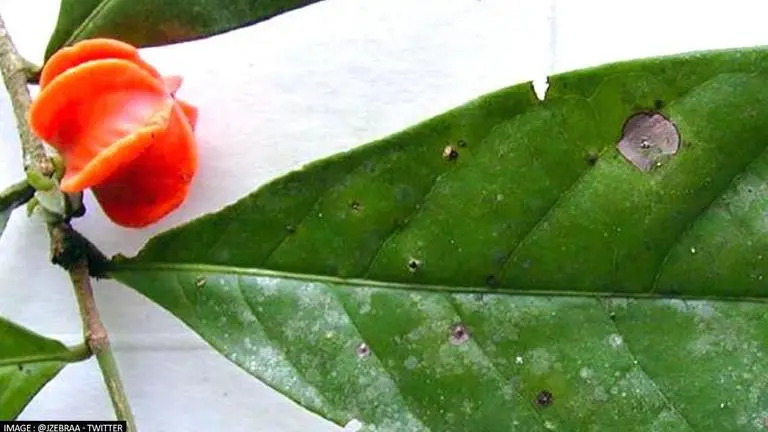
The mystery behind Aenigmanu alvareziae plant discovered from Peru’s Manu National Park in 1973 has finally been decoded, confirmed scientists. The mystery was all about naming the plant and determining its species, but it took the experts nearly 50 years to do so as they didn’t know what class it belonged to. According to a study published in the journal Taxon, the scientists have named it Aenigmanu alvareziae, or 'Mystery of Manu.'
Felicitaciones a los autores de Aenigmanu alvareziae (Picramniaceae), un nuevo genero de árbol para el PN Manu-Peru, un arbolito que era un misterio de medio siglo sin resolver.https://t.co/IEjB8arCYLhttps://t.co/ilEt5nacsy pic.twitter.com/R6L5iXCM1j
— Abel Monteagudo (@monteagudomendo) October 6, 2021
The mystery behind Aenigmanu alvareziae
The discoverers of the plant were left scratching their heads until now, ever since they first found it having orange coloured paper lanterns-like fruits. As per EurekaAlert’s report, Robin Foster, the Smithsonian Tropical Research Institute faculty, who discovered the plant said that it was the orange-coloured Chinese lantern-like fruits that grabbed his attention.
After the discovery, Foster included more researchers in solving the identity mystery of the plant but all were unsuccessful in classifying it. However, the researchers have now identified that it belongs to the Picramniaceae family, which is a small family of plants from the Western hemisphere tropics and subtropics, reported CNN.
What took the scientists so long?
Nancy Hensold, a tropical plant scientist at Chicago's Field Museum said that the scientists remained clueless for such a long time because they were unsure about which family it belonged to in the first place. Besides, she blamed the peculiar chemistry related to the plant's DNA. Moreover, they were left with decades-old specimens of the plant which made the plant's DNA analysis difficult for them. To fix this issue, fresh samples of the plants were collected in 2015, analyses of which helped to solve the mystery.
Advertisement
Martin Cheek, a researcher at the Royal Botanic Gardens in London who was not involved in the study said, the classification of plants normally takes five to 15 years, and the naming of this specific plant took an unusually long time. Surprisingly, he revealed that this length of time can even range from six months to 200 years.
Talking about its usage, Hensold stated that although there are fruits growing on its branches, the Aenigmanu alvareziae won’t become a source of food for humans. Besides, the experts believe that more research awaits to determine the new properties of this plant.