
‘Objective Is to Sever Every Economic Lifeline’: US Hits 4 Indian Firms, Pressures China, Moves to Choke Iran’s Oil Trade
US sanctions four Indian companies and three nationals over alleged Iran oil trade as Washington targets global networks funding Tehran and warns China of further action.
- World News
- 8 min read

;'%3e%3cpath%20d='m8,15.99c4.41,0,7.99-3.58,7.99-7.99S12.41,0,8,0,0,3.59,0,8s3.58,7.99,7.99,7.99Z'%20style='stroke:%23fff;%20stroke-miterlimit:10;%20stroke-width:.02px;'/%3e%3cpath%20d='m3.08,3.37l3.82,5.11-3.84,4.15h.87l3.37-3.64,2.72,3.64h2.94l-4.04-5.39,3.58-3.87h-.86l-3.1,3.35-2.5-3.35h-2.94Zm1.27.64h1.35l5.97,7.99h-1.35l-5.97-7.99Z'%20style='fill:%23fff;'/%3e%3c/g%3e%3c/svg%3e)


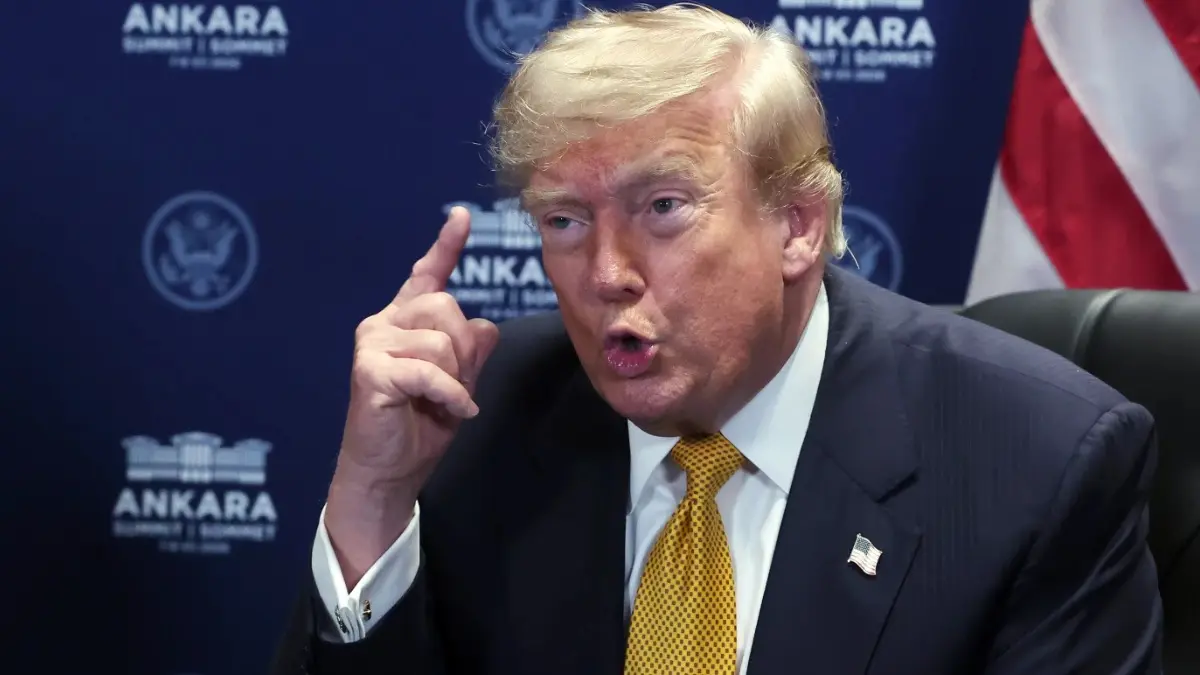
Washington: The United States has launched one of its broadest economic wars against Iran in an attempt to choke off the economic networks that continue to support Tehran’s oil trade, military programmes and entry to international markets.
On Monday, US Treasury Secretary Scott Bessent imposed sanctions against almost 60 individuals, companies, and vessels in multiple countries, while warning governments and businesses that continue to do business with Iran that they could be cut off from the US-led financial system.
The fresh sanctions come as the US-Israeli war with Iran nears its six-month mark and diplomatic attempts remain stalled. Washington says its immediate goal is to cut off the channels through which Tehran gets oil revenue, moves money, and receives sensitive technology.
“We are launching an economic onslaught against Iran’s financial connections around the globe. Our objective is to sever every economic lifeline that sustains this tyrannical regime until Tehran stands alone. We are going to hold everyone accountable, and this is economic asphyxiation of this regime,” Bessent said.
Advertisement
The Treasury Department has identified five areas where Iran claims to sustain its economy- digital assets, technology, gold, aviation, and shipping. The United States has also identified networks reportedly involved in oil smuggling, sanction evasion, procurement, and financial transfers.
Bessent described the effort as a "one-two punch" that combined the existing blockade with the worst sanctions in US history. He stated that the main objective was to "collapse this regime".
Advertisement
India Faces Direct US Action Over Iran Oil Trade
The US has directly targeted Indian businesses and individuals as Washington escalates its campaign to cut Iran off from international revenue. Four Indian firms and three Indian nationals have been sanctioned for their involvement in transactions involving Iranian petroleum and petrochemicals.
The entities listed by the US include Portease Partners LLP, Sadashiva Overseas Ltd, PP Softtech Pvt Ltd, and Prakrutees Infra Impex India Pvt Ltd. Washington has designated three Indian nationals- Indrismiya Ashrafmiya Shekh, Harish Ramchandra Rangi of Portease Partners, and Prashant Garg of PP Softtech.
The measure is part of a larger US sanctions package targeting almost 60 persons, businesses, and boats that Washington claims are linked to Iran's petroleum trade, military-related procurement, shipping, and other revenue-generating networks.
What does Washington allege against the Indian firms?
According to the US State Department, Portease Partners, described as an India-based customs broker, helped facilitate multiple shipments of Iranian petrochemical products to India. Washington has also put specific values on petroleum transactions it attributes to three of the sanctioned companies. The US alleges that Sadashiva Overseas imported about $69 million worth of Iranian-origin petroleum products between February 2024 and June 2025.
PP Softtech is accused of importing approximately $25 million worth of Iranian-origin petroleum products between January 2024 and June 2025. Similarly, Washington alleges that Prakrutees Infra Impex India Pvt Ltd imported around $25 million worth of Iranian petroleum products between May 2023 and February 2026.
The four companies have been designated under Executive Order 13846, which allows the US to impose sanctions on entities involved in significant transactions involving Iranian petroleum or petrochemical products. The designations put the Indian firms directly within the expanding reach of Washington's Iran sanctions programme, as the US seeks to track not only Iranian entities but also overseas companies involved in maintaining Tehran's oil revenues.
For Indian companies dealing in Iranian petroleum and petrochemical products, this could raise the risks of losing access to the US financial system, facing restrictions on international transactions and coming under greater scrutiny from American authorities.
China’s Iran oil trade is the bigger test for Washington
If India faces disruption to trade routes, China presents a much larger challenge for Washington. China remains Iran’s biggest oil customer and has continued purchasing discounted Iranian crude, largely through independent refineries and complex shipping and payment arrangements.
Iranian oil shipments to China fell to about 534,000 barrels per day in August from 823,000 barrels per day in July, but the volumes remain substantial. Washington has made it clear that Chinese companies are not automatically beyond the reach of its sanctions. Asked whether Chinese banks dealing with Iran could eventually be targeted, Bessent said, “no one is above the reach of US sanctions”.
The latest package, however, did not target major Chinese financial institutions suspected of facilitating Iranian oil transactions. That omission is significant given the potential consequences of directly targeting China's banking system.
The US appears to be leaving room for further escalation while giving companies and governments an opportunity to reduce their dealings with Tehran.
“Why would I want to blow up the global financial system?” Bessent said. The sanctions announced this week target Chinese and Hong Kong-based businesses involved mainly in procurement, logistics, shipping and technology networks linked to Iran.
Among them are Shenzhen Sweet Ocean Technology Ltd, which Washington accused of helping Iranian customers obtain sensitive equipment and technology. Its director, Tian Jianbai, was also sanctioned.
Other Chinese entities targeted include Shenzhen Huamei Lianyun International Logistics Co Ltd, Shenzhen Bositong Logistics Co Ltd, Bositong Supply Chain Shenzhen Co Ltd and Lilimoon Navigation Inc.
In Hong Kong, Sweet Ocean Industrial Ltd and several companies linked to its procurement network were sanctioned. The US also targeted entities it accused of helping operate Iran's “shadow banking” networks and companies involved in shipping and bunkering services for Iranian crude.
Beijing warns Washington: sanctions will not solve the conflict
China has strongly rejected the US approach and warned that it could take retaliatory action to protect its interests. Chinese Foreign Ministry spokesperson Lin Jian said China's economic cooperation with Iran is conducted within international law and should not be disrupted by Washington.
“China’s cooperation with Iran complies with international law. We are closely following the situation and will do everything necessary to protect China’s rights and interests," Lin said.
Beijing has repeatedly opposed unilateral US sanctions, arguing that such measures lack international legal authority and do not resolve the underlying conflict.
“China is firmly against sanctions that have no basis in international law or UN Security Council mandate. Economic warfare and maximum pressure provide no solution. They only serve to fuel tensions, disrupt global economic and financial order, and hurt everyone else’s interests. Dialogue and negotiation is the only right way forward," Lin said.
China's position adds another layer of complexity for Washington. Beijing has legal mechanisms that allow it to respond to foreign sanctions affecting Chinese companies, while its dominance in critical minerals gives it significant economic leverage. The timing is also sensitive as Trump is expected to meet Chinese President Xi Jinping in Washington in the coming weeks.
Which other countries and companies are caught in the sanctions net?
The latest US action extends well beyond Iran, reflecting Washington's attempt to follow the international networks that Tehran allegedly uses to move oil, money and technology.
In Iran, the sanctions include organisations linked to the Ministry of Intelligence and Security and the Ministry of Defence and Armed Forces Logistics. The US also targeted individuals it accused of involvement in cyberactivities.
Hong Kong has emerged as another major focus, with companies accused of acting as procurement intermediaries, facilitating payments and supporting Iranian oil shipments.
In Singapore, sanctions have targeted businesses linked to Iran's petroleum sector and individuals connected to Iranian oil networks. Azure Shipping Pte Ltd, Mansoor Tayabbhai Gandhi, Trans Arctic Global Marine Services and Arc Chartering are among those designated.
Singapore-based Wellbred Capital Pte Ltd and related companies in Switzerland and the UAE were also targeted over alleged links to Iranian oil magnate Mohammad Hossein Shamkhani.
Malaysia-based Vast Mart Sdn Bhd was accused of transferring funds to Hong Kong's Sweet Ocean.
In the UK, shipping company Estanica Trading Ltd was sanctioned over an alleged Iranian oil shipment involving a Gambia-flagged vessel. France-based La Nivernaise de Raffinage SAS was also included because of its ownership links to Wellbred Trading.
The US further targeted UAE-based businessmen accused of acting as brokers for Iranian shadow fleets. A Marshall Islands-based shipping company, Sifra Shipping Co, was sanctioned over alleged transportation of Iranian liquefied petroleum gas and ethylene.
Greek nationals Almpertos Tsoris and Georgios Tsoris were also linked by Washington to the Shipoil network and accused of coordinating with sanctioned Iranian entities and providing bunkering services.
Overall, the countries and territories affected by the latest designations include Iran, China and Hong Kong, Singapore, Switzerland, the UAE, Malaysia, the Marshall Islands, the UK, France, Syria, Ukraine and Greece.
Iran’s economy shows the immediate cost
Iran's economy is already experiencing the effects of the sanctions, with the rial dropping to a record 2.02 million per US dollar. Rice prices have risen by 60% and beef prices by more than 150%, while the IMF predicts an economic contraction of more than 5%.
Tehran has rejected the new sanctions, claiming that years of US limitations prompted the government to create systems to defy such pressures.
Iranian Economy Minister Ali Madanizadeh said the sanctions would not achieve Washington's goals, while government spokesperson Fatemeh Mohajerani said the government will lead the country through the latest crisis. Iranian officials have also warned that continuing economic pressure may precipitate a much worse energy crisis.
Mohsen Rezaei, secretary of Iran's Supreme National Security Council, warned that if the “economic war” continues, “not a single drop of oil will be exported” from the Persian Gulf.