
Pakistan Chokes Press Freedom Amid Brutal PoJK Protest Crackdown, Makes NOC Mandatory For Foreign Journalists Beyond Islamabad, Lahore And Karachi
Pakistan has made NOC clearance mandatory for foreign journalists travelling outside Islamabad, Lahore and Karachi, a move which is termed choking of coverage of atrocities and brutal crackdown on protests in PoJK.
- World News
- 4 min read

;'%3e%3cpath%20d='m8,15.99c4.41,0,7.99-3.58,7.99-7.99S12.41,0,8,0,0,3.59,0,8s3.58,7.99,7.99,7.99Z'%20style='stroke:%23fff;%20stroke-miterlimit:10;%20stroke-width:.02px;'/%3e%3cpath%20d='m3.08,3.37l3.82,5.11-3.84,4.15h.87l3.37-3.64,2.72,3.64h2.94l-4.04-5.39,3.58-3.87h-.86l-3.1,3.35-2.5-3.35h-2.94Zm1.27.64h1.35l5.97,7.99h-1.35l-5.97-7.99Z'%20style='fill:%23fff;'/%3e%3c/g%3e%3c/svg%3e)


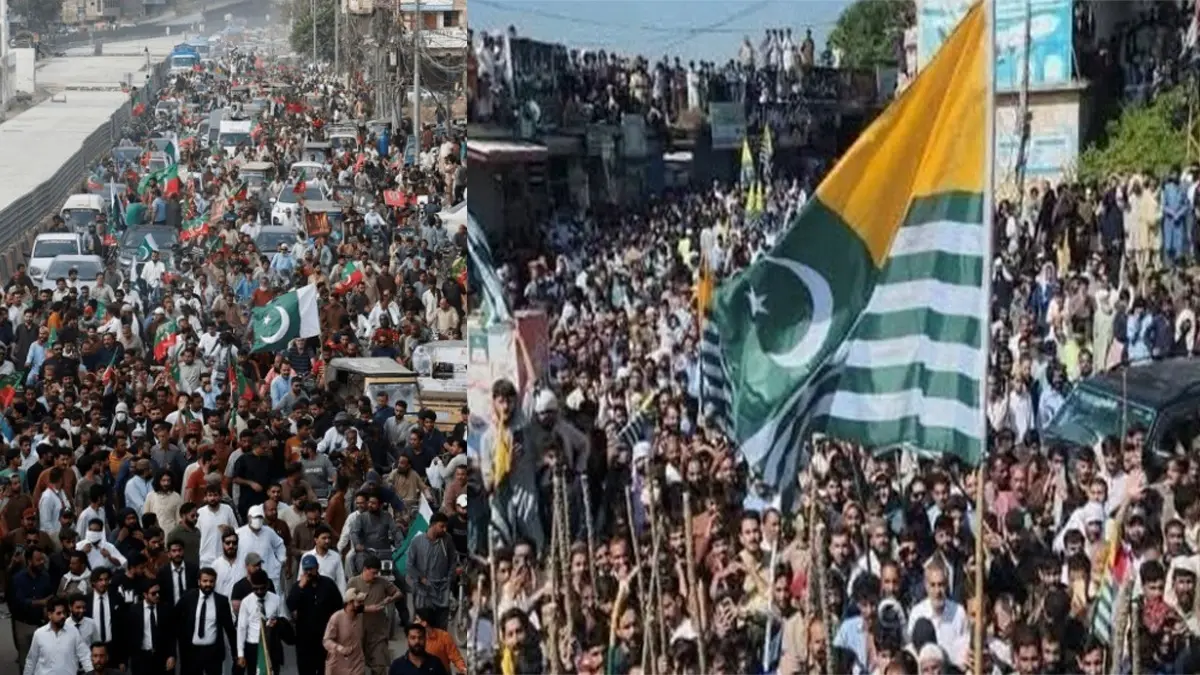
Islamabad: Pakistan has imposed unqualified new controls on international journalists, making it compulsory for foreign media personnel to obtain a No Objection Certificate (NOC) before they can travel outside Islamabad, Lahore and Karachi for reporting work. The order, announced by the Ministry of Information and Broadcasting of Pakistan, has been framed as an administrative update but arrived at a time when global attention is focused on unrest and brutal crackdown by Asim Munir's Army in Pakistan-occupied Jammu and Kashmir (PoJK).
As per reports, under the revised framework, every foreign correspondent, producer and media personnel already registered with the ministry’s External Publicity Wing (EPW) must now seek prior clearance from the same wing before moving to any other city to file news reports, documentaries, films, videos or social media content for official purposes. The only cities exempt from the requirement are Islamabad, Lahore and Karachi.
However, for leisure travel to Abbottabad and Murree, the journalists are permitted to apply for an NOC from the EP Wing upon request, and the ministry has stated that such approvals are expected to be issued within three working days.
Notably, the clampdown followed reports of massive protests, use of lethal and inhuman force, and communication blackouts during the reported local election process in PoJK, and comes as human rights groups raise alarm over enforced disappearances and restrictions on coverage. The experts have suggested that by tightening the movement of foreign media, Pakistan risked deepening perceptions that the Shehbaz Sharif government, guided by Asim Munir, is trying to manage the narrative rather than address the underlying grievances.
Advertisement
New NOC Regime For Foreign Media
The guidelines issued by the Pakistani Ministry lay out a detailed system for the registration, accreditation and movement of international media organisations and their staff. According to Dawn, all foreign journalists, media professionals and support personnel already accredited by the EP Wing will now be required to secure a mandatory NOC before travelling to any city other than the three exempted metropolises.
The rules cover international print, electronic and digital outlets, including web-based platforms and social media operations. All personnel linked to foreign media must register through the EP Wing’s designated online portal. The Pakistani journalists living abroad who contribute to foreign media must also apply via the portal and route their applications through the nearest Pakistani diplomatic mission.
Advertisement
The ministry has further extended registration to production houses, companies, freelancers, fixers and non-journalists who provide services to foreign media in Pakistan. It clarified that registration only establishes professional recognition and does not grant any official status.
The EP Wing stated, “EP Wing reserves the right to approve or reject any Accreditation application. The journalists can appeal to the Secretary, Ministry of Information and Broadcasting in such cases.”
It added, “All foreign/international media personnel already accredited or registered with EP Wing shall be required a mandatory NOC from EP Wing for movement to any other city (except Islamabad, Lahore and Karachi) in case they are going to produce a news content, story, video, film, documentary or social media content for their official use.”
Backlash Over PoJK Brutality And Press Freedom Concerns
Reports suggested that in order to implement the system, the Pakistani government emphasised that registered journalists would be issued QR-enabled PVC accreditation cards to facilitate entry to the official government events and premises. The registration cards are expected within 7 working days, while full accreditation cards may take between 4 and 6 weeks, Dawn reported.
The measures have drawn immediate criticism from rights organisations, with Amnesty International and the Committee to Protect Journalists (CPJ Asia) voicing concern over mounting restrictions on journalists, communication shutdowns, enforced disappearances of media workers and curbs on foreign coverage around the PoJK protests. Amnesty has also called for an independent investigation into reports of excessive force against protesters in Rawalakot.
India has pointed to the contrast between the situation in the Union Territory (UT) of Jammu and Kashmir (J&K) and in PoJK. Jammu and Kashmir-based human rights activist Taslima Akhtar stated that the security situation in the UT had improved massively since August 2019, while expressing concern over reports of violence against civilians and restrictions on peaceful protesters in PoJK.
The foreign experts asserted that Shehbaz Sharif, by centralising approvals and slowing accreditation, has given himself and his government a veto over where and when the world’s media can report. They even suggested that in a region already under a cloud of allegations, the order looks less like regulation and more like an attempt to smother scrutiny.