
Pakistan To Host US-Iran Mediation Talks On Friday Days After Ceasefire
The proposed talks aim at consolidating the fragile ceasefire and avert further escalation in West Asia.
- World News
- 4 min read

;'%3e%3cpath%20d='m8,15.99c4.41,0,7.99-3.58,7.99-7.99S12.41,0,8,0,0,3.59,0,8s3.58,7.99,7.99,7.99Z'%20style='stroke:%23fff;%20stroke-miterlimit:10;%20stroke-width:.02px;'/%3e%3cpath%20d='m3.08,3.37l3.82,5.11-3.84,4.15h.87l3.37-3.64,2.72,3.64h2.94l-4.04-5.39,3.58-3.87h-.86l-3.1,3.35-2.5-3.35h-2.94Zm1.27.64h1.35l5.97,7.99h-1.35l-5.97-7.99Z'%20style='fill:%23fff;'/%3e%3c/g%3e%3c/svg%3e)


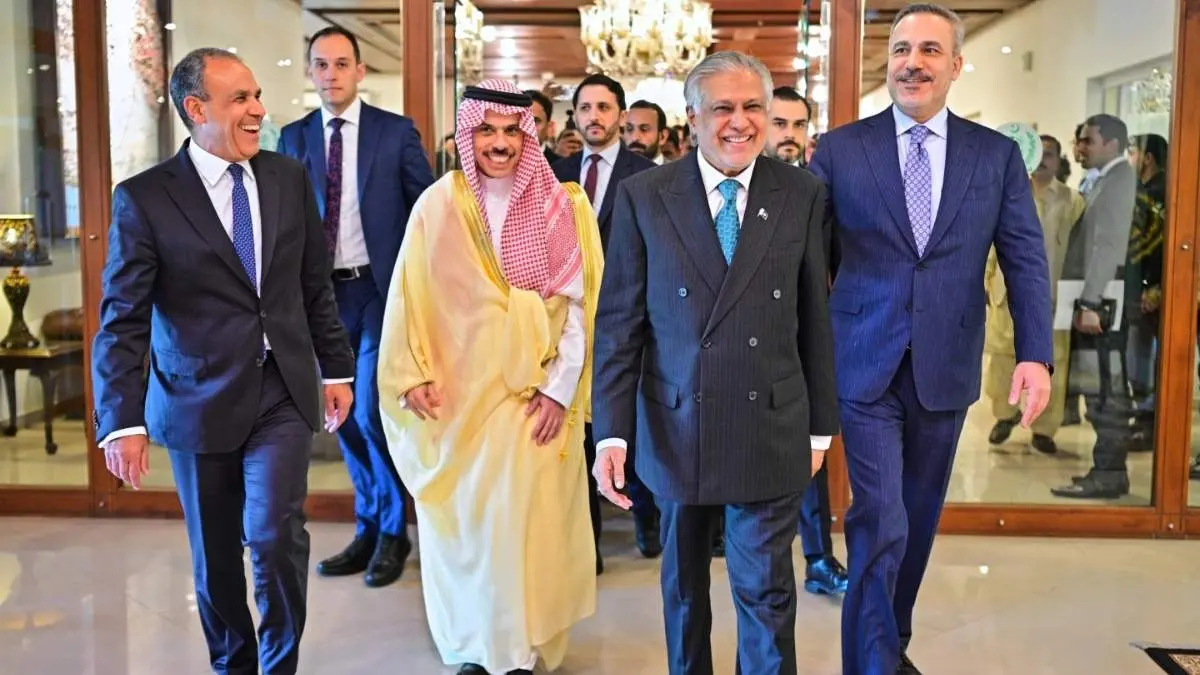
Islamabad: Pakistan is all set to host the high-stakes in-person talks between the United States and Iran in Islamabad on Friday. The proposed talks aim at consolidating the fragile ceasefire and avert further escalation in West Asia. However, Lebanon seems to have emerged to be a thorn in the highly anticipated ceasefire talks, as both Israel and US maintains that operations against Hezbollah is not included in the deal, but Iran maintains otherwise.
Delegations from the United States and Iran are set to meet in Islamabad on Friday, reports indicate. Ahead of the talks, Pakistani authorities have declared April 9 and 10 as public holidays in the capital as part of heightened security measures. Only essential services, including hospitals and law enforcement, will remain operational.
As per reports, the White House has indicated that the US delegation will be led by Vice President JD Vance, accompanied by special envoy Steve Witkoff and President Donald Trump’s son-in-law and senior adviser Jared Kushner.
On the Iranian side, reports suggest that Parliament Speaker Mohammad Bagher Ghalibaf is expected to lead the delegation. However, it remains unclear whether officials from the Islamic Revolutionary Guard Corps or Foreign Minister Abbas Araghchi will be in attendance.
Advertisement
Meanwhile, Pakistani Prime Minister Shehbaz Sharif and Deputy Prime Minister and Foreign Minister Ishaq Dar are likely to host the talks over the weekend. There is no official confirmation yet on the role of Army Chief Field Marshal Asim Munir, though some reports have speculated about his involvement in backchannel efforts leading up to the ceasefire announcement.
How Pakistan Emerged To Be A Key Peace Broker
On Wednesday afternoon, as the 8 pm deadline for U.S. military action against Tehran approached, Prime Minister Sharif took to X to urge both sides towards a ceasefire. Sharif claimed diplomacy was progressing “steadily, strongly and powerfully” and formally requested that the US President grant a two-week reprieve.
Advertisement
Behind the scenes, both Washington and Islamabad were actively seeking a way to de-escalate even as President Trump publicly threatened to wipe out "Iranian civilization."
Fragile Ceasefire
Hours after the ceasefire came into place, Israel conducted strikes across Lebanon saying that it was not part of the peace proposal. This prompted Pakistan Prime Minister Shehbaz Sharif to urge all parties to exercise restraint during the two-week period.
“Violations of ceasefire have been reported at few places across the conflict zone which undermine the spirit of peace process. I earnestly and sincerely urge all parties to exercise restraint and respect the ceasefire for two weeks, as agreed upon, so that diplomacy can take a lead role towards peaceful settlement of the conflict,” Sharif posted on X on Wednesday evening.
What Has Iran Speaker Said
The Speaker of Islamic Republic of Iran’s Parliament MB Ghalibaf said that Lebanon and the entire Resistance Axis, as Iran's allies, form an inseparable part of the ceasefire. He stressed that Prime Minister Shehbaz Sharif publicly and clearly stressed the Lebanon issue; and there is no room for denial and backtracking. Ghalibaf also pointed out that ceasefire violations carry explicit costs and strong responses.
Tehran has already indicated that it will withdraw from the ceasefire agreement if Israel continues to launch attacks on Lebanon. Israel has been pounding missiles across Lebanon, reasoning that these strikes do not fall under the ambit of the ceasefire, including the latest elimination of Hezbollah Chief's Personal Secretary Ali Yusuf Harshi.