
Al-Qaeda chief Al-Zawahiri, other leaders likely to be near Afghan-Pakistan border: UN
Prominent Al-Qaeda leader Ayman al-Zawahri and other important leaders of militant group reside in the border region between Afghanistan and Pakistan, said UN.
- World News
- 3 min read

;'%3e%3cpath%20d='m8,15.99c4.41,0,7.99-3.58,7.99-7.99S12.41,0,8,0,0,3.59,0,8s3.58,7.99,7.99,7.99Z'%20style='stroke:%23fff;%20stroke-miterlimit:10;%20stroke-width:.02px;'/%3e%3cpath%20d='m3.08,3.37l3.82,5.11-3.84,4.15h.87l3.37-3.64,2.72,3.64h2.94l-4.04-5.39,3.58-3.87h-.86l-3.1,3.35-2.5-3.35h-2.94Zm1.27.64h1.35l5.97,7.99h-1.35l-5.97-7.99Z'%20style='fill:%23fff;'/%3e%3c/g%3e%3c/svg%3e)


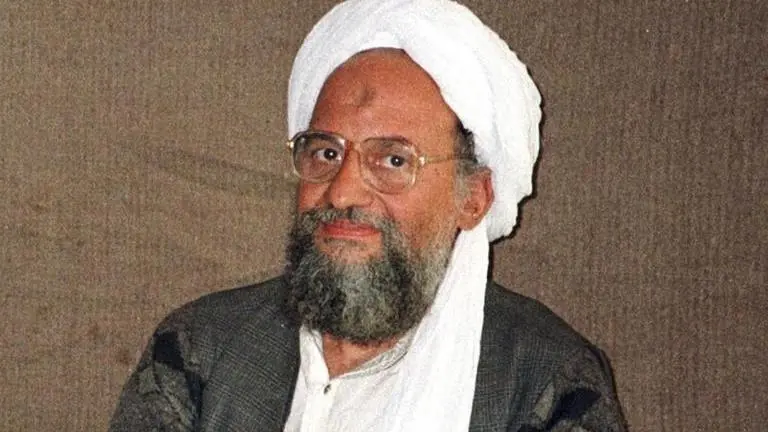
Prominent Al-Qaeda leader Ayman al-Zawahri and other important leaders of the militant group reside in Afghanistan and Pakistan border region, stated a United Nations report. The report, issued on Friday, said that Zawahiri is “probably alive but too frail to be featured in propaganda.” It also said that significant numbers of Al-Qaeda fighters along with other foreign extremist elements that align with the Taliban are housed in various parts of Afghanistan.
“Member states reported that a significant part of Al-Qaeda leadership remains based in the border region of Afghanistan and Pakistan, where the core is joined by and works closely with Al-Qaeda in the Indian Subcontinent,” the twelfth report of the Analytical Support and Sanctions Monitoring Team said.
Al Qaeda leader “Aiman Muhammed Rabi al-Zawahiri, is believed to be located somewhere in the border region of Afghanistan and Pakistan. Previous reports of his death due to ill health have not been confirmed...One member state reports that he is probably alive but too frail to be featured in propaganda,” the report added without mentioning the country.
Al-Qaeda-Taliban in 'regular communication'
The UN report also said that Al-Qaeda’s strategy in the near future is to establish a traditional safe haven in Afghanistan for the extremist group’s leadership. The Monitoring Team also noted that the assessments have suggested a longer-term Al-Qaeda core strategy of ‘strategic patience’ for a period of time before it would start planning attacks on global targets. It added, “This scenario is untested against stated Taliban commitments to prohibit such activities.”
It also said, “Member states assess that formal communication between senior Al-Qaeda and Taliban officials is currently infrequent, one member state reported that there is regular communication between the Taliban and Al-Qaeda on issues related to the peace process.”
“The group reportedly consists of primarily Afghan and Pakistani nationals, but also individuals from Bangladesh, India and Myanmar,” the report added while noting that the current leader of Al-Qaeda in the Indian Subcontinent is Osama Mahmood, who is not listed. He succeeded the late Asim Umar.
The report stated that during the period of review from May 2020 and April 2021, Al-Qaeda suffered a reduction with several senior members being killed, often while fighting alongside Taliban associates living collaboratively with them. It said, "The primary component of the Taliban in dealing with Al-Qaeda is the Haqqani Network. Ties between the two groups remain close, based on ideological alignment, relationships forged through common struggle and intermarriage"
Advertisement
The report also noted that the Taliban began enhancing its control over Al-Qaeda by collecting information on foreign terrorist fighters and registering and restricting them. It said, "However, it has not made any concessions in this regard that it could not easily and quickly reverse, and it is impossible to assess with confidence that the Taliban will live up to its commitment to suppress any future international threat emanating from Al-Qaeda in Afghanistan. Al-Qaida and like-minded militants continue to celebrate developments in Afghanistan as a victory for the Taliban’s cause and thus for global radicalism.”
"While both organisations are expected to maintain a posture of distance and discretion for as long as such is required for the achievement of Taliban objectives, Al-Qaeda nonetheless stands to benefit from renewed credibility on the back of Taliban gains...It will be important for the international community to monitor any sign of Afghanistan again becoming a destination for extremists with both regional and international agendas," it said.