
Power Struggle In Iran? Reports Claim IRGC Tightens Grip As President Faces ‘Political Deadlock’
Unconfirmed reports suggest Islamic Revolutionary Guard Corps is blocking key appointments and decisions, effectively the civilian government amid war tensions.
- World News
- 3 min read

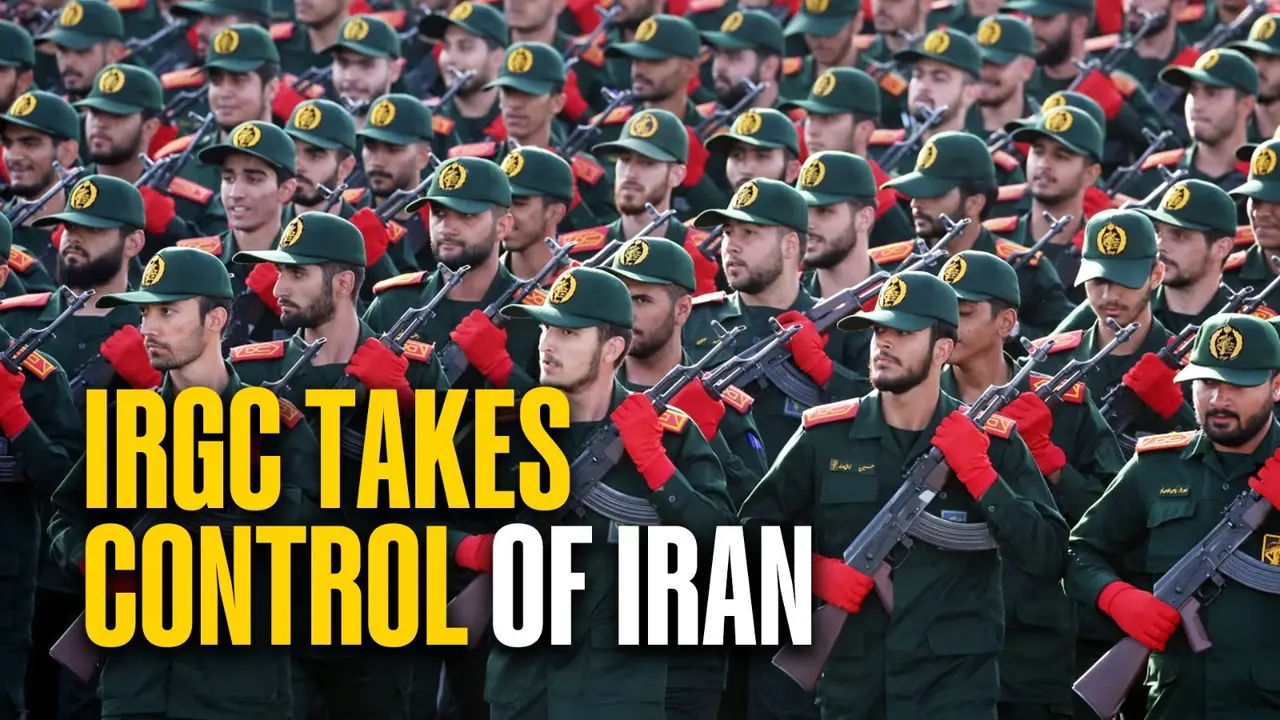
Amid escalating regional tensions, reports emerging from Iranian media and opposition-linked outlets indicate a deepening power struggle within Iran’s leadership, with the Islamic Revolutionary Guard Corps (IRGC) allegedly tightening its grip over key state functions.
According to these reports, the administration of President Masoud Pezeshkian is facing a “complete political deadlock”, with the IRGC said to be blocking major appointments and decisions, effectively sidelining the civilian government.
According to reports, an attempt by Pezeshkian to appoint a new intelligence minister last week failed after opposition from IRGC-linked leadership, including commander Ahmad Vahidi. Multiple candidates were reportedly rejected, with the argument that wartime conditions require sensitive positions to remain under direct military oversight.
Under Iran’s political system, such appointments typically require approval from the Supreme Leader. However, uncertainty surrounding Mojtaba Khamenei, whose condition and accessibility remain unclear in recent days, has added to the complexity, with reports suggesting restricted access and a tightening security perimeter around him.
Advertisement
Pezeshkian has reportedly been seeking an urgent meeting with Mojtaba Khamenei in recent days, but all requests have gone unanswered, with no contact established.
Some accounts even point to the emergence of a “military council” of senior IRGC officials exercising influence over core decision-making, though these claims remain unverified independently.
Advertisement
Efforts to remove senior aide Hejazi?
At the same time, internal tensions are also being reported within the Supreme Leader’s inner circle, particularly involving senior aide Ali Asghar Hejazi. Disagreements have been reported over succession dynamics and the potential consolidation of power by military-linked institutions.
The tensions are rooted in Hejazi’s explicit opposition to Mojtaba Khamenei’s potential succession. According to reports, he had previously warned members of the Assembly of Experts that Mojtaba lacks the necessary qualifications for leadership and argued that hereditary succession is incompatible with the principles outlined by Supreme Leader Ali Khamenei.
Hejazi reportedly cautioned that elevating Mojtaba would effectively hand full control of the country to the IRGC and permanently sideline civilian institutions.
In the first week of the ongoing war, Israeli media reported that Hejazi had been targeted in an airstrike in Tehran. However, later reports indicated that he survived the attack.
Don’t promise this will be last war: Israel
These developments come against the backdrop of ongoing conflict and heightened hostilities in the region.
Reacting to the broader security situation, Israeli Foreign Minister Gideon Sa'ar said Israel had “removed the annihilation threat,” but warned that challenges remain. “We do not promise that this will be the last war,” he said, emphasising continued military, diplomatic and technological strengthening.
Sa’ar reiterated that Israel would not accept living under existential threat and stressed the need for vigilance and sustained preparedness.
While the reports from Iran point to significant internal strain, there has been no official confirmation from Iranian authorities on the extent of the alleged rift between the government and the IRGC.