
Prominent Egyptian Activist Alaa Abd el-Fattah Released From Prison After Presidential Pardon
Egyptian President Abdel-Fattah el-Sissi has pardoned prominent activist Alaa Abd el-Fattah, along with five other prisoners, after nearly 12 years of imprisonment.
- World News
- 4 min read

;'%3e%3cpath%20d='m8,15.99c4.41,0,7.99-3.58,7.99-7.99S12.41,0,8,0,0,3.59,0,8s3.58,7.99,7.99,7.99Z'%20style='stroke:%23fff;%20stroke-miterlimit:10;%20stroke-width:.02px;'/%3e%3cpath%20d='m3.08,3.37l3.82,5.11-3.84,4.15h.87l3.37-3.64,2.72,3.64h2.94l-4.04-5.39,3.58-3.87h-.86l-3.1,3.35-2.5-3.35h-2.94Zm1.27.64h1.35l5.97,7.99h-1.35l-5.97-7.99Z'%20style='fill:%23fff;'/%3e%3c/g%3e%3c/svg%3e)


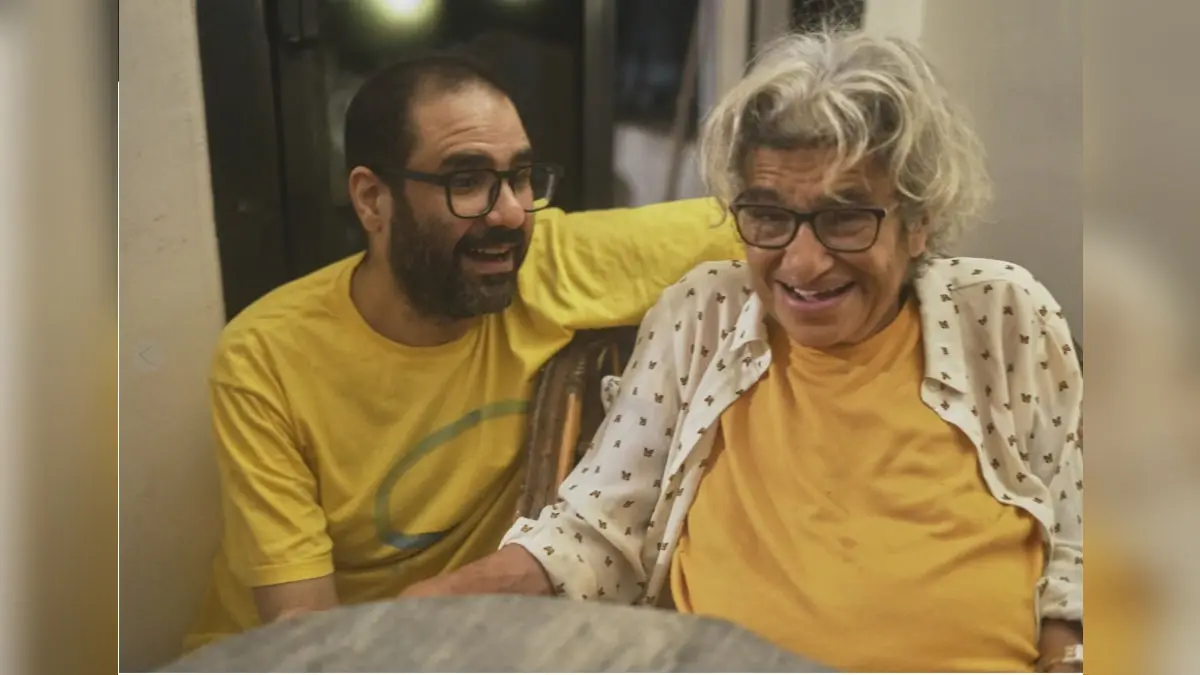
Egyptian authorities on Monday announced the presidential pardon of prominent activist Alaa Abd el-Fattah, who has been in prison for almost all of the past 12 years. A statement from the president's office said that another five prisoners were also pardoned. It was not immediately clear when they would walk free.
The activist's lawyer, Khaled Ali, told the Associated Press on Monday that Abd el-Fattah is expected to be released from Wadi Natron Prison, just north of Cairo, immediately after the state’s decision is published in the country’s official gazette, which he expects is likely within the next two days. Laila Soueif, Abdel-Fattah’s mother, said she was heading to the prison where her son is held. “I won’t rest until he is out,” she said.
Abd el-Fattah was a leading voice in the country’s 2011 Arab Spring uprising and has gone on multiple hunger strikes behind bars. His ordeal became emblematic of the fraying of Egypt’s democracy. The activist took part in the 2011 uprising that toppled autocratic former President Hosni Mubarak, and later was active in protests against human rights abuses as well as military trials of civilians.
He was first sent to prison in 2014 for participating in an unauthorized protest and allegedly assaulting a police officer, before being released in early 2019. He was arrested again in September 2019 during a security crackdown that followed rare anti-government protests in Egypt, and after more than two years in pre-trial detention, an emergency security court sentenced him to five years for spreading false news.
Advertisement
When his release date came up in September 2024, authorities refused to count the more than two years he spent in pre-trial detention and ordered him held until Jan. 3, 2027. “My heart will explode,” his sister Mona Seif posted on Facebook, relieved about the news of his pardon. The pardon by Egyptian President Abdel-Fattah el-Sissi came after an independent rights group submitted a petition to the president’s office earlier this month.
The National Council for Human Rights, acting on behalf of the families of the prisoners, urged el-Sissi to consider Abd el-Fattah’s situation and that of the six others on “health and humanitarian grounds," and earlier this month, el-Sissi’s office said he had ordered relevant authorities to look into it.
Advertisement
Abd el-Fattah’s family waged a desperate campaign to pressure Britain — whose citizenship Abd el-Fattah had obtained that year through his U.K.-born mother — to help secure his freedom and take him in. When Egypt failed to release Abd el-Fattah last September, his mother, Soueif, began her own hunger strike in Britain, but became seriously ill and ended the strike in July.
An influential blogger, Abd el-Fattah, hails from a family of political activists, lawyers, and writers. His late father was one of Egypt’s most tireless rights lawyers, his sisters — British citizens as well — are also political activists, and his aunt is the award-winning novelist Ahdaf Soueif. Abd el-Fattah's most dramatic, all-or-nothing hunger strike came in 2022, as Egypt hosted an annual U.N. climate summit in the Red Sea resort of Sharm el-Sheikh.
That strike ended when Abd el-Fattah lost consciousness and was revived with fluids. Leaders of Britain, France, and Germany said they sought Abd el-Fattah’s release in private talks with el-Sissi during the climate conference. Still, European countries, which have a growing interest in Egypt’s gas reserves, and the United States, which sees el-Sissi as a key source of stability, were reluctant to openly clash with Egypt.
The circumstances surrounding the latest appeal for Abd el-Fattah’s release were different than previous ones, Ali told The Associated Press earlier this month — in part because of his mother’s hunger strike, which added a “humane” element to the petition. It was not immediately known if the activist would leave Egypt, but Ali said that his client has a desire to keep his Egyptian citizenship and live in Egypt.