
Rare pygmy pipehorse found in New Zealand, given Māori name by local tribe
A pygmy pipehorse was found in New Zealand which has been given a Māori name. The name was given by the Ngtiwai tribe in collaboration with biodiversity experts
- World News
- 3 min read

;'%3e%3cpath%20d='m8,15.99c4.41,0,7.99-3.58,7.99-7.99S12.41,0,8,0,0,3.59,0,8s3.58,7.99,7.99,7.99Z'%20style='stroke:%23fff;%20stroke-miterlimit:10;%20stroke-width:.02px;'/%3e%3cpath%20d='m3.08,3.37l3.82,5.11-3.84,4.15h.87l3.37-3.64,2.72,3.64h2.94l-4.04-5.39,3.58-3.87h-.86l-3.1,3.35-2.5-3.35h-2.94Zm1.27.64h1.35l5.97,7.99h-1.35l-5.97-7.99Z'%20style='fill:%23fff;'/%3e%3c/g%3e%3c/svg%3e)


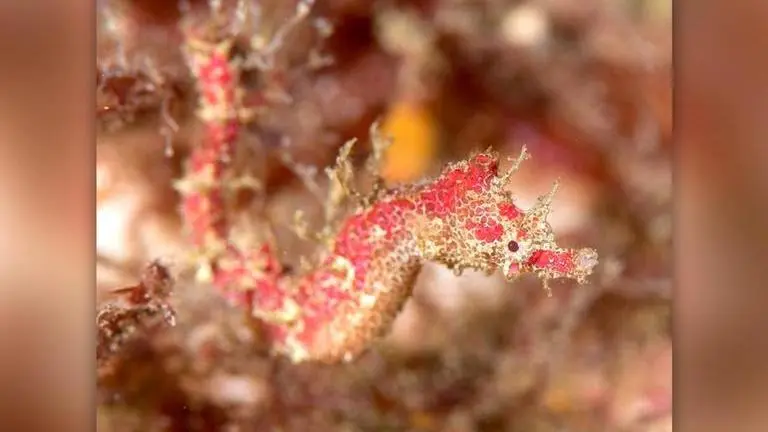
A pygmy pipehorse was discovered in New Zealand’s north coast region, which has been given a Māori name. The name was given by the local tribe which is believed to be the first time an indigenous group has publicly named a new species of animal, according to a report by The Guardian. The 6-cm long fish, which is related to the seahorse, lives on rocky reefs off the coast of Australia. It is the country's first pygmy pipehorse discovery. The pipehorse Cylix tupareomanaia was named by the Ngtiwai tribe in collaboration with biodiversity experts Dr Thomas Trnski of Tmaki Paenga Hira Auckland Museum and Graham Short of the California Academy of Scientists. The name Cylix comes from the Greek and Latin words for cup or chalice, and it refers to the cup-like crest on the top of the new species' head. The word tupareomanaia refers to "the Manaia's garland." Notably, Manaia is the Māori name for a seahorse and also means "ancestor" or "tupuna," reported The Guardian.
A beautiful new genus and species of pygmy pipehorse, Cylix tupareomanaia, from temperate New Zealand is published in Ich & Herps! https://t.co/Yfs9vZQdV6. Thanks to the iwi Ngatiwai for the species name. Photo @Rich_Underwater@AustmusResearch @ausmus @calacademy @burkemuseum pic.twitter.com/xHfnlLUIGk
— Graham Short (@syngnathids) September 20, 2021
Manaia pygmy pipehorse is the popular name for Cylix tupareomanaia. The Ngtiwai tribe expressed its gratitude for having given the new species a name. "The naming of this taonga [treasure] is vital to Ngtiwai because we have heard stories about this species from our ancestors, but the original name has been lost due to colonisation's harmful effects," Hori Parata, a member of Ngātiwai community was quoted as saying by The Guardian. Meanwhile, Dr Trnski from the Auckland Museum stated that It was an honour to be able to bring mātauranga Māori (knowledge) into the naming process. He informed that this is the only animal in the world for which the naming authority has included a tribal name. Dr Trnski went on to say that it was the acknowledgement of traditional knowledge which was long overdue, reported The Guardian.
Cylix tupareomanaia was first noticed in 2011
It should be mentioned here that divers first saw Cylix tupareomanaia in 2011 at the Poor Knights Islands Marine Reserve, where it was mistaken for the rare seahorse species Hippocampus jugumus. However, Graham Short recognised it as possible new species when it was uploaded on Facebook in 2017, and then Trnski joined him in an attempt to confirm that it was indeed a new species. As mandated by the International Code of Zoological Nomenclature - the code for naming new species - the authors of the new name, Short, Trnski, and Ngtiwai, will be forever connected to the species name, reported The Guardian.