
Afghanistan: Over 200K people displaced since May as Taliban attacks continue, states OCHA
Taliban continues to rise influence in Afghanistan since the withdrawal of NATO and US troops from the country. The group has captured five provincial capitals.
- World News
- 3 min read

;'%3e%3cpath%20d='m8,15.99c4.41,0,7.99-3.58,7.99-7.99S12.41,0,8,0,0,3.59,0,8s3.58,7.99,7.99,7.99Z'%20style='stroke:%23fff;%20stroke-miterlimit:10;%20stroke-width:.02px;'/%3e%3cpath%20d='m3.08,3.37l3.82,5.11-3.84,4.15h.87l3.37-3.64,2.72,3.64h2.94l-4.04-5.39,3.58-3.87h-.86l-3.1,3.35-2.5-3.35h-2.94Zm1.27.64h1.35l5.97,7.99h-1.35l-5.97-7.99Z'%20style='fill:%23fff;'/%3e%3c/g%3e%3c/svg%3e)


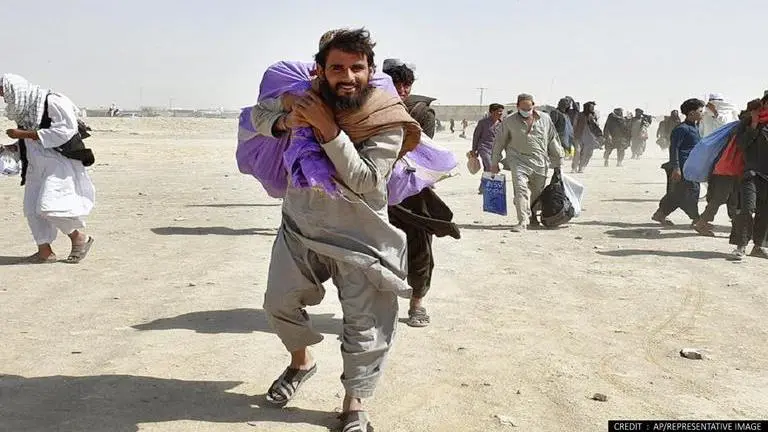
Data provided by the United Nations Office for the Coordination of Humanitarian Affairs (OCHA) has revealed that over 200,000 people have been internally displaced in Afghanistan as the country continues to witness a rise in Taliban-induced violence.
The OCHA report shows a massive hike in the number of internally displaced people (IDPs) who are looking for safer and better environments for themselves and their families. Afghanistan has been facing severe violence orchestrated by the Taliban since the USA and NATO announced the withdrawal of foreign troops from the country by September 11.
Over 300% rise in internal displacement
According to the data provided by the United Nations Office for the Coordination of Humanitarian Affairs, at least 244,000 people were internally displaced since May, this year, which is a 300% increase in comparison to the previous year. The report stated that most of the people arriving are from the northeastern and eastern regions of Afghanistan which continues to face the highest number of attacks from the Taliban. A large portion of the displaced people come from rural areas.
The people lakh sufficient food, shelter, and even access to medicine and are now seeking these necessities elsewhere.
Advertisement
Increasing Taliban influence in Afghanistan
Since US President Joe Biden's announcement in April to withdraw all American troops from Afghanistan by September 11 and a similar decision taken by NATO allies, the Taliban has launched an all-out offensive against the Afghan government. In the last three months, the Afghani militant group has gained immense influence and captured vast swathes of territory.
The south-central Asian county continues to witness fierce fighting between Afghan forces and the Taliban in key areas. The violence has reached both rural and urban centres leading to the Taliban closing in on many cities and provincial regions. Recently, the militant group took control of five provincial capitals, including Kunduz, the sixth-largest city in the country.
Advertisement
In Kunduz, the Taliban has claimed it has seized control over key government buildings, barring the airport and the military base, which is still under Afghan security forces. In Sar-e Pul, the Taliban has driven out officials out of the main city to the military base nearby, as informed by Mohammad Noor Rahmani, a provincial council member of the Sar-e Pul province.
Earlier, the Taliban had captured the provincial capital, Zaranj in southern Nimroz province. The terror group described the feat as a ‘symbolic victory’.
At the rate at which the Taliban is gaining power and violence increasing in the country, the IDP numbers are expected to rise further.
(Image: AP)