
Coronavirus antibody safeguard Macaques from infection, raises vaccine hopes
Sufficient quantities of antibodies and T-cell response are able to stop macaques from being infected by Sars-Cov-2, animal trials revealed
- World News
- 2 min read

;'%3e%3cpath%20d='m8,15.99c4.41,0,7.99-3.58,7.99-7.99S12.41,0,8,0,0,3.59,0,8s3.58,7.99,7.99,7.99Z'%20style='stroke:%23fff;%20stroke-miterlimit:10;%20stroke-width:.02px;'/%3e%3cpath%20d='m3.08,3.37l3.82,5.11-3.84,4.15h.87l3.37-3.64,2.72,3.64h2.94l-4.04-5.39,3.58-3.87h-.86l-3.1,3.35-2.5-3.35h-2.94Zm1.27.64h1.35l5.97,7.99h-1.35l-5.97-7.99Z'%20style='fill:%23fff;'/%3e%3c/g%3e%3c/svg%3e)


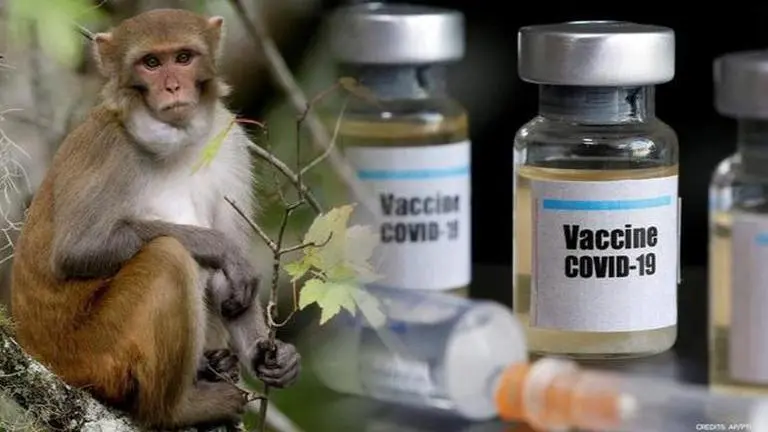
Sufficient quantities of antibodies and T-cell response are able to stop macaques from being infected by Sars-Cov-2, a comparative animal trial to study thresholds of immune response and its effects has found. The results of the study published in the journal 'Nature' also gives an insight into the nature of immune response required to battle COVID-19. It stated T-cells that kill the infected cells, were required as much as the anti-body, which bind themselves with the viruses and neutralize them.
The Study
As part of the study, researchers Katherine McMahan and Jingyou Yu from Harvard University used rhesus macaques and injected them with antibody-rich plasma in varying doses from monkeys who had recovered from coronavirus. After two weeks, they discovered that monkeys with the highest dose of plasma that is 250mg/kg of weight, did not test positive. In addendum, only one out of the three that got the second-highest dose of plasma, that is 25 mg/kg, tested positive.
All the macaques in the group which got the lowest dose of plasma, that is 2.5mg/kg contracted the virus. Meanwhile, all the three in the control group, that is those who received no plasma, also tested positive. However, in a surprising result, one group with the least amount of plasma showed a lower viral load than the control group.
Advertisement
In their study, the researchers also found that a lower level of T-cells led to lowered antibody in the macaques. According to scientists, the findings, taken together, provide a key proof-of-concept that antibodies can protect against Sars-Cov-2 infection and if they are near or below the threshold required for protection, cellular immune response (T cells) may be important in controlling the virus. The researchers have now used these findings to quantify the threshold of antibody concentration that appeared to be most effective.
Advertisement
“In particular, NAb titers (concentration of neutralising antibodies) of approximately 500 fully protected, and titers of approximately 50 partially protected the macaques,” said the peer-reviewed study published on December 4.
'T-cells play a critical part'
In addendum, the study also throws light on the importance of other parts of the immune system other than anti-bodies. “CD8 depletion studies also showed that cellular immunity can contribute to protection against SARS-CoV-2 re-challenge in convalescent macaques with waning antibody titers,” the report said.