
Japan announces to pay 'hush money' to firms to keep sensitive patents secret: Report
Japan’s economic security was on the top of the list of newly elected premier Fumio Kishida’s political agenda, as he vowed to safeguard the country’s secrets
- World News
- 2 min read

;'%3e%3cpath%20d='m8,15.99c4.41,0,7.99-3.58,7.99-7.99S12.41,0,8,0,0,3.59,0,8s3.58,7.99,7.99,7.99Z'%20style='stroke:%23fff;%20stroke-miterlimit:10;%20stroke-width:.02px;'/%3e%3cpath%20d='m3.08,3.37l3.82,5.11-3.84,4.15h.87l3.37-3.64,2.72,3.64h2.94l-4.04-5.39,3.58-3.87h-.86l-3.1,3.35-2.5-3.35h-2.94Zm1.27.64h1.35l5.97,7.99h-1.35l-5.97-7.99Z'%20style='fill:%23fff;'/%3e%3c/g%3e%3c/svg%3e)


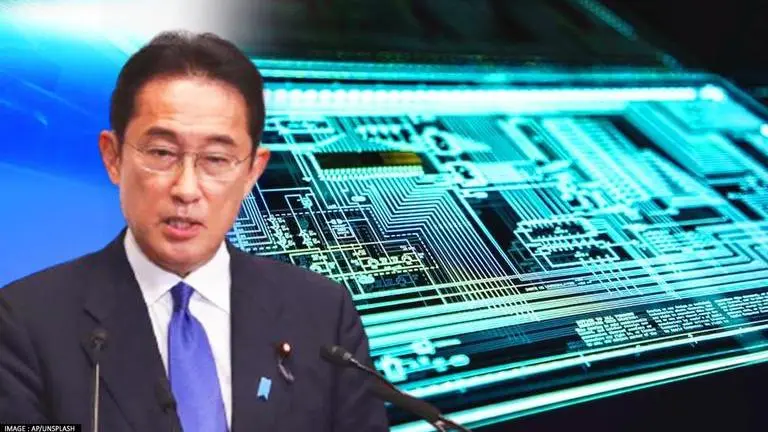
Japan on Saturday announced that it will pay ‘hush money' to the companies equivalent to the compensation amounting to roughly 20 years of licensing income in order to keep the sensitive patents a ‘secret’. This majorly involves the potential military applications that will be protected under the secrecy legislation for sensitive patents, and personal information will be safeguarded under the Amended Act on the Protection of Personal Information. Under Japan's secrecy legislation, the state officials, companies who leak 'special state secrets', and journalists who seek to obtain them face lengthy jail terms.
The legislation was drafted after the wide reporting on the Fukushima nuclear disaster and as tensions soared between Tokyo and Beijing. While Japan protects the "special state secrets” under the special state secrets bill that could lead to 10 years in jail, under the new proposed legislation, companies that design the country’s military application are required to keep its patents a secret or risk facing legal repercussions, Japanese news agency Nikkei Asia first reported.
Patents are also being considered under the ‘Economic Security Bill’ which will include any application or technology that may develop nuclear weapons, help do uranium enrichment, and manufacture cutting-edge innovations such as quantum technology, according to Nikkei Asia.
Japan’s economic security 'top priority' for new Premier
Japan’s economic security was on the top of the list of newly-elected premier Fumio Kishida’s political agenda, as he vowed to safeguard the country’s secrets. While exact details of the bill remain unclear, the Japanese government has said that it will release a framework for the bill as early as next month for more clarity. The cabinet approval for the new legislation is slated for February 2022, while the law is expected to take effect by the fiscal year 2023. “Japan will screen equipment purchases by key infrastructure operators of telecommunication networks and power grids, as well as financial companies,” newspaper Nikkei Asia reported.
Advertisement
The country is also weighing to boost the supply-chain resilience, as well as diversify risks in the industries across the automobiles to electronics as economic security is on the newly formed government’s key agenda for Japan’s growth strategy. Kishida will appoint a team with members from the Defence Ministry, National Security Secretariat and other agencies to review the patent applications, the newspaper reports.