
Papua New Guinea gained independence on this day in 1975; know 'Land of thousand cultures'
Papua New Guinea (PNG), which is the world’s third-largest island country, achieved full independence from Australia on this day, i.e September 16, in 1975.
- World News
- 2 min read

;'%3e%3cpath%20d='m8,15.99c4.41,0,7.99-3.58,7.99-7.99S12.41,0,8,0,0,3.59,0,8s3.58,7.99,7.99,7.99Z'%20style='stroke:%23fff;%20stroke-miterlimit:10;%20stroke-width:.02px;'/%3e%3cpath%20d='m3.08,3.37l3.82,5.11-3.84,4.15h.87l3.37-3.64,2.72,3.64h2.94l-4.04-5.39,3.58-3.87h-.86l-3.1,3.35-2.5-3.35h-2.94Zm1.27.64h1.35l5.97,7.99h-1.35l-5.97-7.99Z'%20style='fill:%23fff;'/%3e%3c/g%3e%3c/svg%3e)


Papua New Guinea (PNG), which is the world’s third-largest island country, achieved full independence from Australia on this day, i.e September 16, in 1975. Archaeological evidence indicates that the humans first arrived in PNG around 45,000 years ago. The island country has been ruled by Germans, Britishers and Australians.
16 Sept 1975: #Australia grants Papua New Guinea its independence #OTD after the Papua New Guinea #Independence Act of 1975 was enacted on September 9. #PapuaNewGuinea #history #ad https://t.co/mbK7LubzQb pic.twitter.com/PTio4LuKET
— Today In History (@URDailyHistory) September 16, 2020
In the 19th century, Germany ruled the northern half of the country for decades, however, post World War I, the League of Nations authorised Australia to administer the area as a ‘League of Nations mandate’ territory that became the Territory of New Guinea. The Southern half of PNG, on the other hand, was colonised by the UK. Although with Papua Act of 1905, Britishers transferred the territory to the newly formed Commonwealth of Australia.
Both the territories, Papua and New Guinea, had entirely separate administrations, however, both were controlled by Australia. It was after World War II that the two territories were combined into the Territory of Papua and New Guinea, which was later referred to as ‘Papua New Guinea’.
Advertisement
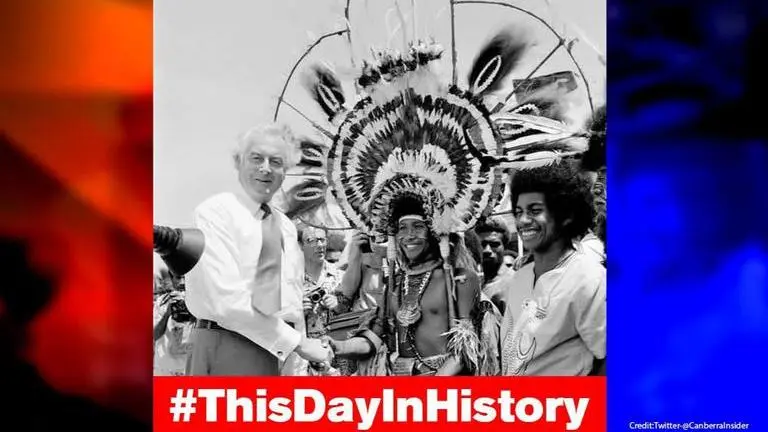
Prime Minister Gough Whitlam at Papua New Guinea independence celebrations, September 16, 1975 pic.twitter.com/jRuOEFCRWX
— Canberra Insider (@CanberraInsider) September 16, 2020
During the Australian reign, the administration of both territories was combined. At first, the island was utilised as a massive new source of labour for the coastal plantations. Arabica coffee and cacao were rapidly adopted by local smallholders. Despite the general lack of economic development, the island, however, attracted a large number of migrants, particularly from the poorer areas and especially the Highlands.
Advertisement
Australia’s development assistance
It was in 1946, that Australia started managing the New Guinea (eastern half) as a United Nations trust territory. In the 1950s, Australia then took a gradualist approach to educate the population and improve health services. However, from the 1960s, with international pressure, Australia expedited the efforts to create an educated elite and improve social conditions, boost the economy, and develop political structures in preparation for decolonisation.
HAPPY 45th INDEPENDENCE PAPUA NEW GUINEA! GOD BLESS US ALL.💯💙💪🙌 pic.twitter.com/WK3awix04m
— Dominic Papau (@dominic_papau) September 15, 2020
General elections for a House of Assembly were then held in 1964, 1968 and 1972. On December 1, 1973, self-government was achieved and two years later, PNG achieved all independence from Australia. It was noted back then, that Australian development assistance provided nearly half of the national budget.