
UN calls for inclusive govt in Afghanistan, slams Taliban's curtailment of women rights
Taliban have not established full trust with much of Afghan population or convinced them of their capacity to govern,” UN Chief’s Special Representative said.
- World News
- 3 min read

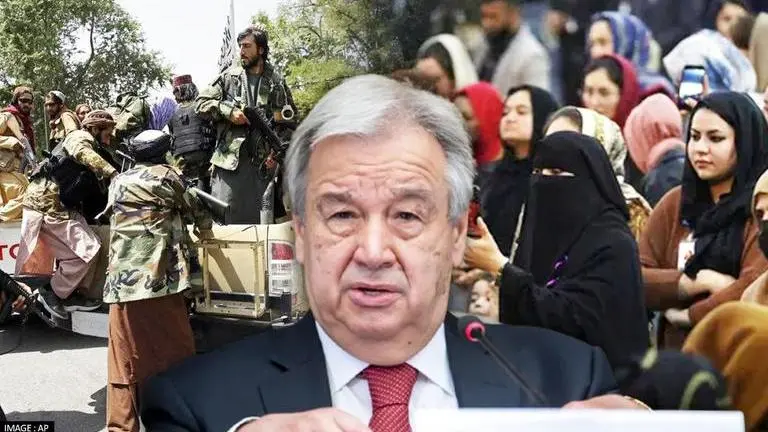
Stressing that the Afghan people are being abandoned, forgotten, and punished by circumstances without a fault of their own since the Taliban’s takeover, the UN on Wednesday strengthened its calls for a more inclusive government in the war-ravaged Central Asian nation. In her first general assessment of the de facto Taliban administration, UN Secretary-General’s Special Representative for Afghanistan, Deborah Lyons at a United Nations Security Council briefed about several issues with the Taliban’s governance in Kabul after the United States drawdown, particularly women’s rights, girls’ education, and inclusivity.
“We have heard of harassment and extra-judicial killings,” said Secretary-General’s Special Representative for Afghanistan Deborah Lyons. She added that even when the Taliban allowed the UN’s presence throughout the country, as well as broad humanitarian access, including for female humanitarian workers, this would not deter the agency from highlighting major issues of the infringement of women's rights within the region. The UN, Lyons said, has been able to visit parts of the country, providing vital assistance.
General curtailment of Afghan women and girls’ fundamental rights, says UN Rep
The UN Chief's Special Representative for Afghanistan noted that the de facto Taliban authorities have indicated they are working on a nation-wide policy to ensure the access to education for the Afghan girls so that the right to girls’ education can be exercised across the country, although that policy and its implementation has been taking more time. The representative further accused the Taliban of breach of women’s safety and their basic rights as Lyons said:
“While the de facto authorities had initially assured the protection of women’s rights within Islamic law, including education, there has been a general curtailment of Afghan women and girls’ fundamental rights and freedoms.” She went on to add, “These range from limiting their right to work to the absence of women from major decision-making fora and from senior echelons of the civil service.”
The UN's representative noted that policies applied disparately around Afghanistan by the Taliban government have made some provinces significantly less restrictive than others. But the issue of women’s rights continues to worsen across the territory. “We continue to call for a more inclusive administration, in which government institutions reflect Afghanistan’s broad diversity,” said Lyons, according to a UNAMA press statement. She highlighted that there has been “limited progress” in this area.
Advertisement
Lyons pointed out that the composition of Afghanistan's Cabinet “remains entirely male, essentially Pashtun and almost all Taliban, at both the capital and provincial levels," and recent appointments continue to appear designed more to rewarding fighters than promoting “governance and inclusion”. The representative also stressed the limitations on freedom of expression due to nationwide clampdown on demonstrations, curbs on the media outlets.
“Taliban have not yet established full trust with much of the Afghan population or convinced them of their capacity to govern,” UN Chief’s Special Representative for Afghanistan noted. “The movement is also struggling to manage some serious internal divisions,” said Lyons. “Taliban must decide on whether to govern according to the needs and the rights of the diverse Afghan population, or whether to rule on the basis of a narrow ideology.”