
US to reduce troops in Iraq 'over coming months', joint statement issued
In a significant move towards eliminating the ISIS threat, the United States on Thursday agreed to reduce troops in Iraq over the next few months.
- World News
- 2 min read

;'%3e%3cpath%20d='m8,15.99c4.41,0,7.99-3.58,7.99-7.99S12.41,0,8,0,0,3.59,0,8s3.58,7.99,7.99,7.99Z'%20style='stroke:%23fff;%20stroke-miterlimit:10;%20stroke-width:.02px;'/%3e%3cpath%20d='m3.08,3.37l3.82,5.11-3.84,4.15h.87l3.37-3.64,2.72,3.64h2.94l-4.04-5.39,3.58-3.87h-.86l-3.1,3.35-2.5-3.35h-2.94Zm1.27.64h1.35l5.97,7.99h-1.35l-5.97-7.99Z'%20style='fill:%23fff;'/%3e%3c/g%3e%3c/svg%3e)


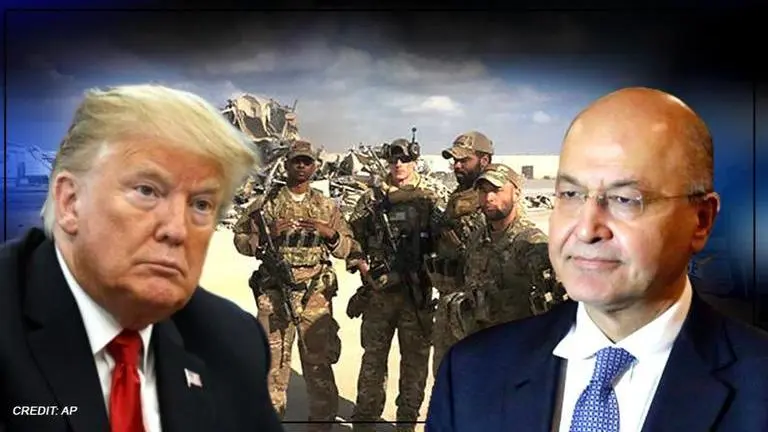
In a significant move towards eliminating the ISIS threat, the United States on Thursday agreed to reduce troops in Iraq over the next few months after holding strategic dialogue with officials Baghdad.
A joint statement released by the two countries recognised that in the light of significant progress made towards eliminating the ISIS threat, the US would continue pulling out its forces from Iraq over the coming months. The US also assured that it would hold talks with the Government of Iraq about the remaining forces as both the countries turn their focus towards developing a bilateral security relationship based on strong mutual interests.
The US further reiterated that it does not seek nor request permanent bases or a permanent military presence in Iraq, as previously agreed to in the 2008 Strategic Framework Agreement (SFA) that provides for security cooperation to be undertaken on the basis of mutual agreement.
Advertisement
Meanwhile, the Government of Iraq also committed to protecting the military personnel of the International Coalition and the Iraqi facilities hosting them consistent with international law and the specific arrangement for their presence as it will be decided upon by the two countries.
Advertisement
Strategic dialogue between Iraq-US
The delegation for the strategic dialogue between the two countries was led by Senior Under Secretary of the Ministry of Foreign Affairs Abdul-Karim Hashim Mostafa, from Iraq and the delegation of the United States Government was led by Under Secretary of State for Political Affairs David Hale, via video conference.
The dialogue was held in accordance with the 2008 Strategic Framework Agreement for a Relationship of Friendship and Cooperation between the United States of America and the Republic of Iraq. The discussions included security and counterterrorism, economics and energy, political issues, and cultural relations.
(With agency inputs)