
WHO issues 'alarming' warning, says recent Bird Flu outbreak can infect humans 'easily'
As the world recovers from the horrors of the deadly Coronavirus Pandemic, WHO on Wednesday issued ‘alarming warnings’ about the ongoing ‘bird flu' outbreak.
- World News
- 4 min read

;'%3e%3cpath%20d='m8,15.99c4.41,0,7.99-3.58,7.99-7.99S12.41,0,8,0,0,3.59,0,8s3.58,7.99,7.99,7.99Z'%20style='stroke:%23fff;%20stroke-miterlimit:10;%20stroke-width:.02px;'/%3e%3cpath%20d='m3.08,3.37l3.82,5.11-3.84,4.15h.87l3.37-3.64,2.72,3.64h2.94l-4.04-5.39,3.58-3.87h-.86l-3.1,3.35-2.5-3.35h-2.94Zm1.27.64h1.35l5.97,7.99h-1.35l-5.97-7.99Z'%20style='fill:%23fff;'/%3e%3c/g%3e%3c/svg%3e)


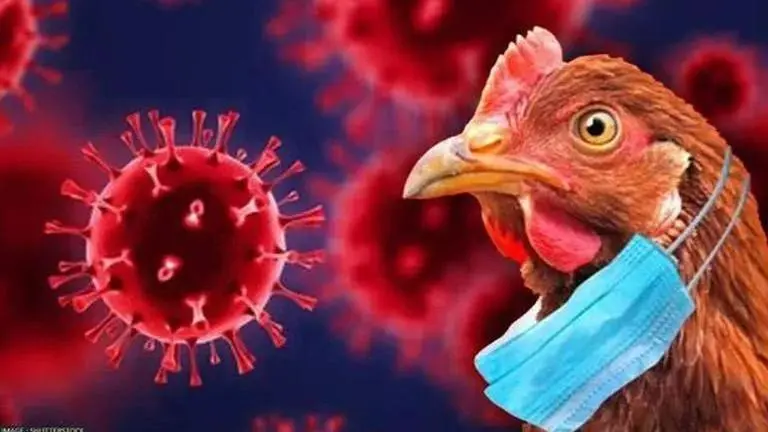
As the world recovers from the horrors of the deadly coronavirus pandemic, the World Health Organisation (WHO) on Wednesday issued ‘alarming warnings’ about the ongoing bird flu outbreak. In a recent press release, the international body said that the ongoing Avian Influenza (bird flu) outbreak has the potential to infect humans ‘easily’. The body highlighted that the increasing number of the detection of the H5N1 avian influenza among mammals has raised concerns that the virus might end up being adapted to infect humans. The virus usually spreads among birds, but can be fatal if it infects humans.
“Avian influenza viruses normally spread among birds, but the increasing number of H5N1 avian influenza detections among mammals—which are biologically closer to humans than birds are—raises concern that the virus might adapt to infect humans more easily,” the WHO said in a statement on Wednesday. “In addition, some mammals may act as mixing vessels for influenza viruses, leading to the emergence of new viruses that could be more harmful to animals and humans,” the body furthered. In light of this, the WHO along with the Food and Agriculture Organization of the United Nations (FAO), and the World Organisation for Animal Health (WOAH) are urging nations around the world to work together across the sectors to prevent the spread.
Ongoing avian influenza (#BirdFlu) outbreaks in animals pose risks to humans too - countries should work together and across sectors of society, to protect people and save as many animals as possible https://t.co/dzuLv6vq31 pic.twitter.com/fMlOVnqkSY
— World Health Organization (WHO) (@WHO) July 12, 2023
How is the surge in cases among Mammals a warning sign
The WHO reiterated that there have been increasing reports of deadly outbreaks among mammals. As per the statement, around 10 countries across three continents have reported outbreaks of bird flu among mammals since 2022. The international body insisted that both land and sea mammals have been affected by the outbreak in countries like Spain, the US, Peru, Chile, etc. “H5N1 viruses have also been detected in domestic animals such as cats and dogs in several countries, with recent detections of H5N1 in cats announced by authorities in Poland,” the advisory reads.
The body stated that the sporadic "influenza A(H5N1) clade 2.3.4.4b virus" has been reported among humans as well. However, such instances remained very rare with only 8 cases reported since December 2021. Despite this rarity, the authorities urged that precautions need to be made to prevent its spread. "With the information available so far, the virus does not appear to be able to transmit from one person to another easily, but vigilance is needed to identify any evolution in the virus that can change that,” said Dr Sylvie Briand, Director of Epidemic and Pandemic Preparedness and Prevention, WHO. “WHO is working closely with FAO and WOAH, and laboratory networks to monitor the evolution of these viruses, looking for signals of any change that could be more dangerous to humans. We encourage all countries to increase their ability to monitor these viruses and detect any human cases. This is especially important as the virus is now affecting countries with limited prior experience in avian flu surveillance,” Dr Briand added.
Advertisement
How to curb the spread?
After substantiating that the virus can potentially spread among humans, the WHO listed out some of the advisories to prevent matters from going out of hand. These are the guidelines provided by the FAO, WHO and WOAH to the countries so that the spread can be tackled at a large level. They are as followed:
- Prevent avian influenza at its source, mainly through enhanced biosecurity measures in farms and in poultry value chains, and apply good hygiene practices.
- Rapidly detect, report and respond to animal outbreaks
- Strengthen influenza surveillance in animals and humans
- Conduct epidemiological and virological investigations around animal outbreaks and human infections
- Share the genetic sequence data of viruses from humans, animals or their environments publicly
- Encourage collaboration between the animal and human health sectors
- Communicate the risk
- Ensure influenza pandemic preparedness at all levels.