
No Foul Play, No Suicide Risk. What Really Happened To The Saudi Prince Found Dead At London Hotel?
A Saudi prince was found dead at a London Marriott hotel with alcohol, GHB, cannabis and Xanax in his system. An inquest ruled he suffered a cardiac arrest after a fatal mix, with no evidence of foul play or suicide risk.
- World News
- 3 min read

;'%3e%3cpath%20d='m8,15.99c4.41,0,7.99-3.58,7.99-7.99S12.41,0,8,0,0,3.59,0,8s3.58,7.99,7.99,7.99Z'%20style='stroke:%23fff;%20stroke-miterlimit:10;%20stroke-width:.02px;'/%3e%3cpath%20d='m3.08,3.37l3.82,5.11-3.84,4.15h.87l3.37-3.64,2.72,3.64h2.94l-4.04-5.39,3.58-3.87h-.86l-3.1,3.35-2.5-3.35h-2.94Zm1.27.64h1.35l5.97,7.99h-1.35l-5.97-7.99Z'%20style='fill:%23fff;'/%3e%3c/g%3e%3c/svg%3e)


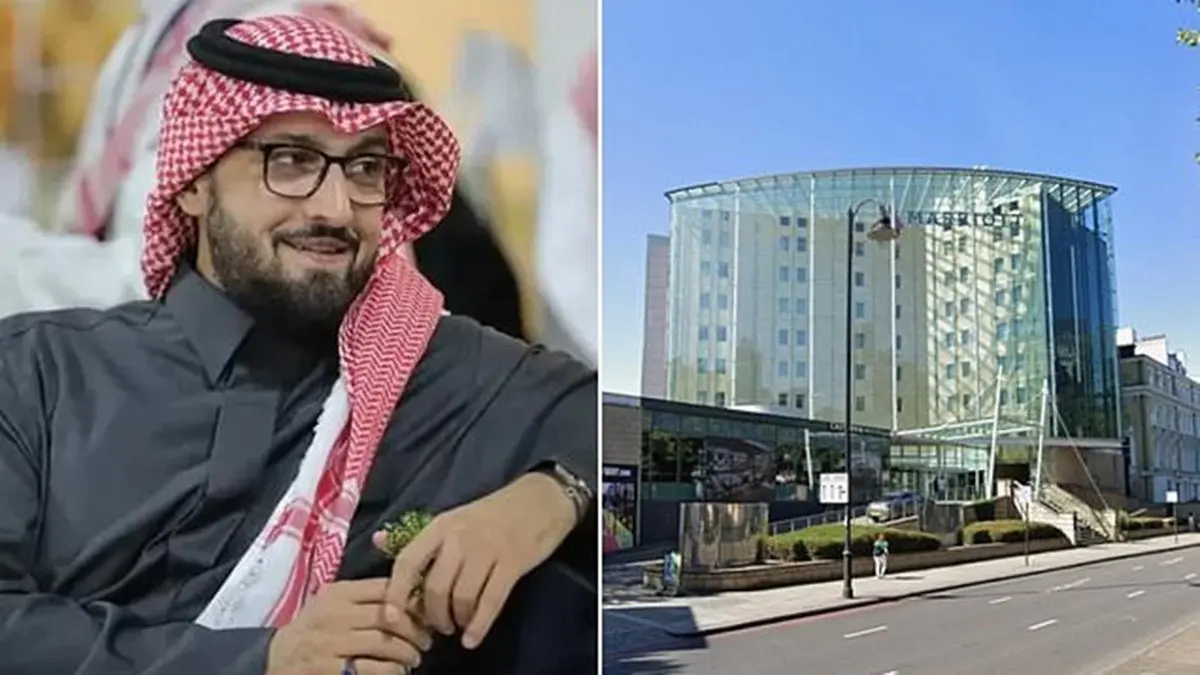
London: A 29-year-old prince of Saudi Arabia’s ruling family was found dead in a luxury west London hotel last year after taking a dangerous mix of alcohol, prescription medication and recreational drugs. A UK court has heard the inquest, where the toxicology findings were presented during an inquest into the death of Prince Abdullah bin Fahad bin Abdullah bin Abdulaziz bin Jalawi al Saud.
According to The Telegraph, the prince had a blood alcohol level of 222 mg per 100 ml of blood at the time of his death, which was almost 3 times the UK’s legal drink-drive limit of 80 mg. The tests also detected the recreational drug gamma-hydroxybutyrate (GHB), cannabis and the anti-anxiety medication alprazolam, sold as Xanax.
The hearing at Inner West London Coroner’s Court was informed that the prince’s body was discovered in the bathroom of his locked €600 per night room at the Marriott Hotel in Kensington on November 25 last year. The cause was a cardiac arrest triggered by the combined effects of the substances in his system, and the medics tried to revive him, but they eventually failed. The postmortem concluded he had suffered a cardiac arrest caused by the combined effect of the substances.
Struggles With Addiction, Prior Treatment
The court heard that Prince Abdullah had been battling dependence on alcohol and Xanax in the months before his death. The claims were supported by the fact that his family had sought specialist help for him in London.
Advertisement
Moreover, around 3 months earlier, he was admitted to the Priory Clinic in Roehampton, where the treatment can reportedly cost up to €35,000 a week. During the stay, he then underwent detoxification for alcohol, benzodiazepines and the anti-anxiety drug pregabalin.
After leaving the clinic, he continued care at Rainford Hall, a private rehabilitation facility in Merseyside that reportedly charges around €7000 a week. Although there, he was also treated for an upper respiratory tract infection, and later he was discharged from Rainford Hall on October 14.
Advertisement
Final Days At The Marriott Hotel
Further, on November 19, the prince checked into the Marriott Hotel in Kensington, considering a week-long stay. CCTV shown to the court captured him stepping outside the hotel for a cigarette on the evening before he died.
The hotel staff later found him lying fully clothed on the bathroom floor of his locked 5th-floor room. The paramedics were called, who tried to revive him, but he could not be revived.
The toxicology tests presented to the inquest identified possible fatal levels of GHB, a drug commonly referred to as a ‘party drug’. Alongside the drug were alcohol, cannabis and alprazolam, as well as other anti-anxiety medications. A postmortem examination concluded that his death was caused by a cardiac arrest brought on by the combined impact of alcohol and drugs.
No Evidence Of Foul Play Or Suicide Risk
The inquest was apprised that Prince Abdullah was not regarded as being at risk of suicide, while the police also found no sign of third-party involvement. The cops reviewed CCTV footage which showed the prince had been alone in the hotel in the hours before his death and on the basis of the video evidence, the investigating agencies concluded that there was no evidence of foul play.
The case spotlighted the dangers of mixing prescription medication with alcohol and recreational drugs, and comes amid growing scrutiny of substance use among young adults in private healthcare settings in the UK.